Read also:
How to Watch FX Live Without CableHow To Watch AMC Without CableHow to Watch ABC Without CableHow to Watch Paramount Network Without CableYou’ve seen Sandra Bullock struggling for survival in gravity-free outer space. You’ve seen Matt Damon trying to make it from one day to the next on Mars or Robert Redford scrambling to stay afloat (literally) on the open seas. Now, writer/director Brian Duffield takes the survival thriller to fishy new heights in Whalefall (which was co-written by Daniel Kraus, who also penned the film’s source material of the same name). Now a single character must endure in unthinkable conditions…in a whale’s belly.
Before that digestion transpires, college-aged Jay Gardiner (Austin Abrams) returns home to his family on the one-year anniversary of his dad, Mitt (Josh Brolin), passing away. Jay didn’t have a good relationship with his often toxic and persistently ocean-obsessed dad. Upon remembering that they never found his dad’s corpse (after he took his own life by drowning) and seeing how distraught his siblings are over this reality, Jay sets out one morning to retrieve the man’s body.
This mission, unfortunately, eventually entails a massive sperm whale swallowing Jay. Now trapped in the creature’s belly, this woefully unprepared guy begins hustling for a way out. He only has 40 minutes of oxygen left. He’s got few tools at his disposal. Yet maybe, just maybe, he can do this. While stuck in this unthinkable scenario, Jay begins pulling a Slumdog Millionaire, remembering various random moments from his past potentially holding answers for the present. Specifically, he thinks back to various conversations with survivalist and diver Mitt (who also adored whales) for tips on how to escape.
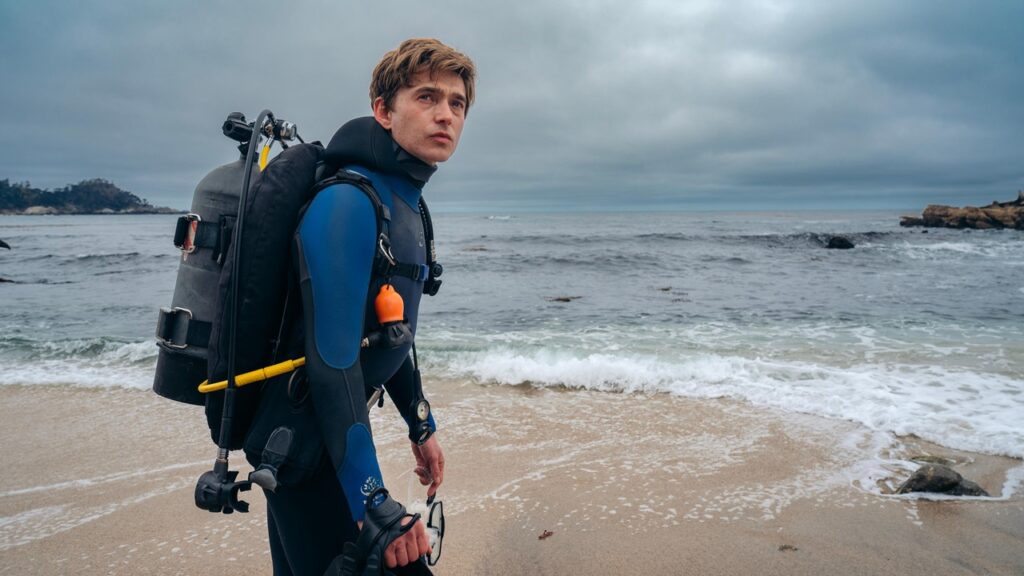
So far, Duffield’s directorial career (which also includes Spontaneous and No One Will Save You) has emphasized young people grappling with imminent death and surviving on their own. This experience means any Whalefall scenes focusing on Jay in a whale’s guts are exceptional. Especially welcome is how unabashedly terrifying Duffield makes this scenario. A scene where Jay realizes one whale chamber he’s entered is full of acid, for instance, is perfectly timed. Thoughtfully and gradually unfurling discovery makes the sight of his charred hands extra gasp-inducing.
Duffield, cinematographer Aaron Morton, and the production design team also shrewdly lean into indecipherability in the whale tummy to accentuate tension. Certain scenes having erratic lighting or indistinguishable environments could’ve felt like dismal deployments of shaky-cam: visual incoherence substituting for tension. Instead, there’s intentionality informing Whalefall’s most disorienting images. They potently capture wild unpredictability, the notion that the “walls” could close in on Jay at any moment.
Meanwhile, when Jay is stuck in similar-looking caverns, it reinforces his dearth of options. He can’t walk into another room or discover a corner of a deserted island suddenly holding helpful survival tools. He’s trapped in Hell. Whalefall’s lighting and editing choices throw viewers head-first into the situations’ most nightmarish corners. Plus, the majority of Whalefall’s whale interior scenes are digestible. That hammers home how more visually jagged segments are effectively chaotic rather than disjointed.
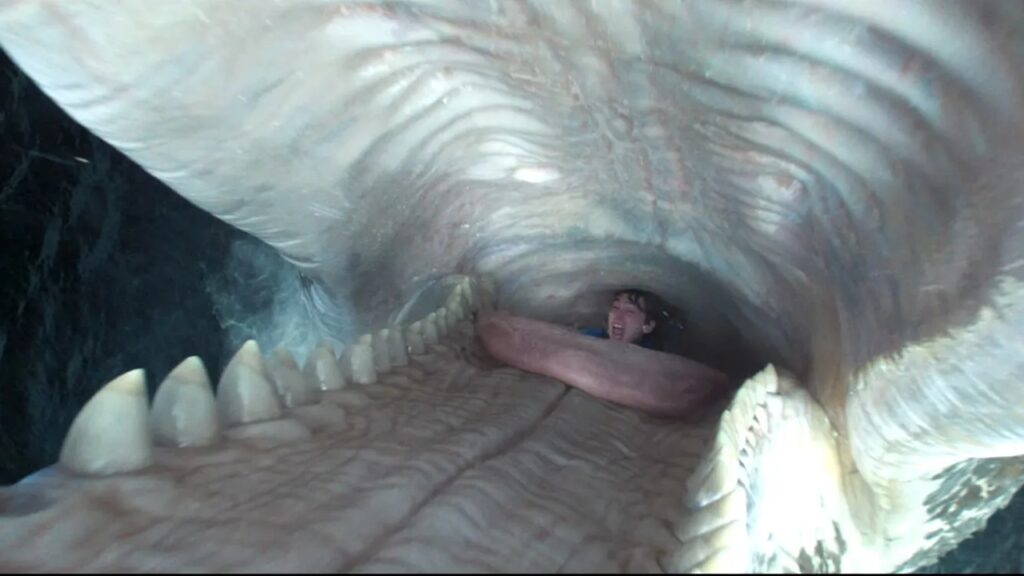
Meanwhile, Austin Abrams makes a solid crux for Whalefall. His youthful appearance informing his roles in everything from Scary Stories to Tell in the Dark to Wolfs (the latter of which saw him playing a character named Kid) serves him well here. Abrams commands an immediately vulnerable aura, making it extra harrowing watching him trapped in a whale’s stomach. It’s one thing if Dave Bautista or Chris Hemsworth got stuck in this scenario. Ben Stiller’s son from Brad’s Status, though?!?
It isn’t just his age and ability to portray young characters that make Abrams a winning Whalefall lead. He’s also a strong physical performer. As Jay grows wearier and wearier in the whale’s stomach, Abrams communicates that reality to heartbreaking effect. Even when framed from the neck-up, this actor palpably portrays the toll this experience takes on Jay.
Abrams even works well in the assorted Whalefall flashback scenes, which prove troublesome for this film. The father/son material has its effective moments, especially since Duffield lets certain scenes depicting Jay and Mitt’s frayed relationship breathe. One segment showing teenage Jay awkwardly informing his dad he’s going to his friend’s birthday party instead of their diving excursion radiates particularly realistic, suppressed angst. Most other similar sequences, though, hinge on excessively tidy dialogue.
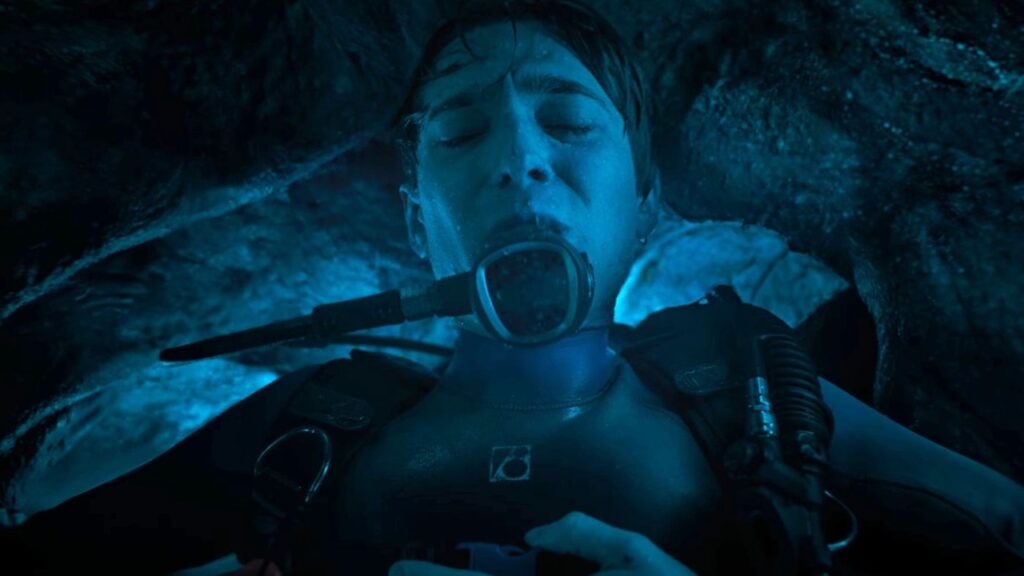
While the whale survival material is fraught with uncertainty, Jay and Mitt’s conversations are largely predictable and deliver frustratingly convenient epiphanies. A similar artistic disparity exists visually between these Whalefall sections. Inside this underwater beast, Jay navigates a world that looks like if Little Death’s hideout got a Finding Nemo makeover. Meanwhile, the landlubber flashbacks are shot standardly. Minimal blocking or set design flourishes really stand out in these talks. Rather than absorbing intimate moments that built this frayed father/son dynamic, these scenes make one tap their foot impatiently, hoping to return to Jay’s nightmare escape.
A third act that tries colliding these two elements has mixed results. Duffield’s commitment to eschewing self-referential dialogue and treating everything with gravitas produces moving moments and striking images. The latter feat especially materializes when a pack of vicious Orcas attack the sperm whale against an ominous black void. However, these sequences also lean heavily on overwrought dialogue. Potentially impactful instances of visual storytelling are undercut through Brolin’s narration channeling big “father…mother…always you wrestle inside me” energy.
Once the credits roll and Whalefall comes ashore, it’s clear this production is less than the sum of its parts. Thankfully, the successful segments are worth lauding. The practical effects and sound design used in realizing the whale’s interior especially deserve immense kudos for making a conceptually outlandish premise chillingly visceral. If only those better qualities didn’t clash with clumsy dialogue-oriented tendencies that lay things on too thick. Even when you’re dealing with a gargantuan whale, restraint is necessary.
Whalefall is now playing in theaters everywhere.