Read also:
How to Watch FX Live Without CableHow To Watch AMC Without CableHow to Watch ABC Without CableHow to Watch Paramount Network Without CableFor the past decade or so, writer-director James Gray has built an eclectic filmography. He’s jumped from the explorer epic The Lost City of Z to the meditative science fiction Ad Astra to the autobiographical Armageddon Time. However, he defined the start of his career with movies that contemplated the intersection of family and crime. In Little Odessa, The Yards, We Own the Night, and Blood Ties (which he wrote but did not direct), he returns again and again to the dynamic of one member of a family dyad (usually brothers) wrestling with the repercussions of their criminal choices while the other does all they can to avoid any sort of vicarious exposure, as if criminality was a communicable disease. In Paper Tiger, Gray returns to this personal fascination for the first time in 13 years.
The film, however, is no mere recitation of old themes, a remix of prior works. This time out, Gray turns the previous worldview on its ear. Instead of wrestling with the cost of a life of crime and the difficulty escaping its black hole-like gravitational pull, he explores the consequences of sticking with one’s values and refusing the temptation of breaking the rules when going along to get along is the far easier, safer, and more lucrative option. The result is a picture that is both more and less hopeful than his previous works. Several characters in this work are among Gray’s most “decent” in his crime films. Those who aren’t, though, are crueler and less humane than his previous flirtations with felons.
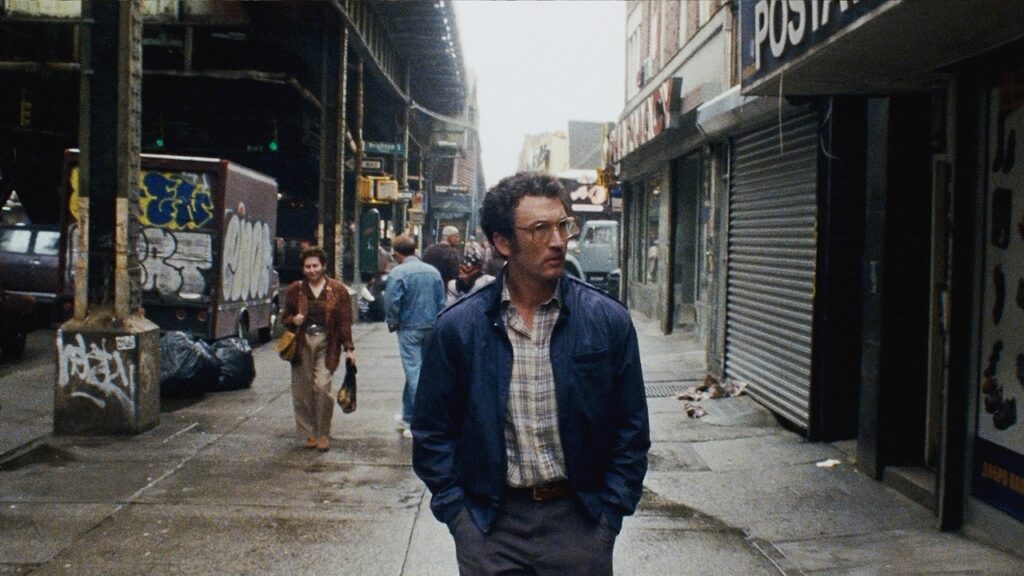
It’s the 80s. Gary Pearl (Adam Driver) is a former NYPD officer who found financial success as a private security consultant. His divorce, however, has placed a big dent in his bank account. Irwin (Miles Teller), his younger brother, is a family man and engineer. His salary ensures the family is breaking even, but little more. Gary thinks he has the solution to both their financial woes though: helping Russian immigrants/businessmen adhere to new environmental regulations near the Gowanus Canal. The solution becomes a threat to them both, though, when Irwin accidentally sees something he shouldn’t. Irwin’s wife, Hester (Scarlett Johansson), meanwhile, becomes consumed with anxiety about the future of her family thanks to other recent events.
Visually, Paper Tiger starts in the darkness of a fall evening and largely lives there throughout. Moments of sunlight nearly always pair with bad news, suggesting that the only choices for the Pearls are literal or psychological darkness. The Brooklyn and Queens of the 80s feel accurate here. Especially to the vision of those boroughs found in the films of Lumet, a clear inspiration. They are lived-in and alive, safer than their most uncharitable depictions but still dotted with malevolence.
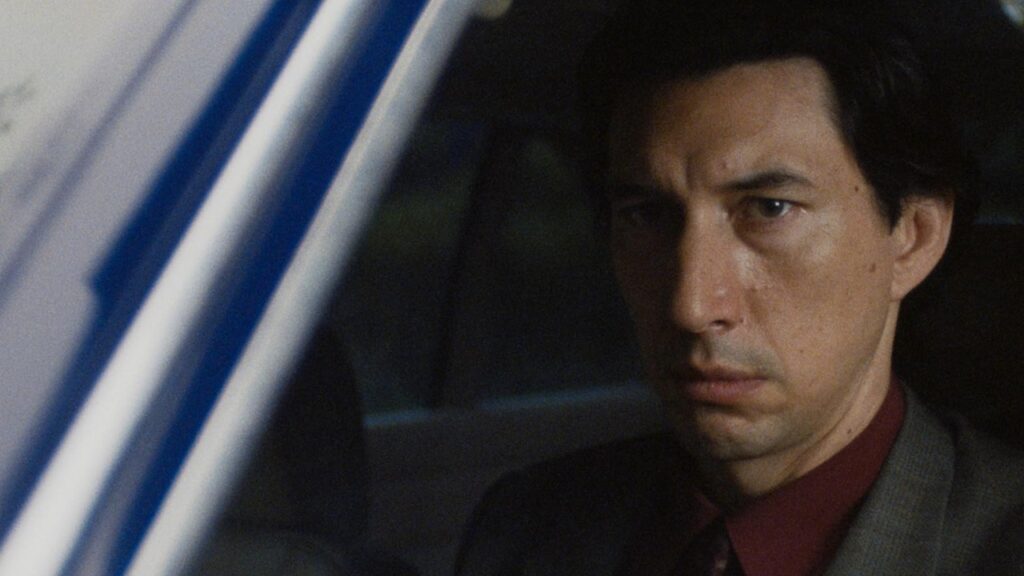
Driver slashes through it, laconic in disposition, rapid-fire in speech. He wants to impress—his brother, his nephews, his former brother in blue. And yet, Driver somehow doesn’t make it feel sleazy or obsequious. He’s gregarious and generous by nature, but he’s no clown. He can turn his charisma sharp in a moment, calling out a former colleague or pushing back against some thugs. It’d be foolish to ever underestimate Driver’s talents and yet this effort feels different. He isn’t just big either. His final scene, one of quiet and graceful defiance, is every bit as memorable as the first moment he swans into Irwin’s house, a full Peter Luger catering team on his coattails. It’s as complete a performance from him as any in the past five years.
As a long-time believer in Teller, he and Drive matching up well doesn’t surprise me. Nonetheless, I imagine it will surprise others. Whereas Driver goes big and bright, Teller pulls inward. After he and his sons return home from an especially harrowing experience, he quietly tells them, by way of validation and reassurance, “Tonight was a bad night.” It is quick and understated, and yet the tone, his posture, the look on his face, all of it suggests something large and heavy is sitting on and around his family now. A later encounter between Irwin and Gary showcases both performers nicely, as it pulses with hurt and burdens that neither character can fully articulate. Driver because it is not his nature to let on he’s wounded and Teller because Irwin keeps such a tight leash on his bigger emotions.
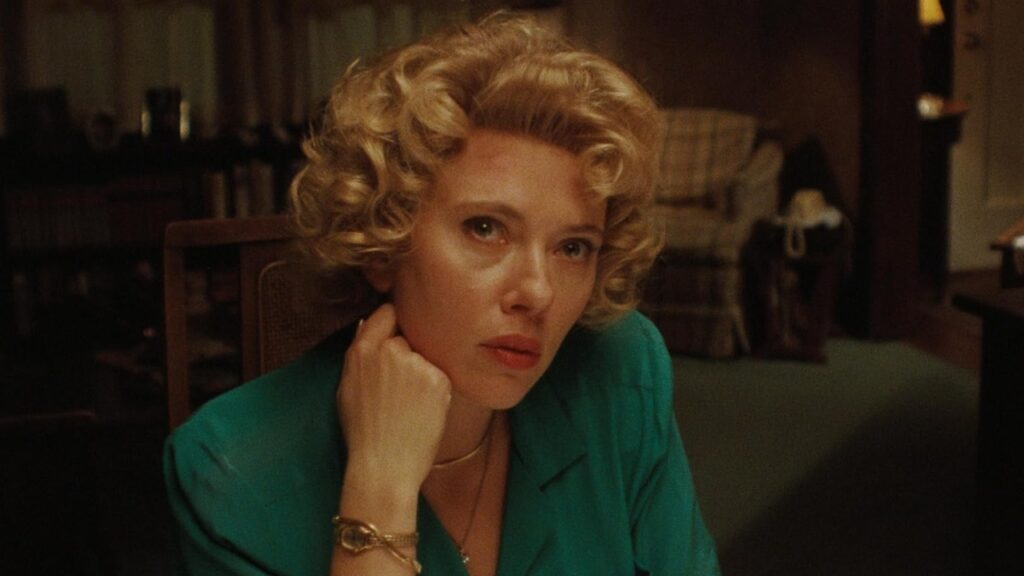
With Paper Tiger so focused on the brothers, Johansson has the smallest role of the three, by far. However, she makes Hester feel three-dimensional with that limited space. Carrying herself in a way that suggests she and Irwin have long been a natural fit, she too speaks volumes with limited dialogue. Conversations between her and her doctor and her and her mother are underlined with steeliness and almost unbearable sadness. Her disposition might mirror her husband’s but her choices place her alongside her brother-in-law as well. In a quiet and restricted way, she is a dynamic presence too. Like Gary, she’s convinced herself everyone in her life will be better off if she goes it alone, causing suffering for herself and everyone she seeks to protect. Her refusal to ask for help carries tremendous consequences, some of which she’ll likely never realize.
It is a rare feature that leaves one utterly certain the characters are about to face the hardest time of their lives and with reasonable hope that they won’t shatter under the pressure. That’s a trick Paper Tiger pulls off, but hardly the only one.
Paper Tiger has a full steak dinner waiting for audiences in select theatres starting November 20.