Read also:
How to Watch FX Live Without CableHow To Watch AMC Without CableHow to Watch ABC Without CableHow to Watch Paramount Network Without CableDecades. That’s how long it’s taken for the documentary Once Upon a Time in Harlem to finally reach movie theaters. Director William Greaves and his camera crew captured this film’s footage in 1972, but post-production problems led to him temporarily shelving the project. Even after Greaves left this world in the 2010s, his family (including director and son David Greaves) kept pushing to make this feature a reality. Further obstacles kept creeping up. As late as four months before its 2026 Sundance Film Festival premiere, The New Yorker reported that the completion of Once Upon a Time in Harlem was still at the mercy of “an ongoing process of fund-raising.”
When William Greaves began this endeavor, he never could’ve imagined Once Upon a Time in Harlem would take 54 years to realize. Strangely, though, this lengthy wait provides the final film with unexpected synchronicity. Roughly 50 years had passed between the start of the Harlem Renaissance and when Harlem was filmed. Similarly, 54 years have transpired since this project started shooting. The final feature now functions as a time capsule on multiple levels.
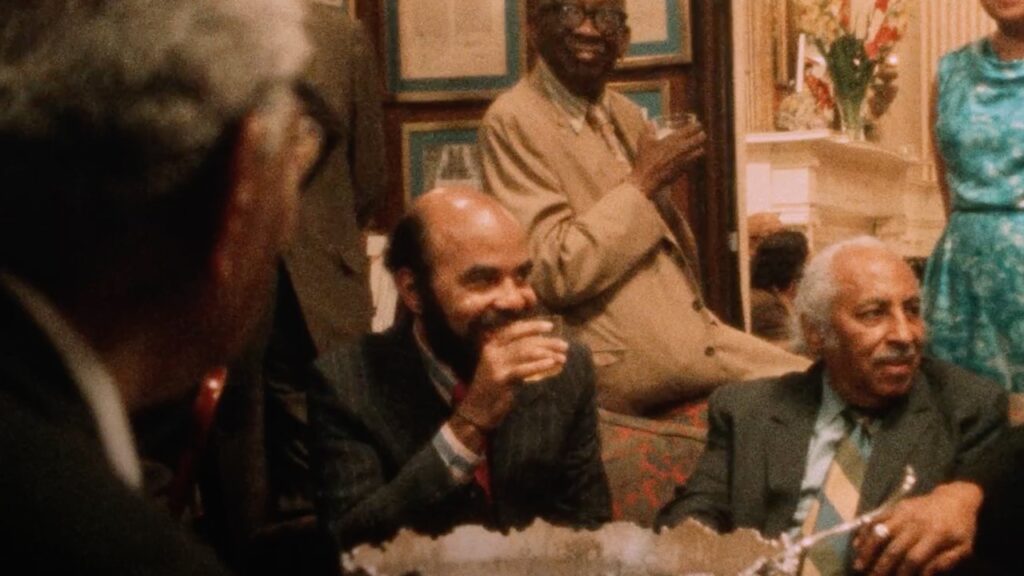
Once Upon a Time in Harlem chronicles the coolest gathering imaginable. One night, in Duke Ellington’s home, countless icons from the Harlem Renaissance descended to drink, chat, debate, and look back on the past. People from all disciplines appear on camera, whether it’s writer Richard Bruce Nugent, librarian Jean Blackwell Huston, photographer James Van Der Zee, legendary actor Leigh Whipper, activist and socialist (the latter term emphasized through on-screen text most times when he appears on-screen) or Richard B. Moore, among so many others.
Decades after they began their respective careers, they’re all legends to the wider world. Tonight, though, they’re just human beings shooting the breeze and reckoning with the passage of time.
Once Upon a Time in Harlem is a movie you surrender to. Typically, Greaves and the cinematographers plop the camera in the middle of discussions full of overlapping discussions or declarations transpiring just beyond the boom-mic’s reach. The camera scrambles to catch every memorable moment in this social situation rather than bending all the chatter to the audiences demands. Even the talking head segments are built around what the interview subjects want to talk about (like Leigh Whipper reciting his entire lengthy speech from an old movie) rather than hand-holding moviegoers.
The result is a motion picture brimming with life. Nimble and persistent conversations movingly capture the rich histories between all these personalities. Sure, it’s been decades since many of them have seen each other. However, the various Once Upon a Time in Harlem subjects still share profound and captivating dynamics. The immersive camerawork lets viewers absorb those rapports and other tiny details in this gathering. Speaking of great details, leaving in little audio hiccups (like Nugent talking before there’s a microphone around to grab his words) or segments where crew members tap on a boom mic was an ingenious maneuver. These fleeting moments capture the messy, deeply human process of filming in a motion picture testament to towering legends.
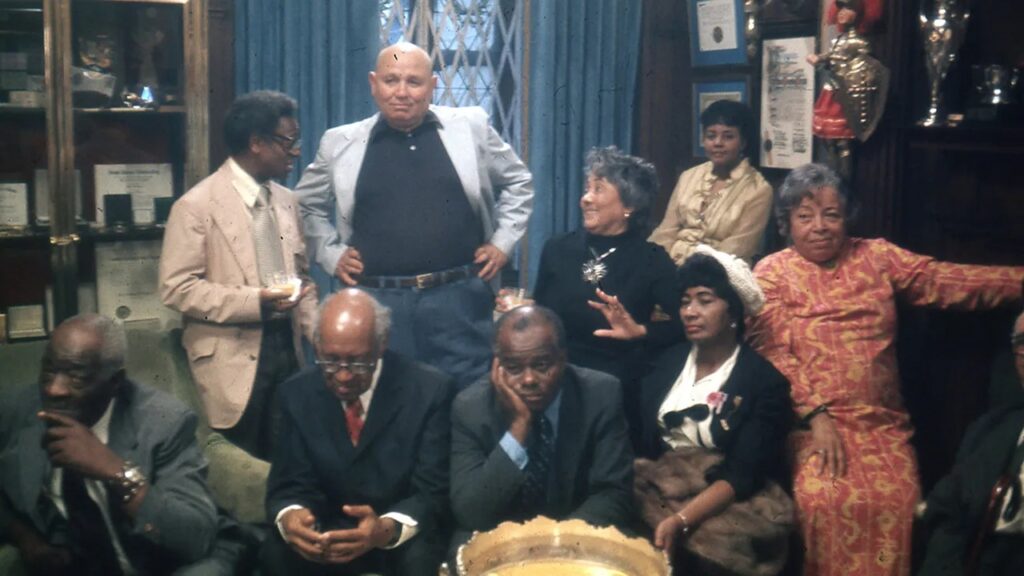
Once Upon a Time in Harlem isn’t just concerned with Harlem Renaissance icons who’re physically at this shindig, though. Throughout this party, several attendees beckon everyone to remember this movement’s already deceased titans. This includes sculptor Augusta Savage, actor Paul Roberson, and the great poet Zora Neale Hurston, among others. Recognizing such legends reflects Harlem’s cognizance of life’s finite nature, but also how human beings can endure forever. Savage, Roberson, and Hurston are still alive in Duke Ellington’s house via anecdotes on this fateful day. Similarly, Leigh Whipper passed away in 1975. Yet this documentary ensures he’s still enthralling audiences decades later.
Existence is confined yet eternal. Once Upon a Time in Harlem vividly captures that reality.
All these stories and assorted interview subjects are nothing short of transfixing. They’re all filtered through tremendously sharp filmmaking instincts. Harlem’s 16mm footage has been delicately restored. Everything looks crisper than William Greaves could’ve ever imagined. This achievement doesn’t, though, mean removing all period-appropriate visual hallmarks. Yesteryear imagery looks dazzling, but not sanitized thanks to modern-day restoration efforts. Even just in how images look, Once Upon a Time in Harlem delicately balances multiple eras of history.
Editors Lynne True and Anne de Mare superbly arrange all this material. This includes juggling cuts between 1972 dinner party footage and archival facets far removed from this once-in-a-generation gathering (like vintage reels of pilot Hubert Julian). True and de Mare encapsulate the esteemed artistry Once Upon a Time in Harlem’s post-production crew members exhibit. These individuals were tasked with bringing this long-gestating production to the finish line. They excelled in living up to the creative standards set by both the on-screen Harlem Renaissance artists and William Greaves. Accomplishing that under the precarious financial conditions dominating Harlem’s realization is utterly astonishing. Like The Other Side of the Wind, Once Upon a Time in Harlem is a long-awaited motion picture radiating with precise craftsmanship rather than reminders of behind-the-scenes uncertainty.
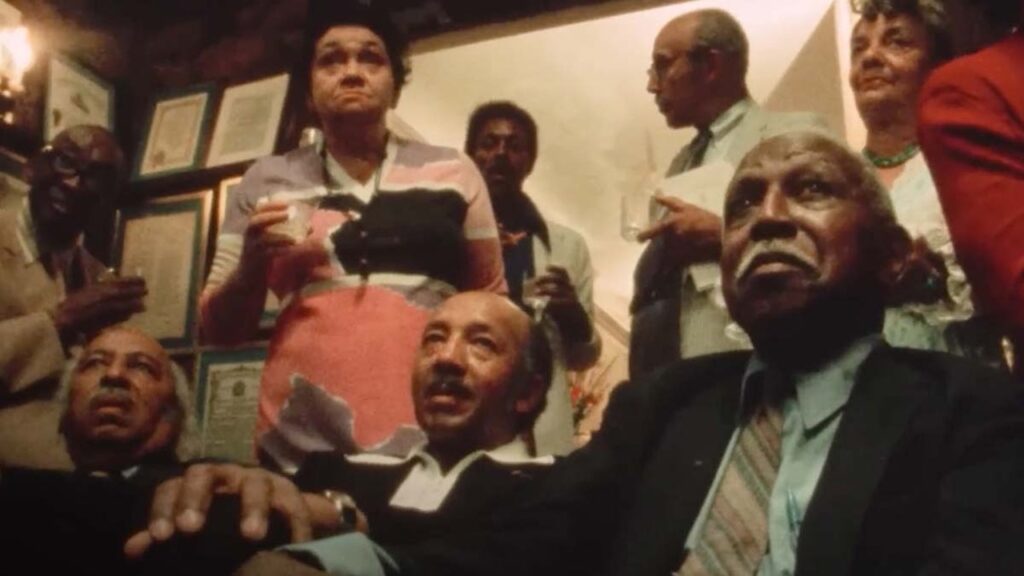
As Harlem winds down, the bittersweet cloud lingering over the proceedings becomes especially inescapable. One attendee outright thanks Greaves for showing up and filming the evening. Others contemplate the Harlem Renaissance’s lasting legacy. Eventually, everyone exits Duke Ellington’s home and goes out to Harlem’s streets. They become once more faces in the crowds, just further individuals on the sidewalk. Yet the camera keeps capturing them outside via footage so off-the-cuff it’s questionable whether Greaves ever intended to put this in the final film.
As these final scenes play out, Once Upon a Time in Harlem, much like You Can See Everything, uses its last moments to flip an entire documentary’s gaze back on its director. However, Everything undergoes this process to challenge Nathan Fielder’s perspective. Harlem, meanwhile, poignantly deploys this technique to underline William Greaves’ artistic immortality. Throughout Harlem, voice-over narration has read aloud poems from deceased Harlem Renaissance figures. Now, in these concluding minutes, Greaves imparts his prose via the poem Deep in the Quiet Wood.
In these words, Greaves contemplates how art lets human beings shout from the rooftops, “I existed!” By centering this poem, Once Upon a Time in Harlem lets another deceased artist both reaffirm that theme and prolong their existence. If enduring in memories are the true test of how long people last, William Greaves and Once Upon a Time in Harlem’s various Harlem Renaissance figures will live forever.
Once Upon a Time in Harlem is now playing in select theaters.