Read also:
How to Watch FX Live Without CableHow To Watch AMC Without CableHow to Watch ABC Without CableHow to Watch Paramount Network Without CableIt’s hard to keep ubiquitous horror icons frightening. As Tasha Robinson astutely observed on The Dissolve in 2014, once-terrifying cinematic figures quickly become amiable or even laughable when they’re so familiar to audiences. These chilling individuals work best when they lurk in shadows. That’s the difference (among many) between Jaws and Jaws: The Revenge. Overexposure ensures today’s chilling slasher villain is tomorrow’s punchline.
That makes a common virtue across writer/director Takashi Yamazaki’s two Godzilla features extra impressive. Both motion pictures deploy monsters everyone has seen in Snickers commercials, goofy T-Shirts, or indulging in victory dances. Godzilla and King Ghidorah are often cuddly and not necessarily nightmare-inducing. Yet Godzilla Minus One and now Godzilla Minus Zero open with sequences rendering these Kaiju tangibly terrifying. When they stomp the ground or roar, you feel helpless, not like an old pal has appeared. Even after decades of familiarity with these characters, Yamazaki makes it feel like viewers are meeting them for the first (anxiety-inducing) time.
Godzilla Minus Zero begins in media res with a new creature known as Ghidorah rampaging through Matsumoto City in 1949. Though Godzilla was defeated two years earlier, Kaiju threats haven’t abandoned Japanese society. Kenji Noda (Hidetake Yoshioka) now leads the Large-Scale Disaster Response Bureau, which is dedicated to confronting potential giant monster attacks. Meanwhile, pilot Kōichi Shikishima (Ryunosuke Kamiki) is trying to lead a quiet domestic life with wife Noriko (Minami Hamabe) and daughter Akiko (Sae Nagatani). In Godzilla Minus One, he learned the value of living. Now, he’s determined to cherish existence’s blessings rather than soar across the sky again.
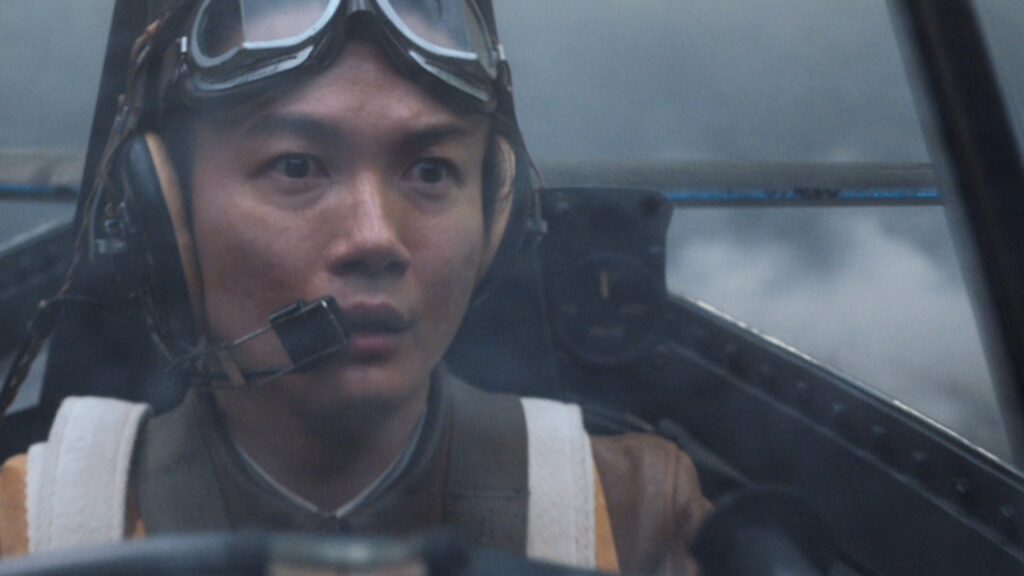
Still, eventually, attempts to take down Ghidorah rope in Kōichi. This all while Noriko grapples with how the Godzilla cells that saved her life are also killing her. Shikishima family struggles aren’t the only problem here, though. Ghidorah proves quite sturdy against manmade weapons. He’s also growing increasingly powerful, far more so than Godzilla ever. Speaking of that movie star, Godzilla eventually resurfaces. Monstrous nightmares of the past and present are now descending on Japan. How will humanity survive?
From the moment Ghidorah first arrives on-screen, Godzilla Minus Zero starts rumbling your IMAX seat and keeps delivering glorious Kaiju action afterward. However, that opening set piece also establishes the larger film’s emotional immediacy. This comes through the camera unblinkingly chronicling a trio of scientists running away from Ghidorah’s carnage. With the images firmly locked down on the ground and the human characters so vividly vulnerable, Godzilla Minus Zero instantly communicates terrifying entrapment within an unstoppable crisis. They might as well be seeking shelter during a tsunami or military invasion.
The evocative and chilling human elements here immediately make it clear Godzilla Minus One’s weightiness isn’t going anywhere, even with multiple Toho monsters clashing.
Pro-tip to anyone writing human storylines in Godzilla movies (looking at you specifically, MonsterVerse features): take a cue from Yamazaki. Embrace specificity and boldness. Just because the humans are more “grounded” compared to the Kaiju doesn’t mean they can’t have grandiose struggles or personality traits. Which is more interesting: Jean Reno incessantly chewing gum or a woman with Godzilla spikes protruding from her neck? Compare Bradley Whitford doing a Rick Sanchez impression to Min Tanaka’s haunted biologist Kanji Murakami (who, at one point, goes full-on mad scientist, complete with jagged editing and weird camera angles), and it’s no contest.
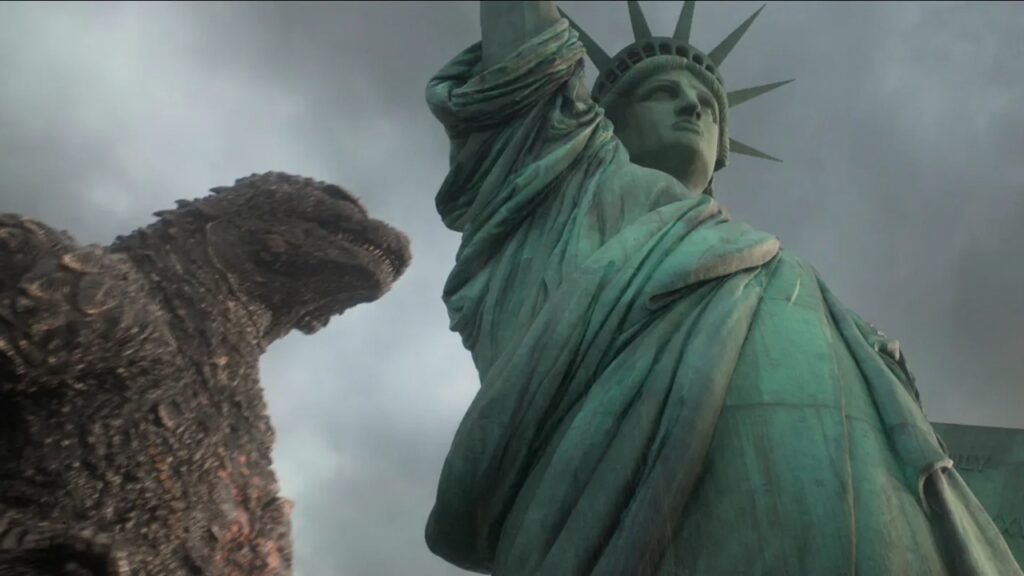
Treating Godzilla Minus Zero’s humans as dramatically compelling creations rather than an obligatory time-filler between Kaiju skirmishes serves the entire film well. Plus, this approach continues and expands upon Godzilla Minus One’s own strong characterizations. Yamazaki even reinforces the importance of these players through certain intimate, action-free conversations filling up the entirety of the IMAX screen. This subtle aspect ratio detail solidifies exchanges about vulnerability or regret as equally important as the monster mashes.
Speaking of those kaiju showdowns, my word! They’re amazing! Even before Godzilla and Ghidorah go toe-to-toe, though, Godzilla Minus Zero provides plenty of “woah”-inducing spectacle. Sublime camerawork, editing, and sound design permeate set pieces like Ghidorah fighting several jets. Meanwhile, Gidorah’s ability to levitate buildings (before sending them plummeting to the ground) is realized on screen with such visceral and terrifying power.
Whenever it’s time for the big monsters to go nuts, Yamazaki demonstrates keen timing that repeatedly benefits Godzilla Minus Zero. No matter the scene, he and the film’s creative team understand exactly when the movie needs a weapon to jam or some heretofore unknown monster superpower to emerge. Furthermore, a total commitment to sincere majestic imagery (with no self-referential snarky lines in sight) accentuates Godzilla’s and Gidorah’s awe-inspiring stature. Can’t have God and anime at your side? Godzilla Minus Zero’s precision and theatricality are the next best possible allies.
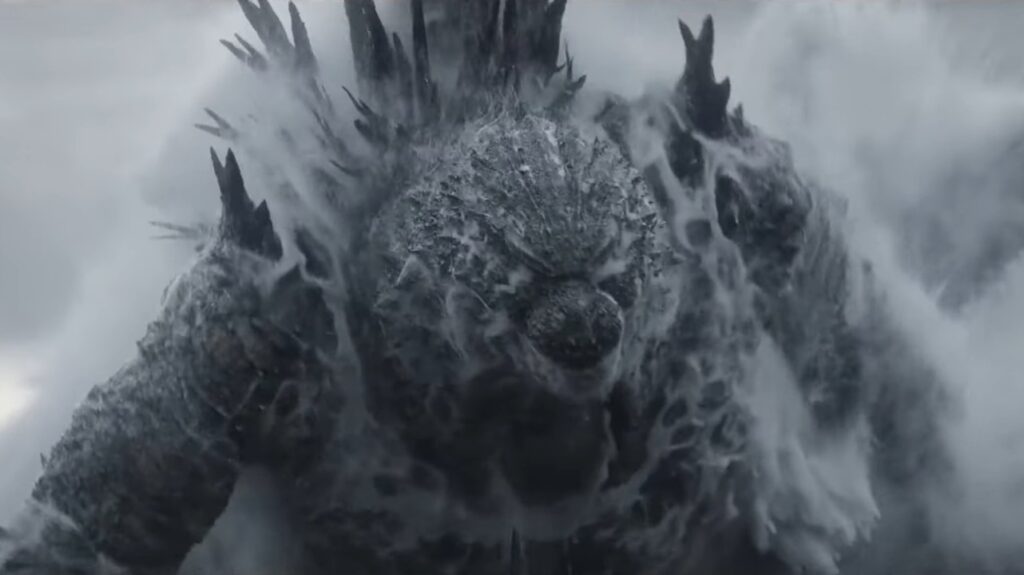
If there’s a quibble I had with Godzilla Minus Zero, it’s that certain human-heavy sequences (especially in the second act) needed more imaginative staging and camerawork. Cutting from evocative frames reinforcing Godzilla’s might to people arranged rudimentarily in an office highlights this problem. That flaw vanishes from one’s mind, though, once Godzilla’s atomic breath or Murakami’s haunted flashbacks fill the screen. Generally, Godzilla Minus Zero is a visual feast. That’s especially true in a grand finale setting a high artistic bar for any future Godzilla titles to clear.
In the middle of all the crumbling buildings and tumbling lizards, though, are emotionally rich human performances. Hidetake Yoshioka and Minami Hamabe particularly stand out amongst the cast. The former performer heartbreakingly manifests Noriko’s simultaneous desire to keep her family together and cognizance over how deeply finite her existence is. Grave mortality and heavy regret compellingly linger over so many Godzilla Minus Zero characters.
Balancing out those character-driven elements with impressive Kaiju action isn’t easy. Yet Takashi Yamazaki more than earns one of those victory dances for effortlessly pulling off such a feat. No wonder Godzilla and King Ghidorah prove so fresh and imposing throughout Godzilla Minus Zero.
Godzilla Minus Zero hits theaters everywhere on November 6.