Read also:
How to Watch FX Live Without CableHow To Watch AMC Without CableHow to Watch ABC Without CableHow to Watch Paramount Network Without CableWhether fairly or not, the ending of a work can determine one’s impression of it. A film or TV show that ends badly can leave even everything that preceded it looking worse. That’s not quite the problem with Last Seen, though the ending similarly handicaps it. Its final moments are, in fact, the most interesting choice the series makes.
While I strive to avoid spoilers, I do need to dig into this show’s conclusion a bit to do it. I won’t provide specifics, but I’ll broadly discuss the emotional state it induces. However, if you are someone who loathes even the implication of what the ending might be, skip the next paragraph.
Eschewing either a clearly tragic or upbeat ending, the final episode ends on a question: what happens next? Essentially, the entire show builds to this moment and then ends. It isn’t that everything is bad until then. It’s just that in comparison, the preceding events feel a bit more predictable, a bit less challenging. If Last Seen began with the status quo it lays out in its final moments, that’s the recipe for some truly unusual television. Instead, it comes at the end of a compelling but not especially unique child abduction tale.
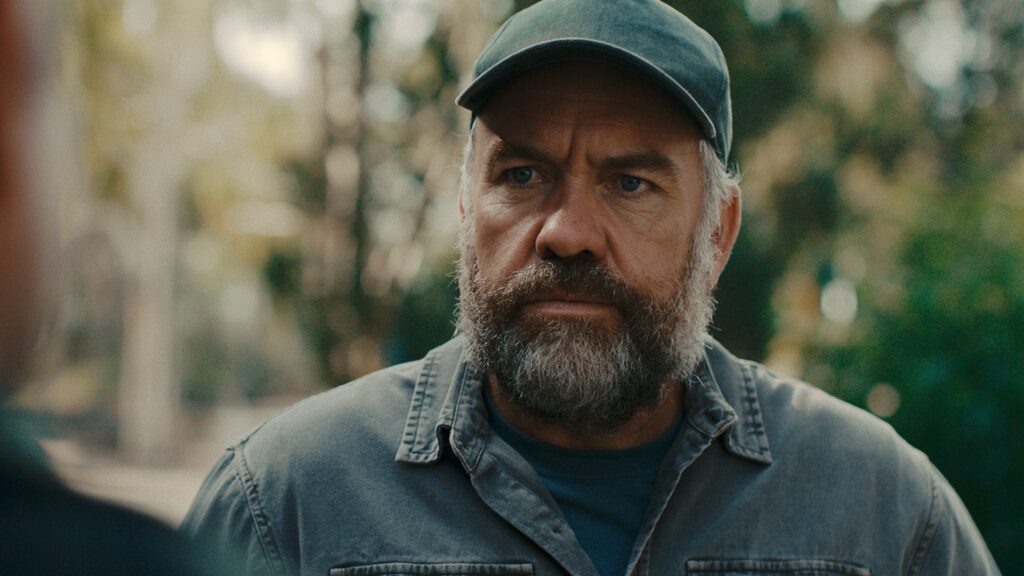
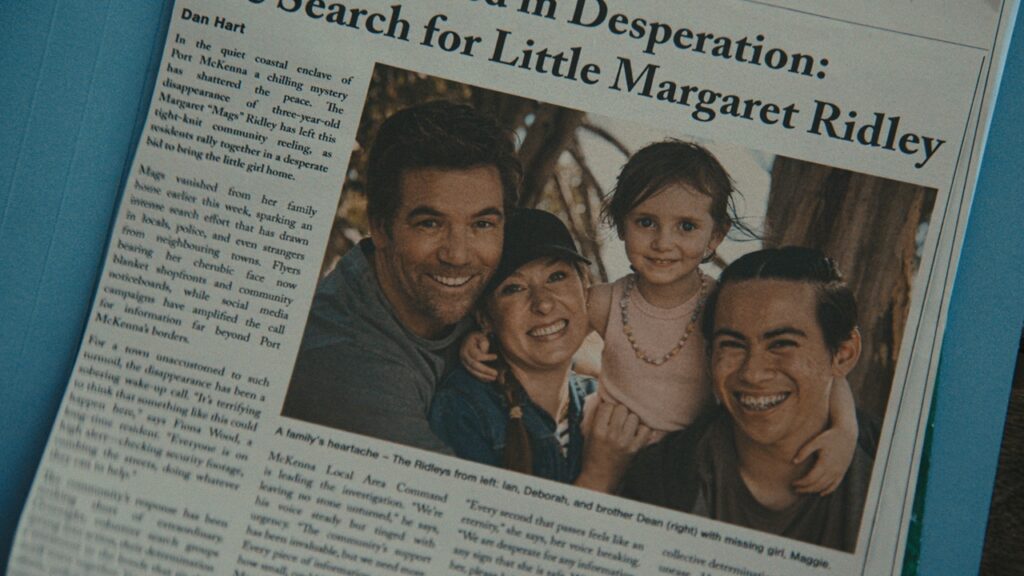
As the show opens, a series of unusual heavy rains reveal the remains of a child in a forest in Southeastern Australia. Cop turned emergency operator Ian Ridley (Patrick Brammall) is immediately certain it is the body of his daughter who disappeared from her bed 11 years earlier. His ex-wife Jenna (Maxine Peake), her new husband Bill (Bert La Bonté bringing something to a nothing part), and pretty much everyone else are more cautious. They’re right to be cautious because, as the show’s ads suggest, things are more complicated.
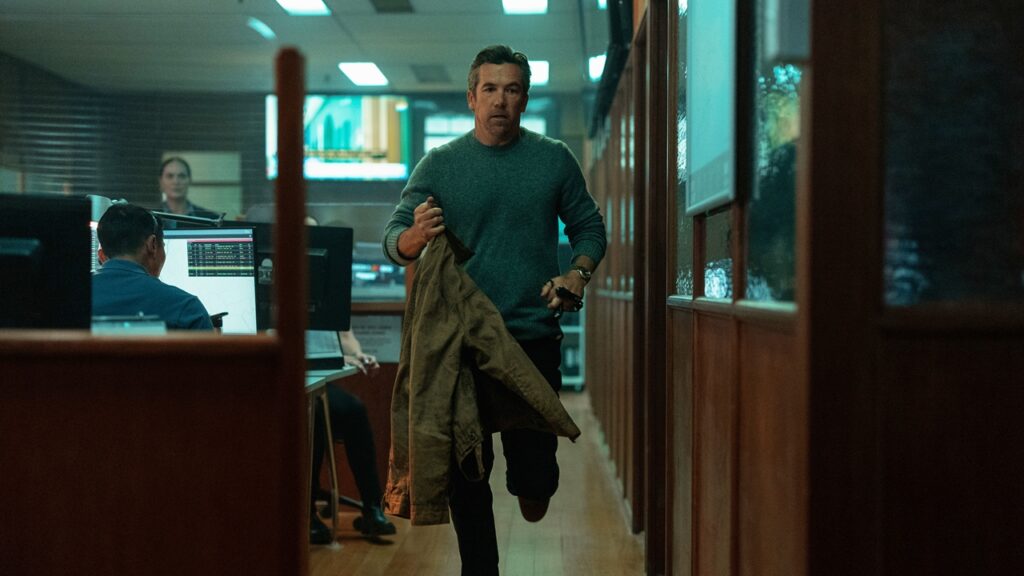
Singling out the ending as Last Seen’s strongest aspect should not be read as a wholesale dismissal of the rest of the series. There is plenty to admire, starting with performances. Brammall finds a way to pull Ian into a compelling character through his performance despite the bones being a lot of clichés—alcoholic, guilt-ridden, emotionally dysregulated, lashing out at anyone and everyone like a wounded animal—bound together. The show smartly resists canonizing him as the “only one who really cares,” while still according him plenty of empathy.
The series makes a similarly deft move with Henry Reid (Brendan Cowell), a religious isolationist whose brother Donald (Daniel Henshall) is Ian’s sobriety sponsor. Cowell plays him as assured and reliable, in contrast to Brammall’s erraticism. However, he doesn’t shy away from the character’s self-righteous superiority or frequent hypocrisy. The way he turns up his nose at his brother and Ian’s addictions (in remission) or the sins of the other townspeople while unhesitatingly declaring his opinions are, inherently, the opinions of his wife Jenna (Maxine Peake) and daughter Sarah (Chloe Jean Lourdes) is arresting. He’s another “follower” of Christ who can’t be bothered to love the people the Son of God died for.
Fundamentally, the series is a steady if unspectacular take on the material. Stories about child disappearance or abduction are inherently emotionally heavy and show creator Kris Mrksa does the weighty material justice without being exploitative. Its twists and turns are well deployed even though viewers have likely encountered nearly all of them somewhere before. It’s a solid drama that rewards attention without exactly grabbing it.
The ending isn’t the only thing holding Last Seen back, either. For a relatively short six-episode run, there is a fair amount of wheel-spinning that diminishes tension more than it builds it. The series’ decision to make the penultimate episode predominantly a flashback that focuses more on the Reids than the Ridleys is especially a momentum killer. Critics and commenters have spilled much ink about the streaming trend of the late-season flashback episode. Typically, I’m softer on it than most. Nonetheless, I am here to call this one of the most egregious deployments.
This is especially true because it reveals little that viewers hadn’t already been told in the present or could’ve surmised from other details. About the only thing to recommend it is some truly impressive de-aging work. In some ways, it makes Peake’s present-day portrayal of Jenna more impressive because it shows just how different she was—in style, body language, and energy—before her daughter’s disappearance. But that insight isn’t close to worth the tradeoff. Placed before the climax of a season that already was making a meal of situations better left as snacks, the penultimate episode is the straw that breaks the pacing camel’s back.
There’s a great idea for a series in Last Seen. Unfortunately, it spends most of the six episodes hidden. The finale finally introduces a genuinely challenging question that lingers after the credits. But it arrives too late to transform what came before. It’s difficult to enthuse too much over a show that saves its best for its literal last moments.
Last Seen starts wandering AppleTV’s woods September 9.