Read also:
How to Watch FX Live Without CableHow To Watch AMC Without CableHow to Watch ABC Without CableHow to Watch Paramount Network Without CableVietnam War flashbacks set to “Fortune Son.” “Surprise” Matt Damon cameos. Pop song dance parties at the end of American animated features. Throw in “gritty ultra-violent adaptations of Robin Hood” into this pile of “things people see all the time in movies”. That particular cinema fixture rears its head once more with The Death of Robin Hood. Writer/director Michael Sarnoski (fresh off helming Pig and A Quiet Place: Day One) at least tries differentiating this story from post-2009 Robin Hood titles headlined by Russell Crowe and Taron Edgerton by eschewing an origin story. As the title makes clear, this is about an older, grizzled version of the famous outlaw.
As The Death of Robin Hood begins, Robin Hood (Hugh Jackman) is living on his own in the hills in the 1270s. This man’s spent his life slaughtering people while taking money rather than running around in green tights and giving to the poor. Now he’s full of regret and always evading people looking to exact grisly revenge for the souls Robin Hood gruesomely killed. When his former ally Little John (Bill Skarsgård) appears asking for aid on a mission, this archer is initially apprehensive. Eventually, though, he acquiesces and unleashes his violent streak once more.
That excursion leaves Robin Hood brutally wounded and knocking on death’s door. Little John opts to drop this guy off on an isolated island nunnery. Sister Brigid (Jodie Comer) runs this domicile where nobody knows who Robin Hood is. He can start a new life here under the name Randolf. However, reminders of this man’s past keep surfacing, threatening to capsize his new life.
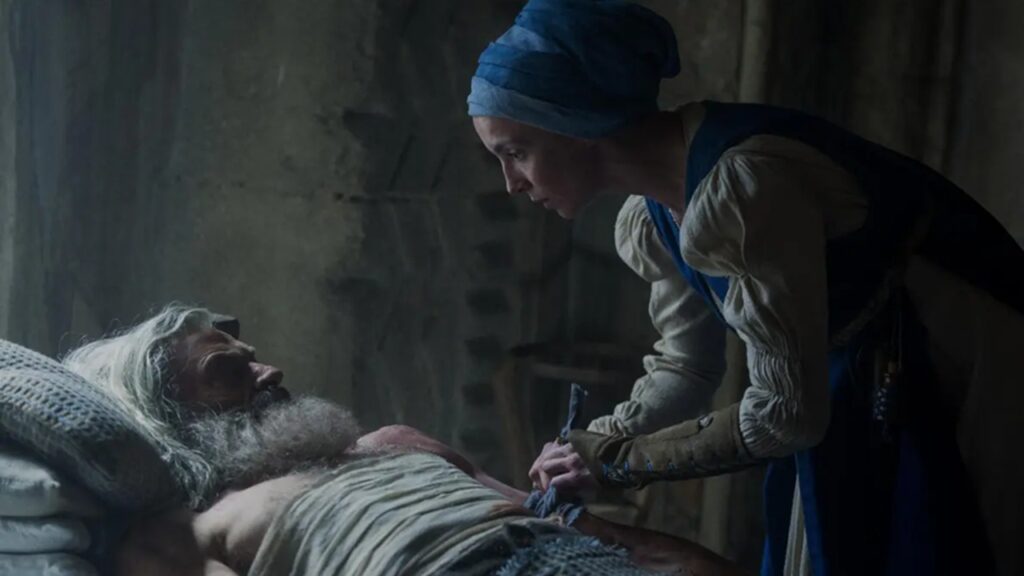
In essence, The Death of Robin Hood is like speed-running through BoJack Horseman season six, with Robin Hood being BoJack, the nunnery being Wesleyan University, and Robin Hood’s psychopathic violence being like BoJack’s time in New Mexico in terms of old sins resurfacing. This bleak production also channels themes and atmospheres preoccupying Sarnoski’s earlier works. The Death of Robin Hood especially functions as a blood-soaked companion piece to Pig. That Nicolas Cage star vehicle subverted revenge movie standards in eschewing violence.
This new Hugh Jackman film, meanwhile, emphasizes the cyclical horrors of violent revenge. All the consequences of Robin Hood and Little John constantly resorting to bloodshed make it clearer than ever why Pig’s lead character solved his problems with empathy and cooking. Speaking of food, a quiet, largely dialogue-free sequence where Robin Hood, Sister Brigid, and Little Margaret (Faith Delaney) all bond while eating soup is a highlight of the entire film.
In this tender moment (realized in an unbroken take), Sarnoski once more shows how good food and vulnerability with others create lasting bonds. Following Pig’s cuisine-centric finale and A Quiet Place: Day One’s crucial scene involving munching on pizza in a tattered jazz club, the emotional significance of combining grub and intimate connections clearly fascinates Sarnoski. It’s neat to see those specific proclivities infused into a famous fable character.
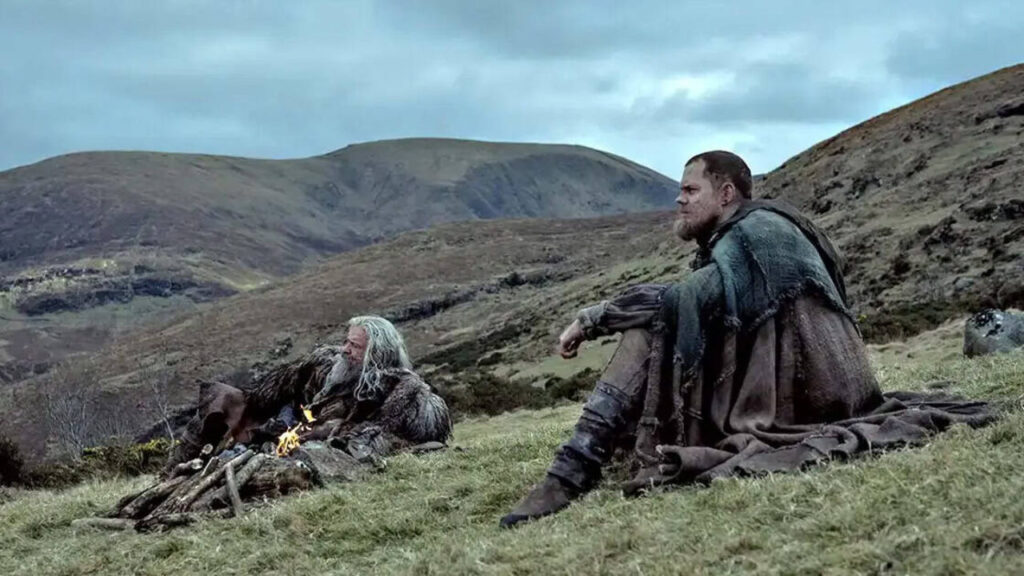
Unfortunately, the rest of The Death of Robin Hood, especially its grueling first act, is far more bereft of specificity. Robin Hood and Little John’s nighttime skirmishes with adversaries in the mud come off as Temu Northman material. The intentionally unsettling depictions of graphic violence aren’t realized with much panache or uniqueness. These explicit displays of knives puncturing women’s bellies or people’s necks are nowhere near as impactful as Lynne Ramsay keeping bloodshed off-screen in Ratcatcher or We Need to Talk About Kevin.
The Death of Robin Hood heavily struggles with its concrete and straightforward creative approach. The script, for instance, is entirely linear and only contains one scene even approaching dream-like surrealism. Characters like Sister Brigid rarely subvert audience expectations in terms of their behavior. Lorna Ó Ríordáin’s costumes opt for subdued colors typically dominating these grimdark features. Jim Ghedi’s score also deploys noises and instrumentation constantly insisting on what the audience is supposed to feel rather than submerging people in sonic uncertainty.
The moody aesthetic begs for a richly complex and challenging production. Instead, The Death of Robin Hood is immense glowering in service of surface-level creative impulses. Sarnoski and cinematographer Pat Scola at least make the proceedings look handsome once the action shifts to that nunnery. Shot on 35mm film, Robin Hood’s brightly lit sequences set on the titular character’s isolated haven look gorgeous. These luscious images certainly make it apparent why Robin Hood would want to stay here.
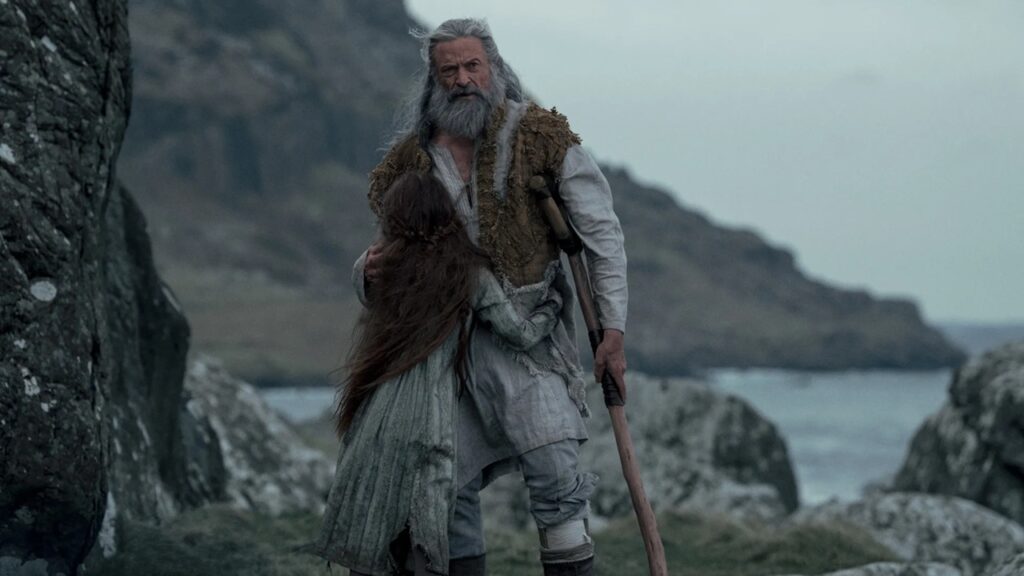
Sarnoski also uses this film to realize one of Hugh Jackman’s stronger performances. This talented actor has a habit of immense externalization threatening to disrupt quieter scenes in films like Song Sung Blue. Here, Jackman’s Robin Hood has to keep quiet on his new island home lest he blow his cover (he’s also old and tired). This means Jackman’s forced to play things more withdrawn to solid effect. The Death of Robin Hood’s final scene features some especially sublime work.
Unfortunately, it’s a long, sometimes tedious road to get to that ending. While Pig’s slower aesthetic beautifully reminded audiences to appreciate life’s tinier joys (like savoring your swine companion), The Death of Robin Hood pacing simply makes its more shallow impulses extra apparent. A dour disposition and echoing moving moments from Michael Sarnoski’s past works isn’t enough to lend this production immense depth. Perhaps an inexplicable “Fortune Son” needle drop would’ve livened up the proceedings.
The Death of Robin Hood is now playing and exuding Merry Men angst in theaters everywhere.