Read also:
How to Watch FX Live Without CableHow To Watch AMC Without CableHow to Watch ABC Without CableHow to Watch Paramount Network Without CableIn Spinal Tap, there’s a moment where Marty Di Bergi (Rob Reiner) shares some album reviews with the band. One in particular, Shark Sandwich, earns the two-word critique, “Shit Sandwich.” Some titles are just too perfect. And so it is with The Dink, AppleTV’s new pickleball film from director Josh Greenbaum and a script by Connecticut’s own Sean Clements. For New Englanders like myself and Clements, a dink is a jerk. But, in racquet sports parlance, it is a light shot that drops immediately after crossing a net or bouncing off a wall. It is that latter definition that captures the movie’s essence. The Dink is a dink, a light comedy that immediately evaporates once the credits roll.
Dusty Boyd’s (Jake Johnson) tale is a sad but familiar one in sports. A kid phenom, he reached his apex—a match against fellow rising star Andy Roddick. Dusty’s great opportunity slipped through his fingers when he fell on a puddle in the bathroom, breaking his wrist, an incident he insists was an act of sabotage by Roddick. These days Boyd is a “pro” at his dad Chuck’s (Ed Harris) tennis club. Roddick, on the other hand, won the US Open in 2003 and scored a career winning percentage of nearly 75%.
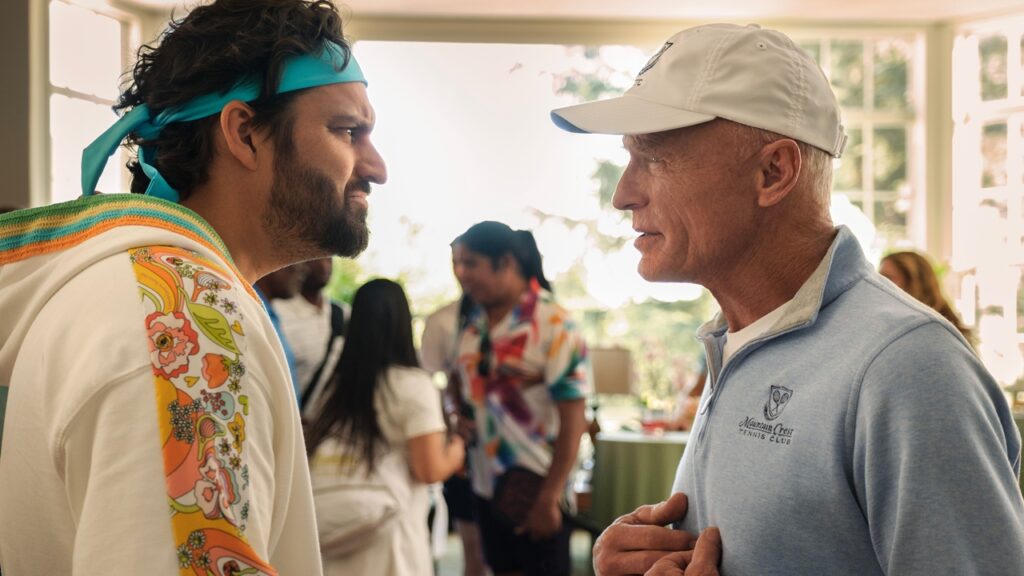
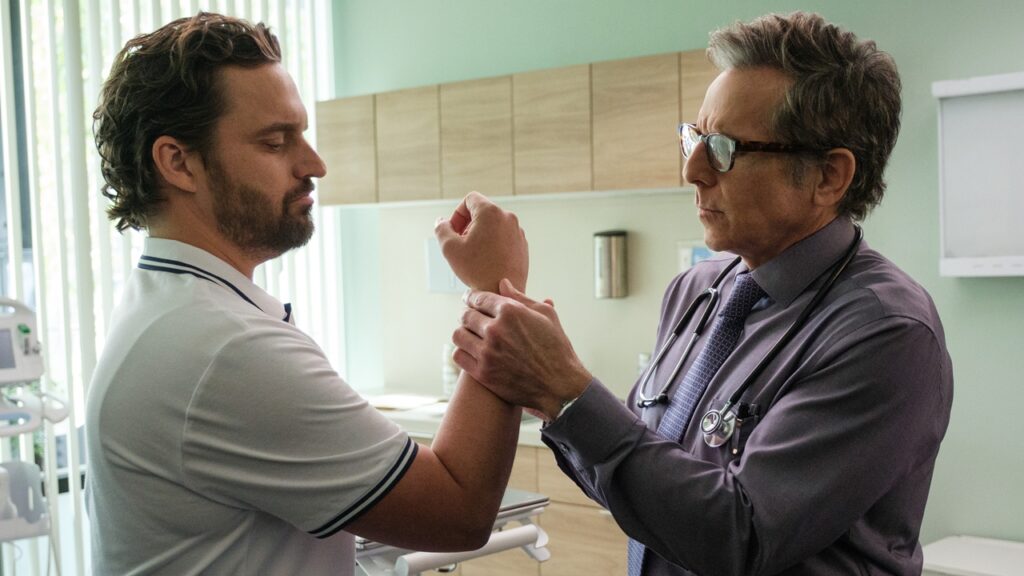
When hotdogging to impress his stoic patriarch, Dusty aggravates his old injury. To recover, Dr. Stone (Ben Stiller) recommends taking up pickleball. And those sites that promise older singles in your area. Not that he’s ever used them. Embarrassed but driven to re-earn daddy’s love, Dusty gives in and joins a league. There he meets Candace (Mary Steenburgen) and an improbable connection forms. Gentle chuckling ensues.
There have been some comparisons to Happy Gilmore and some of Will Ferrell’s sports comedies in the press and early reviews of The Dink. Structurally, this makes sense, but in practice, not so much. While Johnson can bring the mix of manic rage and desperation that both of those other actors are known for, in this movie it is decidedly muted. He flies off the handle a couple of times, but largely he’s more of a sad guy than an angry one. The movie never achieves the variety of bizarreness those films did either. It’s only in its celebrity cameos where the film feels particularly aligned with those previous efforts. Even then, the work of Roddick and a late appearance by Sandler favorite John McEnroe feels less intense.
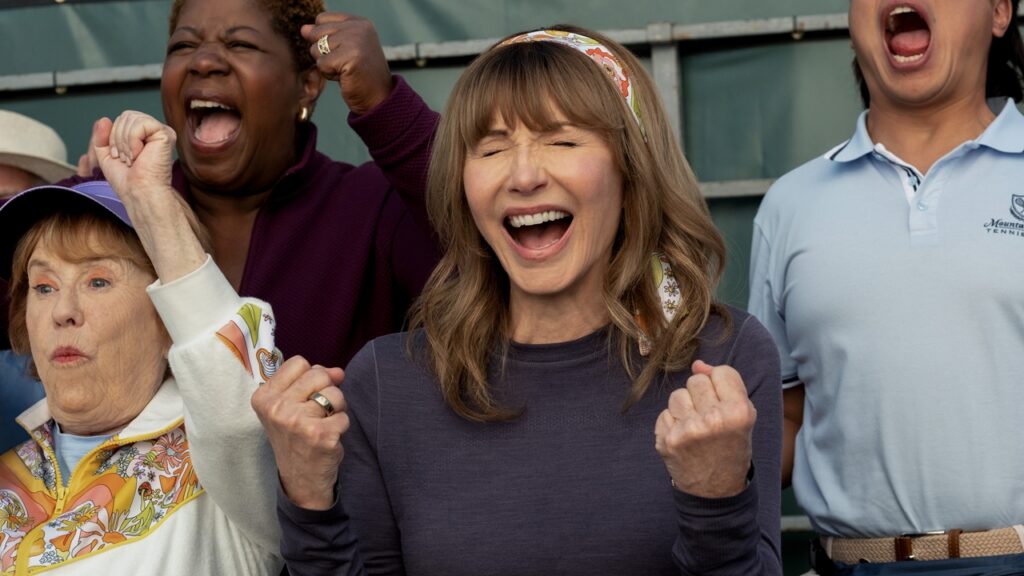
Why should it? It is understandable to anticipate it fitting into that legacy with a script from one half of the Hollywood Handbook team, helmed by the director of the upcoming Spaceballs 2, and featuring supporting turns by comedy ringers like Stiller, Patton Oswalt, Lennon Parham, and Chris Parnell. However, that doesn’t seem to be the film’s intent. Its gentleness is a feature, not a bug. The action is much more about relationships—especially between Dusty and Candace—the joys of a borderline embarrassing sport, and the enduring power of actually decent country music. That’s fine. You review what exists, not the movie you expected going in. And on that front, this is a solid “manbaby finally gives up on his delusions and discovers happiness” story.
As noted above, the main delivery system for this is in the interactions between Johnson and Steenburgen. Steenburgen is such a warm on-camera presence that it can be easy to forget she can be funny as well. She uses it well here, undercutting Johnson’s bigger moments with sly asides and mildly exasperated body language. In response, Johnson does well with illuminating how small Dusty’s world is without it ever becoming overly depressing. He sells the various humiliations visited upon the never-was in a time that doesn’t make him so tragic that he becomes impossible to enjoy. It’s a tough line to walk, but he finds it and keeps steady on it throughout
Truth be told, the best jokes in The Dink take place mostly outside the core dynamic. Harris, ever the pro, is an unexpected MVP. His almost pathological lack of caring about how his attitude affects his son earns plenty of laughs. What really kills, though, is his antagonism towards Oswalt’s pickleball booster. That Harris commits to everything with stone-faced sincerity ensures that the few moments of actual dramatic juice don’t feel phoned in or out of step with the rest of the film, either.
In the end, the film lives up to its name. Everything—the director, the writer, the names on the callsheet—suggests a comedy lining up for a huge overhead smash. Instead, it delivers a light tapper, good enough for smiles and warm feelings but nothing that will leave audiences guffawing.
The Dink approaches the net on AppleTV starting July 24.