Read also:
How to Watch FX Live Without CableHow To Watch AMC Without CableHow to Watch ABC Without CableHow to Watch Paramount Network Without CableWriter/director Radu Jude’s Kontinental ’25 begins with Ion (Gabriel Spahiu), an unhoused former athlete, washing up in a park surrounded by animatronic dinosaurs. From there, Jude’s camera captures Spahiu traipsing through various worn-down locales in a series of unblinking wide shots. At times, he inquires at an eatery whether diners have any work for him. At others, he just silently walks across the frame until reaching his temporary home, an apartment basement. As he journeys, the screen fills with a sampling of the lives on street corners so many avert their eyes from.
Before Ion can even settle in the cellar, Orsolya (Eszter Tompa) shows up with masked guards. They’re there to escort him off the premises so the building’s owners can begin demolishing the place. In its stead will soon stand a snazzy new hotel, embracing “progress” over humane action. When Ion requests a few minutes to pack, Orsolya grants the request. By the time she returns, he’s hung himself rather than face what awaits him back on the streets. Orsolya finds herself grappling with her complicity in his death, wracked with guilt.
Jude’s Kontinental ’25 continues the filmmaker’s commitment to unflinchingly chronicle the world as a modern Hell. His previous feature, Do Not Expect Too Much from the End of the World, was one of 2024’s greatest triumphs, a dark comedy gem exploring the spread of late-stage capitalism’s dehumanizing tendrils into life’s every corner. 2018’s I Do Not Care If We Go Down in History as Barbarians, meanwhile, reckoned with people’s willingness to accept hagiographic visions of historical monsters over messy, brutal reality.
Just because “Tell Me It’s Over” isn’t as extraordinary an Avril Lavigne tune as “Girlfriend” doesn’t mean it isn’t worth listening to. So it is with Kontinental ’25. While not as masterful as Do Not Expect Too Much from the End of the World, it still boasts plenty of insightful commentary and bleak gags worth seeing. Using an approach that calls to mind classic hangout movies, much of this script focuses on people chatting about life’s challenges while lingering on benches or slurping booze in the park. These laidback vibes quietly reinforce how we often go about “normal” lives while the unspeakable transpires. The unhoused, the oppressed, wars, dead bodies. None of it seems enough to disrupt so many’s mundane existence.
The script accentuates that reflexive apathy with an unflinching look at the volume of dehumanizing rhetoric in everyday conversations. Orsolya constantly encounters people nonchalantly referring to Ion as an “idiot” or “criminal”. Even a priest offers a posthumous scolding over words of comfort. They’re often just a piece of larger conversational tapestries, unmarked by dramatic music cues or camera moves. When citizens so easily dehumanize people in their own city, is it any wonder they seem unmoved by injustice abroad?
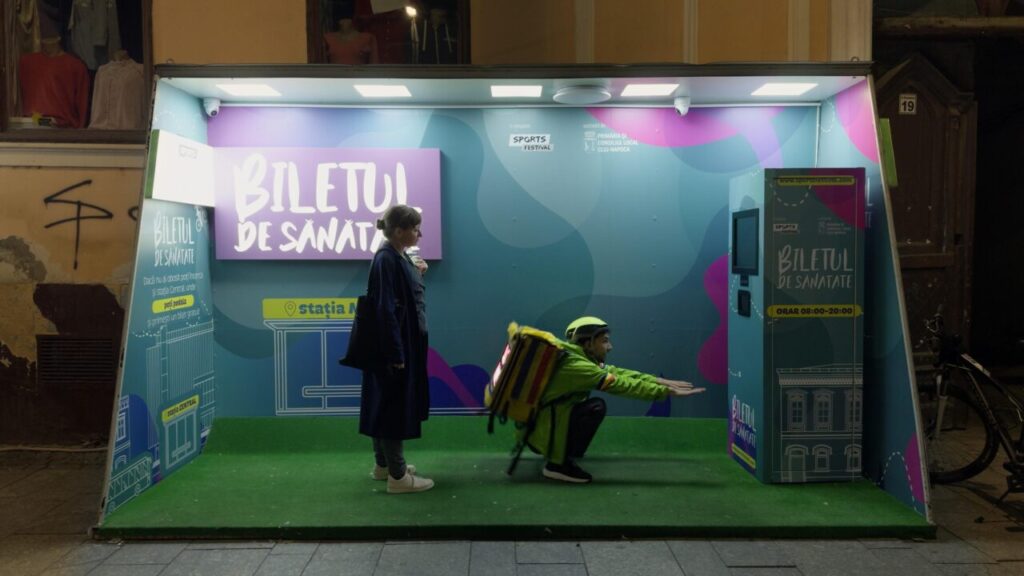
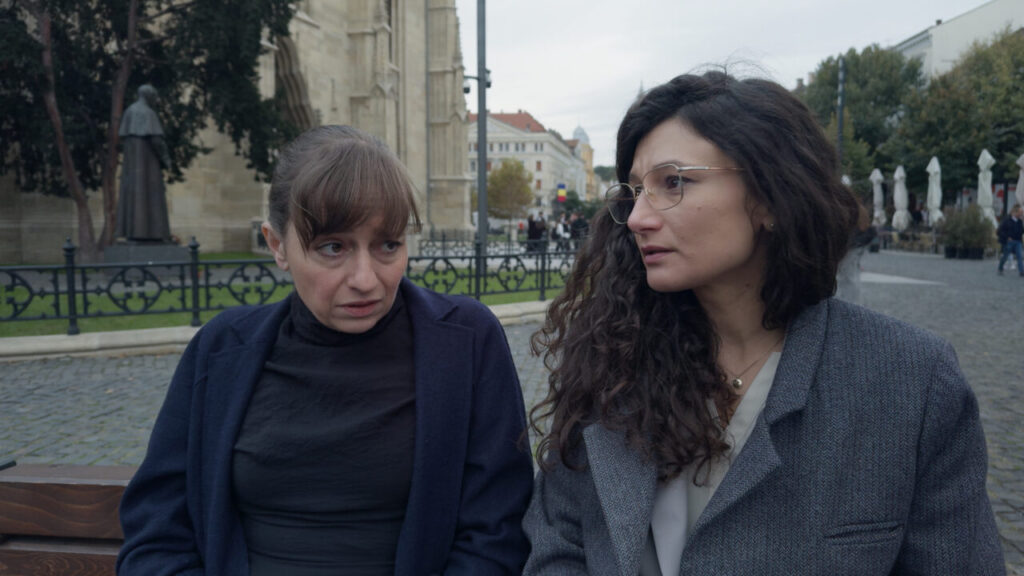
Orsolya’s search for remedies to her guilt acts as a microcosm of how so many work to ease their tormented souls. Despite not going to church in ages, she seeks counsel from a priest. She engages in fleeting sex. She Zelles her friend money for sick, unhoused boy she refuses to meet. Orsolya isn’t evil. Nonetheless, she resorts to ill-advised, often self-serving solutions to chase away complicated feelings rather than process them and take responsibility for her actions. This jagged messiness is both incredibly authentic and a great vessel for dark comedy.
In addition to being authentic in its jagged messiness, the film is a great vessel for dark comedy. Orsolya’s sexual rendezvous, for instance, is grimly hysterical, pushed to the background by a backpack sporting a neon “I AM ROMANIAN” sign. Orsolya’s encounter with a priest is similarly hilarious as a child’s toy car robs him of any sense of authority. Just as Jude’s use of the wideframe earlier emphasized the not-so-hidden lives of the unhoused, it emphasizes the dark humor here as well.
The lack of visual versatility compared to the more expansive and eclectic Do Not Expect Too Much From the End of the World ensures Kontinental ’25 isn’t peak Jude. On the other hand, it resonates thematically. It may lack visual surprises, but that intentional stagnancy reflects Orsolya’s psychological rut. The medium is the message.
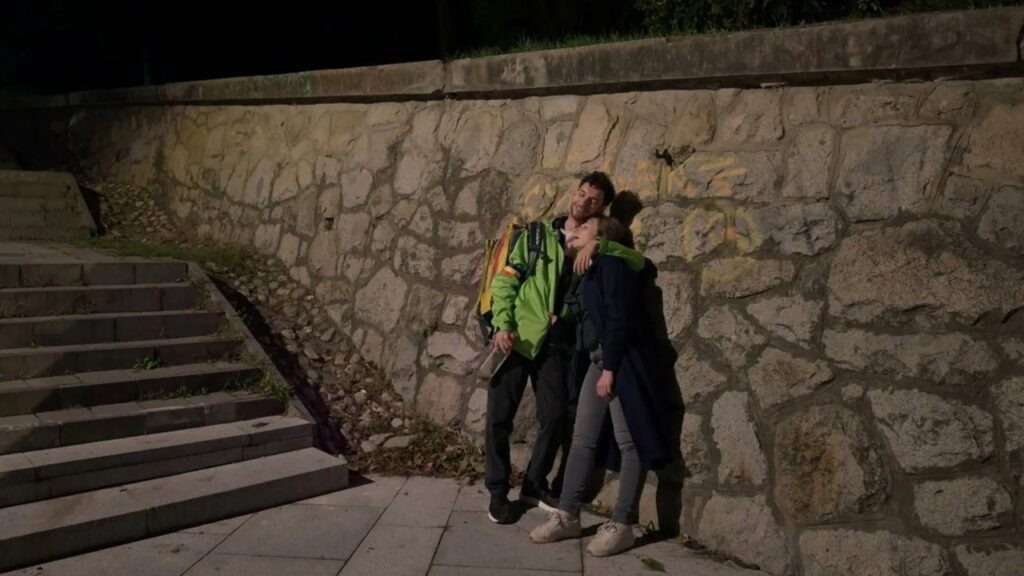
Additionally, while lacking in surprise, the camera still captures plenty. For example, early in Ion’s wandering, he walks past a chalk-scribbled Instagram handle on the park’s concrete steps. Later, Orsolya traipses across those same steps in her drunken nighttime exploits. Returning to that sight tacitly underscores the characters’ shared reality. No matter how hard Orsolya once tried to ignore that truth or attempts to escape it now, there it is. Bound together by the marketing that saturates every bit of our existence. Joined in deserving dignity. Only economic status differentiates them. Jude is one of the few modern filmmakers who could imbue fleetingly seen chalk scribbles with so much commentary.
It feels worth noting that one of the film’s best aspects is made possible by our world changing, however slightly, for the better. As Orsolya is Hungarian, the film repeatedly references Prime Minister Viktor Orbán. Recent election results tossed him out of office, making the film delightfully out of date. Huzzah for the collapse of Orbán’s power. Huzzah for Jude’s commitment to confronting our darkest realities with insight and humor.
Kontinental ’25 is metaphorically chalking the stairs of select theaters now.