Read also:
How to Watch FX Live Without CableHow To Watch AMC Without CableHow to Watch ABC Without CableHow to Watch Paramount Network Without CableFor those of us born after 1987-ish, so many tangible snapshots of yesteryear exist. We were the first generation to grow up with parents constantly clutching camcorders and more portable than ever cameras. The folks raising us captured every possible moment of our respective childhoods. Meanwhile, the selfie entered our lexicon once we reached our twenties. No prior generation has had such accessible, concrete tools to chronicle everyday reality. Yet no technological advancements can erase the pain and uncertainty human beings have always grappled with when considering the past.
On the contrary, those “definitive” fragments from childhood can only enhance those emotions. Why do our psychological recollections of the past not line up with those grinning and harmonious images nestled in scrapbook pages? No matter what tools we have, answers about existence and the people closest to us remain elusive.
Someday, Blue Heron lead Sasha (Eylul Guven) will know this reality. It will torment here. Gnaw at her. For now, though, she’s a child adjusting to the new home she, her parents, Mother (Iringó Réti), and Father (Ádám Tompa), and her siblings have moved into. Among those siblings is quietly tormented teenager Jeremy (Edik Beddoes), who’s just…off. He’s always disobeying his parents, slamming basketballs against walls, or suddenly vanishing. The strained relationship between Jeremy and his family becomes even more contentious in this new domicile.
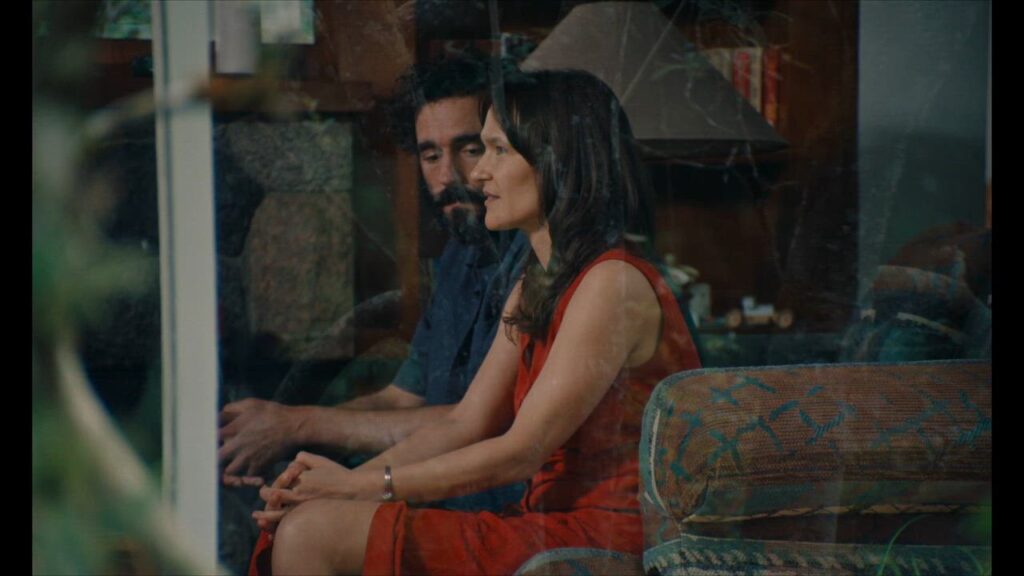
Writer/director Sophy Romvari plunges audiences headfirst into adolescent Sasha’s world. There’s no omnipresent narrator or ham-fisted expository dialogue to lay plain the underlying character dynamics. Instead, Blue Heron’s visuals alternate between evoking observational cinema or a person’s own memories. The latter element fascinatingly informs many evocative details. This includes how certain scenes (like Sasha getting stuck on a neighbor’s pool) abruptly begin or end. Our recollections of yesteryear are often jagged and imperfect. We don’t remember everything. To boot, as children, we don’t understand everything happening around us.
Thus, intentional incompleteness or obscured gazes of reality creatively populate Blue Heron’s images. Romvari and cinematographer Maya Bankovic masterfully capture the idea of much-needed answers or clarity always being just out of reach. For instance, Sasha watches, from a grimy window, her Father and Jeremy engaging in a tense, sometimes physical conversation. She and the audience can see the two interacting, but the camera never goes inside the basement. Instead, the viewer is kept outside with Sasha. The glass window barrier maintains ambiguity around their exchange.
Such visuals are incredibly executed just on a technical level alone. They’re also remarkably effective in stealthily putting viewers inside Sasha’s mind. A similar feat materializes through a lengthy single-take sequence where this girl asks Mother if a friend can come over. She then struggles explaining to her daughter why that isn’t a good idea, given Jeremy’s current issues. All the while, the camera lingers on Mother’s hands squeezing a bowl of potato skins. Her face isn’t shown here, while Sasha remains a blurry background figure.
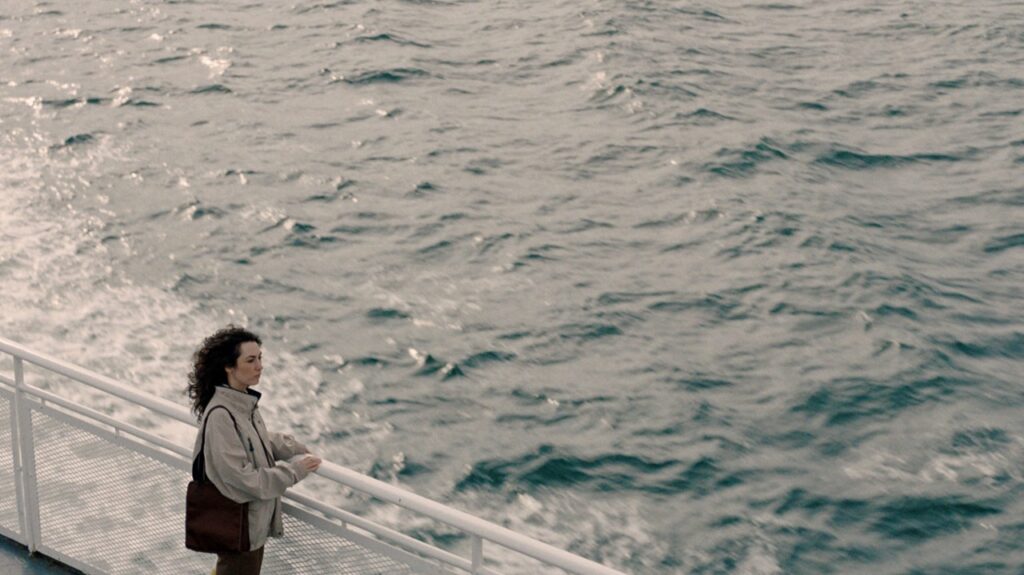
The unexpected camera placement here evokes similarly subversive camera positioning in Dea Kulumbegashvili’s April. It also instills so many stirring interpretations in the viewer. Is this blocking emphasizing how Mother’s hand-based actions provide a greater glimpse into her psyche than her face? Perhaps this reflects how an adult Sasha scrambles for clues about her brother anywhere (including in Mother’s hands) when revisiting her memories. The visual priorities of this and other extraordinary Blue Heron segments are both immediately compelling and lastingly thought-provoking.
Such images are tremendous to experience on a movie theater screen. The same goes for Blue Heron’s sound design. This quiet title features a subtly detailed sonic landscape that comes alive through a theater’s surround sound system. For instance, a pivotal sequence involving Mother and Father figuring out Jeremy’s future features the distant sound of What’s Opera, Doc? playing somewhere in the house. The kids are happily watching television unaware that potentially seismic changes are afoot just a few rooms down. That tragic reality hits one like a ton of bricks thanks to this scene’s deeply presence auditory qualities that come alive in a theatrical setting.
Such impressive artistry defines Blue Heron. Perhaps the most important artistic accomplishment, though, is Romvari’s use of silence. This element proves critical in exploring Sasha’s childhood experiences and Adult Sasha (Amy Zimmer) straining for answers. In the void where dialogue might go, uncertainty festers. Sometimes, that materializes in major ways, like Jeremy refusing to talk to his mother as he repeatedly slams a basketball against a wall. Other times, silence manifests in subtler ways, like a scene showing older Sasha cooking breakfast. This unhurried glimpse into her ordinary life suggests uncertainty over the past follows her even in the most banal segments of her existence.
Silence proves critical in Romvari’s devastating yet subtle vision. Equally important is this filmmaker emphasizing the significance of flippant parts of existence. A scene where young Sasha and Father bond especially encapsulates this feat. Once his daughter asks why her mothers at the doctor, Father, unable to provide the answers Sasha wants, shows her something he can control and explain: MS Paint. This youngster is in awe, drawing her favorite stuffed animal (Mrs. Mousey) and changing the backgrounds to pink.

Romvari’s shooting of this moment is intentionally not grandiose or wistful. However, as the warm hues from the computer dance over these two souls, this moment’s eventual significance is astonishingly palpable. This will become a “throwaway” father/daughter experience they both treasure. This must be the kind of tender moment Sasha replays in her mind over and over again as an adult, searching for clues about her upbringing.
How could this joy exist in a household so tormented? How could Jeremy be so aloof yet have Sasha asking so many questions? Why do those images of Sasha and her siblings smiling feel like they’re from another reality? Blue Heron’s quietly somber ambiance and most distinctive visual flourishes provide a perfect bedrock for such weighty questions.
Answers cannot be easily found in old photographs. Folks born in Sasha’s generation have countless snapshots of their youth. However, they’re just fragments of the past, not revelations. Complete understanding will always elude us, no matter how many records of childhood endure. That’s a brutal part of reality. Art like Blue Heron that so deftly confronts those truths is essential. Gaze upon the silences and empty spaces Sophy Romvari’s camera emphasizes. You’ll witness something unshakably aching.
Blue Heron is now playing in select theaters and will expand into further locations in the coming weeks.