Read also:
How to Watch FX Live Without CableHow To Watch AMC Without CableHow to Watch ABC Without CableHow to Watch Paramount Network Without CableForgotten Island is in the upper echelon of movies that sometimes made me wish the filmmakers and characters popped some Vyvanse. In a post-LEGO Movie world, super hyperactive CG animated comedies (mimicking the rapid-fire sensibilities of younger audiences raised on internet scrolling) have long become the norm. Typically, that aesthetic is exhilarating rather than exhausting. Titles like the Spider-Verse masterpieces, Teenage Mutant Ninja Turtles: Mutant Mayhem, and The Mitchells vs. The Machines use pervasive briskness to unlock incredibly distinctive gags and make quieter emotional scenes really stand out.
Forgotten Island also gets some effective mileage out of this whirlwind aesthetic. However, there are also set pieces and gags so noisy that they made me quote Samuel L. Jackson in The Hateful Eight: “Let’s slow it down. Let’s slow it…way…down.” Not everyone can perfectly replicate the breakneck Phil Lord & Chris Miller/Nimona aesthetic. Even with segments that’ll make audiences curse forgetting their Adderall, Forgotten Island is still a sumptuous delight.
As kids in the Philippines, the boisterous Josephine “Jo” Yuson (H.E.R.) and bookworm Raissa Molina (Liza Soberano) were often alone. One day at school, they’re both sent to the principal. Here, they swear a pact to become best friends. Bonding over Jo’s grandma Lola Fatima’s (Dolly de Leon) stories about the island of Nakali and all its magical inhabitants only brings the duo closer. Over the next decade, Jo and Raissa share countless memories and grow inseparable. Unfortunately, now that adulthood’s arrived, they’re heading in different directions.
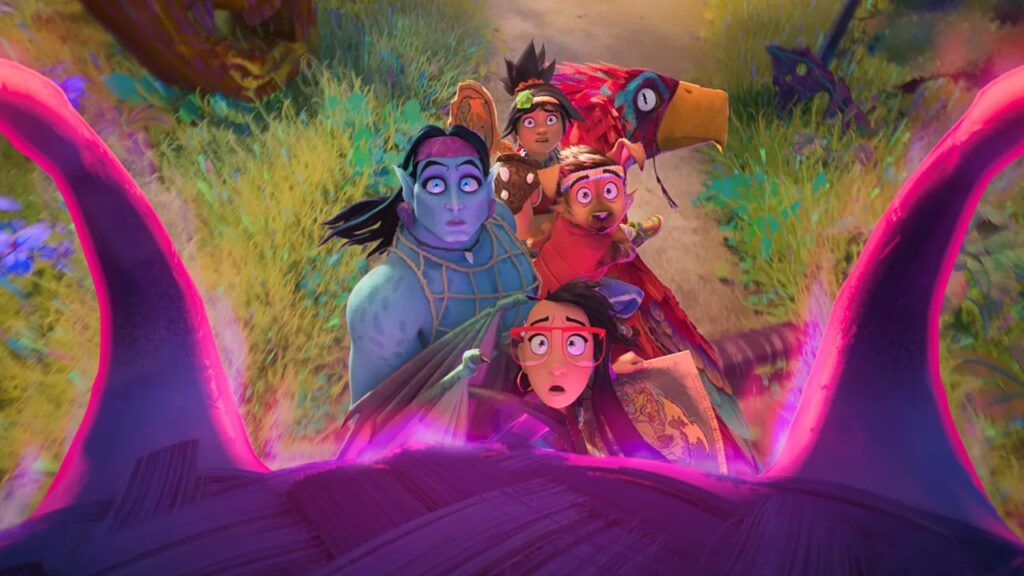
Jo is adrift. She’s struggling launching her life. Raissa, meanwhile, is going to Caltech in America, which means she’ll be apart from her best friend. While the pair share one last night partying before Raissa’s departure, they stumble on a glowing trinket transporting them to Nakali. This place is real as are all the mystical creatures of Filipino folklore that call Nakali home. That includes goofballs like weredog Raww (Dave Franco), but also the formidable, bloodthirsty flying Manang (Lea Salonga). With no memory of their first 12 hours on this island nor that trinket that can bring them home, Jo and Raissa must traverse Nakali and all its perils.
Forgotten Island writer/directors Joel Crawford and Januel Mercado really excel with montage sequences. Granted, I’m a sucker for montages. Just ask that 90 years of Oscars segment I’ve watched countless times. Still, the biggest Forgotten Island montages demonstrate the film’s peak craftsmanship. An opening sequence showing ten years of Joe and Raissa bonding set to INXS’s “Never Tear Us Apart,” for instance, is so darn moving.
The events bringing the pair together (like giving a gory school presentation on Manang) are so thoughtfully specific. Crawford and Mercado carve out school triumphs, hospital stays, and movie-watching memories singular to these characters. Yet their emotions are ones everyone’s experienced with their ride-or-die chums. These montages also get tremendous mileage relying heavily on visual storytelling.
Dialogue’s minimized as striking character animation and vibrant musical choices (including terrific original orchestral tracks from composer Nathan Matthew David) guide the audience through formative Jo and Raissa memories. Marinating in wistful sequences realized through gorgeous animation doesn’t just produce excellent visual storytelling. It also makes Joe and Raissa’s friendship all the more involving. Hooray for quality montages!
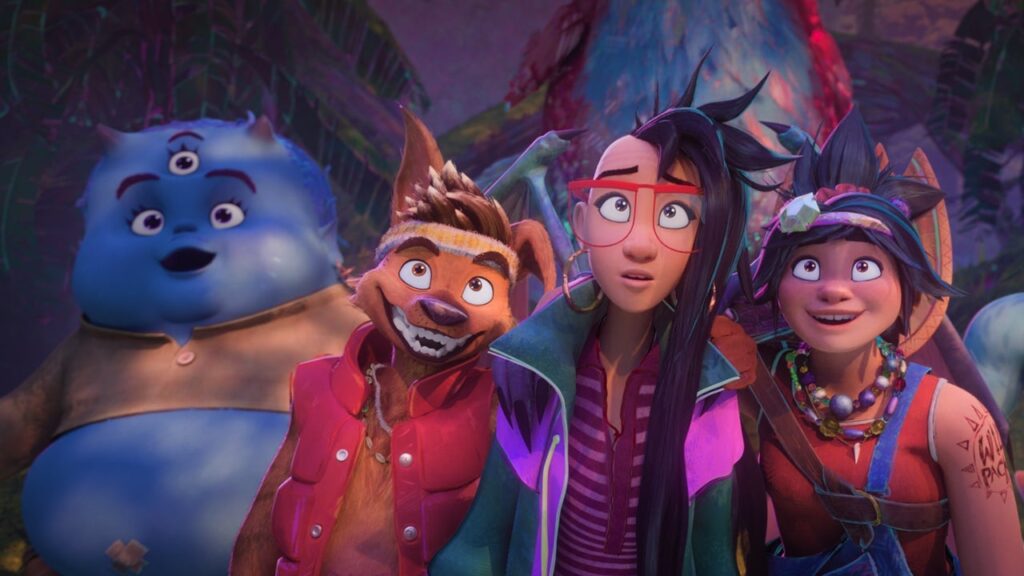
Speaking of visual Forgotten Island triumphs, this film’s animation absolutely sparkles full of color. Here is a 109-minute antithesis to all the modern motion pictures frustratingly devoid of bright hues. Netflix CEO’s and the people behind Disney’s drab live-action remakes will have a heart attack upon seeing Forgotten Island. Vibrant purples and greens especially dominate so many backdrops. Meanwhile, all the characters (like a gigantic red bird Jo bonds with) are draped in similarly pronounced colors. Even dark Manang-focused sequences feature bright (albeit ominous) red tints scattered around the frame.
Forgotten Island is an explosion of confidently realized trippy colors rendering every setting (from ordinary classrooms to realms housing specific Nakali tribes) dazzling. Meanwhile, Crawford and Mercado’s 2D-inspired flourishes on their last directorial effort, Puss in Boots: The Last Wish, persist here (the hand-drawn explosions return from that sequel). However, they amplify these traits for certain scenes. The duo’s imaginative visual streak now manifests through delightful anime-inspired hand-drawn segments.
So many pre-2020 DreamWorks Animation CG features (like Turbo or Mr. Peabody & Sherman) frustratingly adhered to “realism” in their backgrounds and textures. Further accentuating Forgotten Island’s innately heightened aesthetic through anime cutaways is a refreshing departure from that norm. Reject realism. Embrace a dog-man imagining himself as a beefy anime strongman. The 2D influences even extend to giving each CG character eyes that look like they’re sketched with pencils and hand-painted.
Speaking of heightened imagery, leaning on zanier, decidedly unrealistic animation affords Forgotten Island the flexibility to deliver deeply amusing dark jokes. A visual gag involving an imposing knife and an umbilical cord is a prime example of this. On the opposite side of the tonal spectrum, this aesthetic allows images dabbling in body horror. Manang tearing her body in two sentient halves wouldn’t be permissible in something adhering to ultra-realism.
Unfortunately, the creativity informing Forgotten Island’s greatest visual strengths and most impactful emotional moments isn’t pervasive in the entire film. Crawford and Mercado fall back on some frustratingly familiar material to inform certain gags or character beats. The pop song needle drops (like “Baby Got Back” and “Don’t Stop Believin’”), for example, have been done to death in pop culture. A lengthy fart joke, trying to wring laughs out of characters simply saying “tushy”, or a mid-movie Jo and Raissa rap, meanwhile, are stabs at comedy lifted from so many other 21st century animated family films.
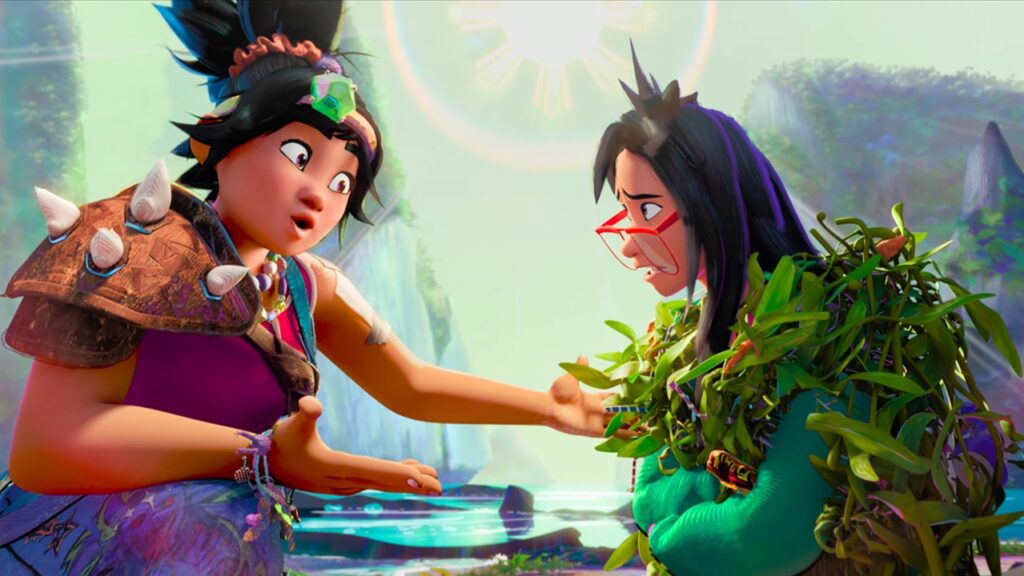
Then there are those excessively hyperactive segments where Crawford and Mercado lean on outsized comic sidekicks (like Raww) screaming or wailing to generate guffaws. Even when Forgotten Island succumbs to its noisiest impulses, at least it always looks gorgeous. Plus, Crawford and Mercado’s deft handling of emotionally raw material from The Last Wish means the duo knows to dial down the wacky ruckus when it’s time for vulnerability to take central stage.
Liza Soberano’s richly human voice acting excellently complements these creative instincts. Handed a familiar kid’s movie/buddy comedy archetype (the stick-in-the-mud intellectual), Soberano breathes specificity and heart into Raissa. She’s especially adept portraying Raissa’s fluctuating feelings towards other Forgotten Island figures like some demon wings attached to her shoulders or even Jo. Raissa’s most euphoric happiness or devastating discouragement all sound so natural and interconnected in her hands.
With Soberano leading a strong crop of voice-over performances and such radiant animation, Forgotten Island’s a whirlwind voyage worth taking. Just keep some Ibuprofen handy for when things get too hyperactive and noisy.
Forgotten Island washes up in movie theaters everywhere on September 25.