Read also:
How to Watch FX Live Without CableHow To Watch AMC Without CableHow to Watch ABC Without CableHow to Watch Paramount Network Without Cable“It seems I’m filming my life in order to have a life to film, like some primitive organism that somehow nourishes itself by devouring itself, growing as it diminishes.” Director Ross McElwee uttered these words in his 1985 documentary Sherman’s March, which chronicled the perpetually single McElwee searching for romance across the South. This feature didn’t just deliver amusing dry comedic narration or endearing off-the-cuff portraits of everyday life. It also contemplated the act of filming itself. McElwee constantly kept the camera rolling, preserving everything in visual historical documents.
Yet, if all the camera did was keep him distant from people, what did it preserve? Who is McElwee beyond what he films? What even is reality when it comes to documentary cinema?
The unflinching pensiveness and vulnerability underlying McElwee’s most famous documentary return to service more tragic needs in Remake. Within the film’s first few minutes, Ross McElwee openly reveals that his son, Adrian McElwee, is dead. As home video footage of Adrian as a child plays onscreen, these images suddenly take on a shattering quality.
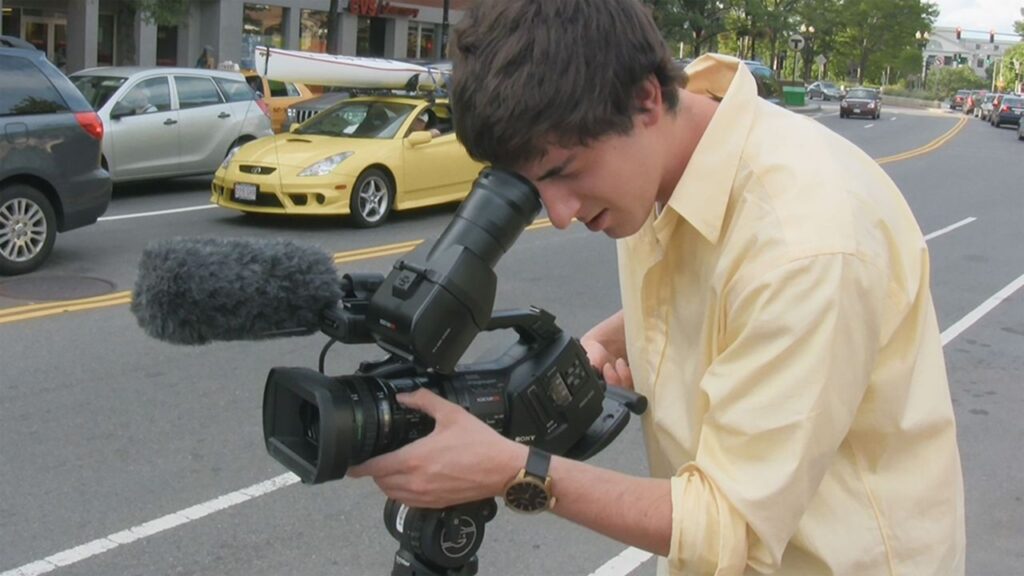
From there, Remake takes viewers back years earlier. Ross has received an unexpected offer: Hollywood producers want to remake Sherman’s March as a fictional narrative film. Adrian often films his ruminations over this offer. This young man harbors ambitions of becoming a filmmaker too (though he’s also got interests in rock music, web design, skateboarding, among other passions). He’s also struggling with addiction, a sickness often inspiring a frayed relationship between himself and his father.
Ross McElwee’s form for Remake is an occasionally non-linear exercise making use of archival home video footage or videos shot at fancy film festivals he and his son were promoting features like Photographic Memory. Old camcorder recordings of Ross McElwee playing with his children (including Adrian) in Paraguay or their backyard were never meant to exist in a theatrical feature film. The closest thing to a long-term purpose they held was potential nostalgia decades down the line. “I hoped we could watch these someday when you had kids of your own,” Ross narrates over early images of his son fishing.
Yet now they materialize in Remake as if their memories flickering through Ross’s mind. At times, Remake visually manifests wandering through this father’s psyche. Other times it’s a cinematic letter to a lost son. In either mold, it’s a compelling work.
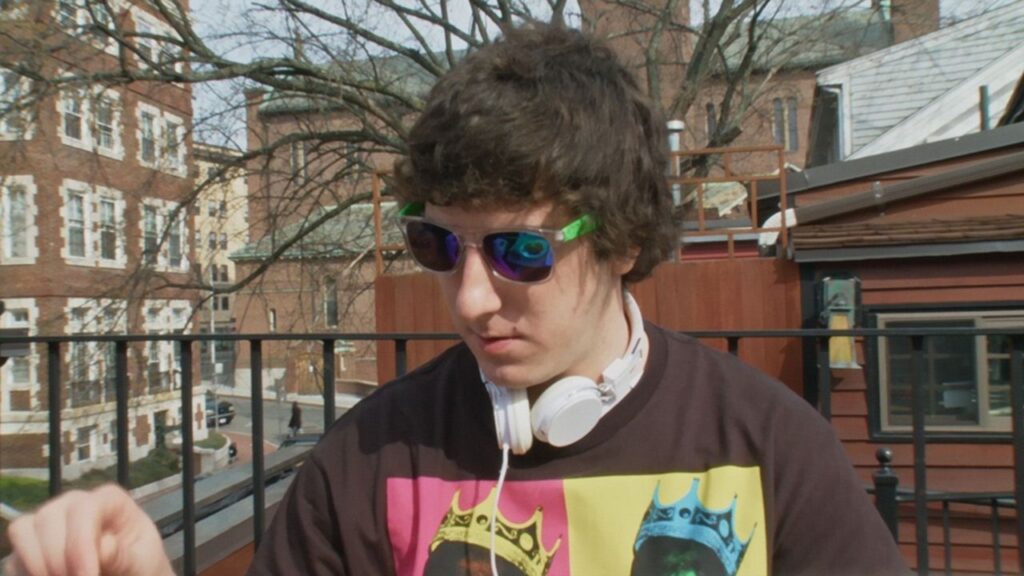
The incidental nature of the on-screen footage is one of this project’s greatest traits. Flippantly filmed in the moment and capturing often vivid expressions of pain, these Remake segments lay bare the interiority of its central subjects. There’s a literally immersive quality to so many of these images. A camera on middle of a breakfast table records while Ross and Adrian have a contentious morning argument. 27-year-old Adrian, endearingly getting his hair cut, evokes similar intimacy in more tender terms. In Remake, the camera is never far away but rather right up close and personal with its subjects.
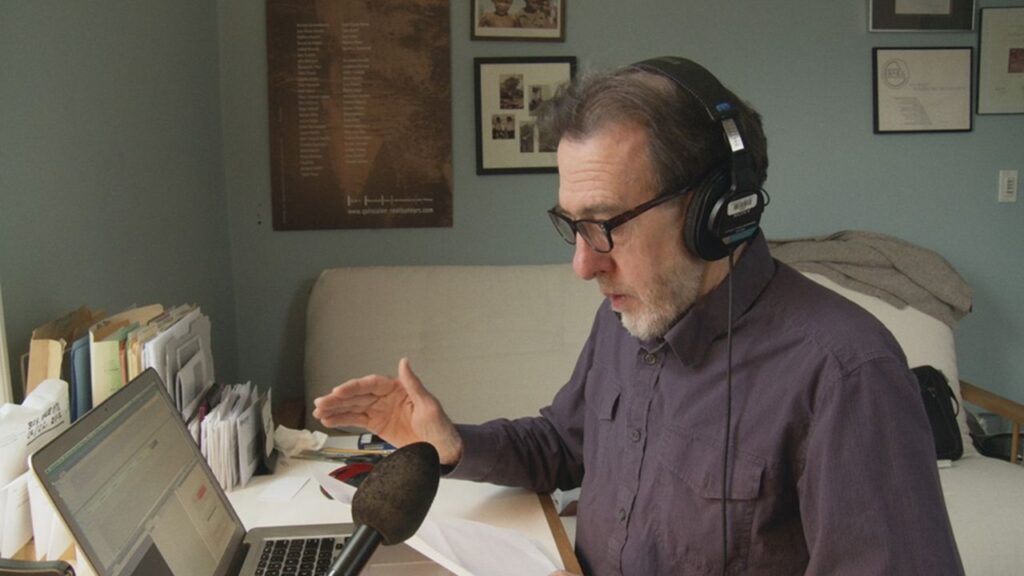
Shortly before that trim, ramshackle footage appears depicting Adrian and his cohorts doing drugs in a Colorado apartment. Maybe these images were captured when someone clicked on the wrong phone app or accidentally pressed record on a camcorder. Whatever inspired their preservation, they provide immediate and harrowing glimpses into Adrian’s most vulnerable points.
The tragedy underlining Remake, though, is that even the rawest Adrian-based videos cannot inherently provide either Ross or viewers with tidy catharsis or answers. While footage of him and his son attending the Venice Film Festival years earlier plays on-screen, Ross ponders if bringing Adrian to these celebrations (full of alcohol and partying) only exacerbated his struggles. He has no answers. He can only gaze at these relics of the past, full of smiles and fireworks, and ponder.
Remake’s focus on pre-existing footage isn’t about uncovering unexpected answers in yesteryear. Instead, the intrinsic ambiguity instilled into these images echoes the grueling uncertainty that lingers after losing a loved one.
Ross McElwee’s manifestation of this intent is as captivating as it is vulnerable. Part of that comes from the quieter depiction of turmoil and sorrow. Any Sherman’s March viewers know Ross isn’t a deeply externalized man. Here, that leads to hauntingly matter-of-fact narration where this man heartbreakingly ruminates on matters like no longer being able to see an ambulance without thinking of the night his son perished.
On the opposite side of the tonal spectrum, this subdued yet impactful approach also extends to happier Remake segments. This is especially potent in a deeply moving sequence where Ross marries fellow documentarian Hyun Kyung Kim. Their unification isn’t a grandiose occasion. However, it’s a fittingly intimate and sweet endeavor for two restrained people (Kim doesn’t even like to have her face filmed). This marriage’s captured through cameras each member of the happy couple holds during the ceremony. In other words, Remake has one of the more cinematically immersive wedding sequences you’ll ever see.
These images are further Remake elements never meant for public consumption. Yet they work so well in this context on so many levels (including reaffirming the film’s visual motifs). Ross McElwee has bundled together so much disparate and jagged footage and created something extraordinary. Binding every corner of Remake is the rich humanity that defined past McElwee efforts like Sherman’s March.
That especially extends to its multi-faceted portrait of Adrian McElwee. Audiences witness every corner of Adrian during this feature’s 114-minute runtime, from a family friend holding him as a baby to his most panic-stricken, desperate phone calls as an adult to Kim recounting how his kindness made him feel like “a big brother” to her. As other 2020s gems like Aftersun and Blue Heron can attest, no matter how many home videos you record, few solid answers or “Eureka!” moments lurk in that footage. However, Remake shows that this material can vividly reinforce the people we can longer hold and the memories we can never relinquish.
Remake is now playing in select theaters.