Read also:
How to Watch FX Live Without CableHow To Watch AMC Without CableHow to Watch ABC Without CableHow to Watch Paramount Network Without CableThe apocalypse begins with a rotting bull carcass. Police chief Ko Bum-seok (Hwang Jung-min), Ko Sung-ki (Zo In-sung), and the latter character’s ragtag pals encounter that deceased beastie on a random road just outside the small Korean village Hope Harbor. The gigantic slashes and strange marks all over this corpse fascinate these men. Sung-ki charges ahead with a plan to investigate the nearby woods for whatever beast did this. Meanwhile, Bum-seok heads into his car and discovers…something’s happening.
More specifically, something’s laying waste to Hope Harbor. Once Bum-seok returns to his village, buildings are decimated. Cars are flipped upside down. Human corpses litter the roads. Then there’s the mighty roar of some unknown creature bellowing nearby. This is all within the first 15 minutes of writer/director Na Hong-jin’s alien invasion epic Hope.
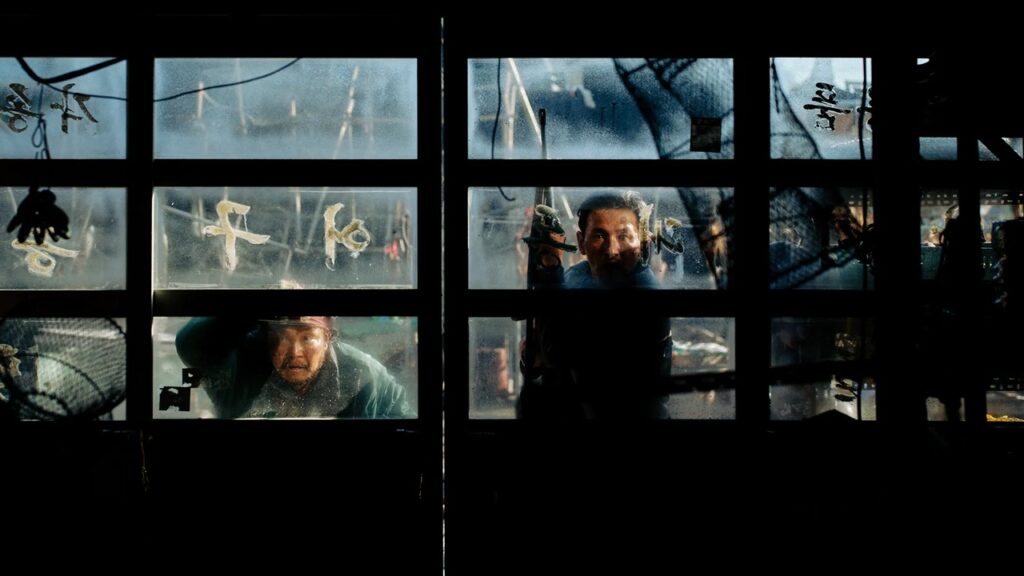
Starting with such a “pedal to the metal” approach is a welcome storytelling decision. Modern titles like Jurassic World Rebirth spin their wheels too long on dreary exposition before reaching the fun material. Hong-jin, meanwhile, starts with a blast and keeps the chaos coming in rapid-fire time. In the process, he proves you can imbue personality and character-specific details alongside the spectacle. Sung-ki and his pals talking about a local old man whose every word is gospel, for instance, lends amusing insight into the longstanding dynamics and reputations in this village.
Similarly, Bum-seok horrifyingly murmuring the names of corpses he encounters as he tries tracking down the invading beast bittersweetly suggests the tight-knit relationship he had with his neighbors before hell broke loose. Focusing on flat shots of individuals didactyly delivering exposition isn’t the only method for revealing interiority. There are more dynamic routes to the same destination.
This first half of Hope functioning as a landbound Jaws (where ordinary people try capturing a killer creature that’s often out of sight) is where Ni Hong-jin fires on all cylinders. This filmmaker’s script and visuals vividly and tensely reflect the ordinary world suddenly plunging into madness. Images of Bum-seok nervously clutching his shotgun as he wanders once-familiar, decimated streets and businesses prove constantly absorbing. Hong-jin and cinematographer Hong Kyung-pyo effective atmospheric impulses also materialize through expansiveness.
The duo suggests unthinkable terror lurks around any corner through utilizing every inch of the expansive 2.39:1 aspect ratio and wide lenses. Such precise blocking keeps one scanning the screen for any clarity behind why Hope Harbor’s suddenly under siege. Playful instances of beasties creeping up on people, meanwhile, work divinely in inspiring involuntary “oh no” murmurs from the viewer.
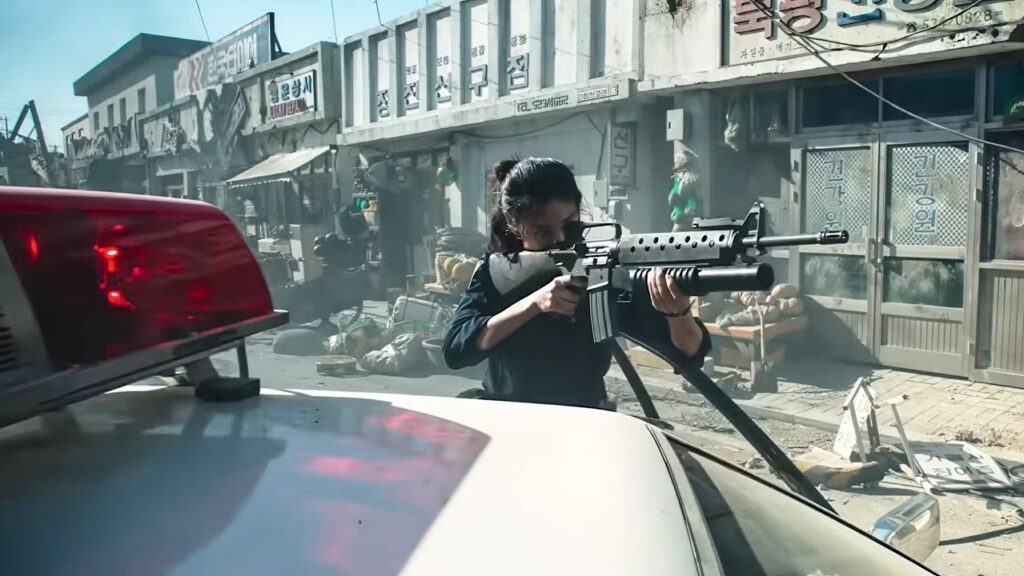
Hope shifts gears roughly 40% through its runtime into a more chase-fixated movie. Here, it’s unafraid to linger on its otherworldly beasties standing fully visible in the bright sunlight. Even in this mode, Hong-jin’s pacing and theatricality ensures Hope remains engrossing. Emphasizing crisp camerawork and the vibrant personalities of different characters for various chases proves vital to making these sequences excel. Plus, Hong-jin and company get a boost from some amazing sights only a truly incompetent movie could bungle. Jung Ho-yeon firing off rockets and swearing at aliens is just innately cool. No notes.
Hope’s also riddled with several smaller details ensuring it doesn’t descend into hollow noise. For one thing, Hong-jin constantly emphasizes how vulnerable and human these characters are. Hope’s Earthlings are not Chosen Ones imbued with superpowers. Nor do they suddenly, perfectly coalesce as a unit once jeopardy emerges. Instead, the film chronicles people panting profusely after lengthy bike riding. They shoot at the wrong targets whilst panicking. Uncontrollable defecation even factors into one memorable sequence.
The humans here aren’t just underdogs. They’re as foible ridden as anyone in the audience watching the movie (including yours truly). How on Earth can they survive an alien invasion? This fascinating question accentuates Hope’s pervasive tension. Similarly compelling is a motif of juxtaposing futuristic alien invaders with classical imagery and items. Hope’s firmly set in 2026. Yet its characters use dingy lanterns to illuminate dim freezers, like 19th-century horror figures using candles to light up crusty mansions.
Significant third-act segments, meanwhile, involve horseback riding. Union men bring a beagle out on their search for the aliens, as if they’re all going on an old-timey fox hunt. These flourishes are visually striking on screen. However, they further reinforce how outmatched Hope’s humans are compared to those alien invaders.
These uber-specific elements, though, can’t quite make Hope’s final third as successful as earlier sequences. In this home stretch, the aliens are out in the open while the forest and a never-ending road are the backdrops rather than tattered Hope Harbor shops. Inevitably, suspense centered on creatures we can’t see proves superior to significantly less ambiguous imagery. Similarly frustrating is the chaotic terror of earlier Hope scenes getting swapped out for chases centered on the same beat of one alien lunging at our heroes and narrowly missing.

The aliens themselves look better the more they resemble biblically accurate angels. The blue-skinned, antler-covered J’aur (Alicia Vikander) exemplifies this. Ditto Ma’veyyo’s (Michael Fassbender) feral form, which is devoid of eyes, walks on all fours, and oozes slime. Unfortunately, Hong-jin and company opted to have several aliens maintain their famous performers’ faces. This leads to otherworldly critters resembling the cursed Jim Carrey as Mr. Limpet concept art.

Even with these visual shortcomings, Hope’s aliens still feature several commendably distinctive elements. Their use of axes and spears rather than ray guns, for instance, is enjoyable and makes these characters imposing even when they’re off in the distance (they can throw anything and turn it in a dangerous projectile). Whenever these creatures run, their super-speed evokes Charlie Chaplin or Buster Keaton’s movements in old silent films. That nice touch reinforces both these beings hailing from another planet and Hope’s emphasis on classical flourishes. It also ensures audiences have more visual takeaways from these aliens than “why did the blue lady have human tiddies?”
Hope’s so fun that abruptly ending on sci-fi mumbo-jumbo sequel set-up rigamarole can’t dilute its entertainment value. Na Hong-jin’s tangible commitment to this bizarre story produces incredibly impressive visuals. When that dedication realizes humans scrambling to survive the horrific unknown or dark comedy beats, Hope excels. Even its shaggier third act (which keeps this overall from hitting the heights of Hong-jin’s The Wailing) features memorably gusto showmanship. Just grit your teeth through some peculiar alien design choices, and you’ll have a grand time.
Hope is now playing in theaters everywhere.