Read also:
How to Watch FX Live Without CableHow To Watch AMC Without CableHow to Watch ABC Without CableHow to Watch Paramount Network Without CableIn the near future, Texas will open up America’s first “detransition clinic.” This disturbing domicile pushing a bogus “cure” for trans identity—a state of being that requires no cure, to be clear—is a microcosm of America’s long-standing antipathy towards LGBTQIA+ souls. Equally troubling is that this attitude doesn’t stop at America’s shores. In Australia, for instance, national laws are favorable and easy to navigate when it comes to matters of getting one’s preferred (accurate) gender recognized. However, states and territories within the country frequently add further impositions, including requirements as severe as forced surgery.
It is that fragmented, obstinate, and too often bigoted political environment that informs Australian writer/director Adrian Chiarella’s feature-length directorial debut, Leviticus. It follows Naim (Joe Bird), who, with his mother, Arlene (Mia Wasikowska), is a newcomer to a tiny super-religious town in Victoria, Australia. “Ever since dad died, she’s only believed in things that aren’t real,” Naim laments to the only person in this community he’s bonded with, Ryan (Stacy Clausen). In these suffocatingly boring confines, these two find comfort in activities like make-out sessions in an abandoned factory.
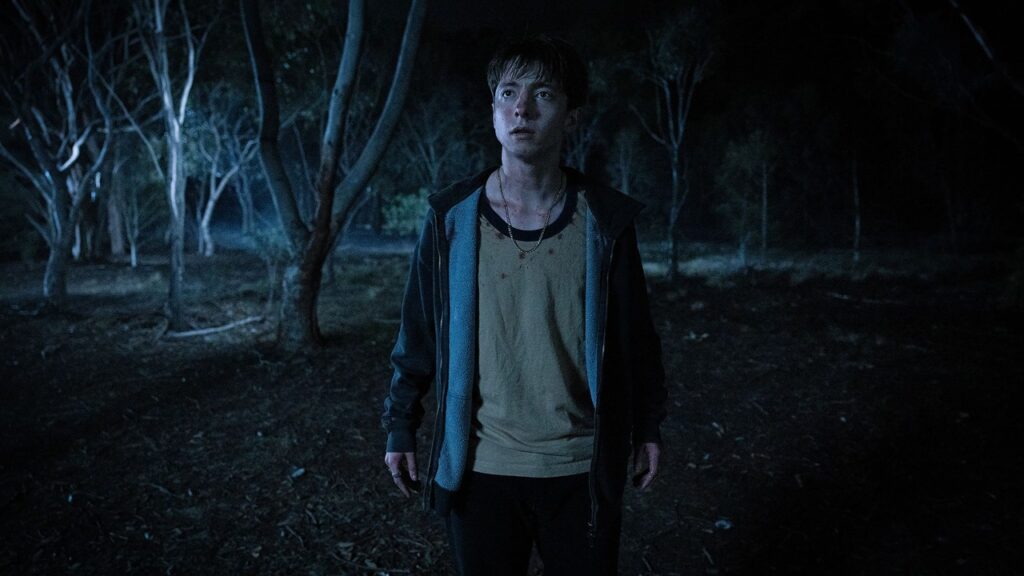
Unfortunately, their queerness comes to the attention of local bigots who hire a “Deliverance Healer” (Nicholas Hope) to “cure” them. Instead, these conversion camp tactics, evil in and of themselves, unleash an additional terrifying evil. It’s an entity that takes the form of the person its intended victim is most attracted to while remaining invisible to others. Chiarella’s script repeatedly focuses on adults dismissing Naim’s appeals for help, a common teen-centric horror trope. Leviticus ups the tension and emotional impact, however, by incorporating the all too common real-life occurrences of cis-het people downplaying or outright ignoring queer concerns. Just think of the tragic history of cops looking away from crimes inflicted on LGBTQIA+ people.
That their sexuality denies them protection from the system and the monster renders relying on each other a risk evokes the danger of gay affection, romance, and partnership in several ways. To survivors of the 1980s and 90s, it is easy to read it as an HIV parable. The threat to gay lives ignored or mocked by the masses. The community upended by an invisible killer that strikes through intimacy.
For people with distance from that time, it will still call to mind the evergreen threat of hate crimes. Linked hands. Every kiss, no matter how chaste. Every declaration of identity. Each exploration of desire or kink. All an “excuse” for this creature to target them.
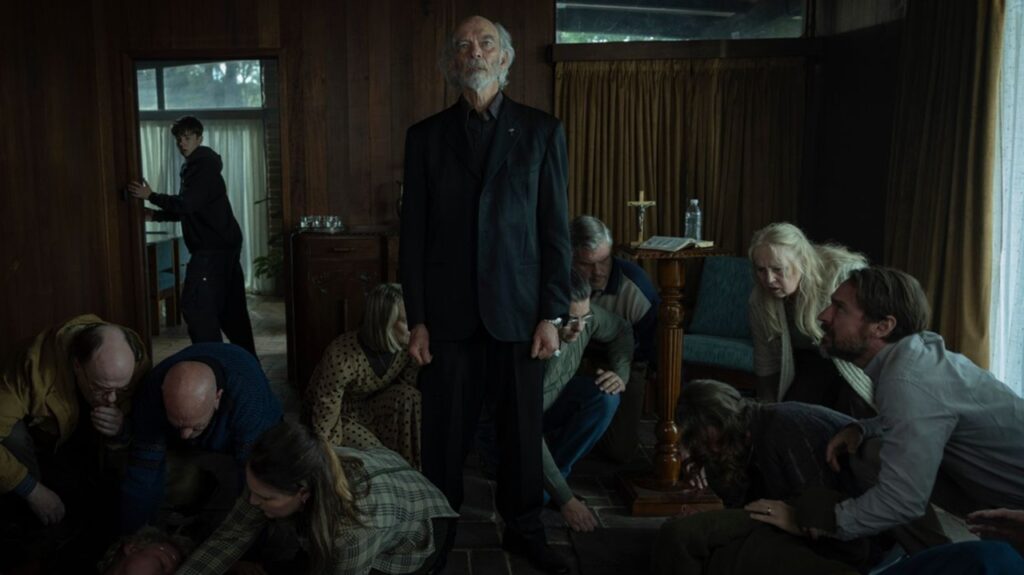
This is not the natural state of being for gay, trans, or any other LGBTQIA+ identifying people. Their lives are not inherently more challenging or grueling than cis-het ones. It is the result of an ever-mounting pile-up of acts of apathy and aggression by the majority. The monster may be the direct threat, but it is the people, the boys’ neighbors, family, and friends, who have called it forth. Leviticus reflects that, creating harrowing, scary sequences that contrast sharply with the honest tenderness of Ryan and Naim’s encounters before the curse.
Similar artistic deftness defines Chiarella and cinematographer Tyson Perkins’ strongest strokes in visual storytelling. Especially inspired is the use of billowing garments hanging on a clothesline, both obscuring and revealing. The first time, the garments foreshadow a betrayal; the second, a deep sense of dread. The frequent use of cramped doorways to frame the teens is another evocative visual symbol, speaking to how the adults try to keep the town’s children trapped by expectations and religion.
Unfortunately, other Leviticus imagery left me a tad cold. Watching this the same day as Gregg Araki’s Nowhere wasn’t a wise idea, as that just reinforced this title’s drabber color scheme. Drab also plays into the camerawork and framing. The movie stays too beholden to 2020s indie horror cinema norms, leaving some subversive visual potential on the table. Still, if production sporadically lacks visual distinctiveness, it consistently flaunts craftsmanship. This is a handsomely realized endeavor, particularly the eerie sound design that makes every bump or shoe squeak ominous.
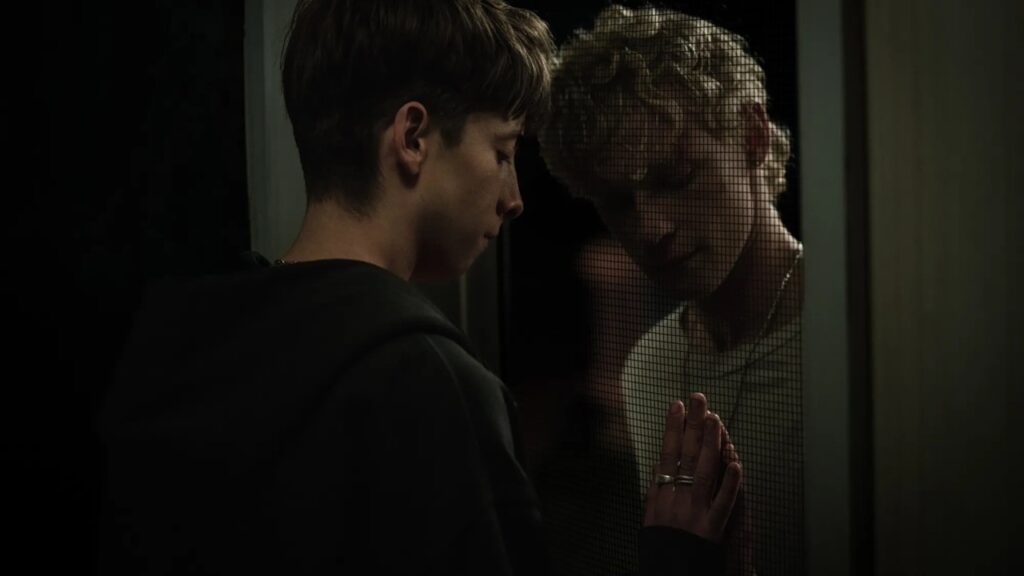
Time and again, though, the two lead performances are Leviticus’s best assets. Bird especially excels, embodying a tangibly messy teenager. Whenever he’s on screen, the actor provides immediate believability and youthful vulnerability. Those qualities heighten the already tragic tension of watching Naim endure conversion therapy horrors and outrace a vicious being. Clausen, in contrast, enters the movie with confidence to spare. As a result, Ryan’s change, post-“Deliverance Healer” rendezvous, into a far more subdued person, plays as immensely heartbreaking. He realizes both sides of the character so potently.
Many stories of the queer experience unfold in the distant past, either accidentally or intentionally arguing “things are better now”. Leviticus, by contrast, is grounded in the here and now. Chiarella has crafted a work that unflinchingly depicts homophobia and conversion therapy practices in the age of smartphones, delivering atmospheric thrills and startling jump scares. In making that truth terrifyingly literal, Leviticus proves both an unsettling horror debut and a pointed reminder that queer nightmares are rarely born in isolation.
Services for Leviticus are now being held in theaters everywhere.