Read also:
How to Watch FX Live Without CableHow To Watch AMC Without CableHow to Watch ABC Without CableHow to Watch Paramount Network Without CableMuch like The Great Mouse Detective heralded the imminent arrival of the Disney Renaissance, Kyle Edward Ball’s Skinamarink has proven a harbinger of the 2020s horror cinema scene. Specifically, it foreshadowed the decade’s biggest horror movies, hailing from YouTube veterans, characterized by wonky aspect ratios, unhurried pacing, and warped everyday reality. Curry Barker’s excellent Obsession exploded this aesthetic into the mainstream only a few weeks ago. Now, hot on its heels comes Kane Parsons’ Backrooms, a feature-length expansion of Parsons’ 2022 web series based on a 2019 creepypasta.
Set in 1990, the film follows furniture store owner Clark (Chiwetel Ejiofor) and his therapist, Dr. Mary Kline (Renate Reinsve). A bitter man reeling from a crumbling relationship, Clark has made best friends with any bottle of booze he can lay hands on. While Kline struggles to reach the stubbornly closed-off client, she affirms The Sopranos’ axiom: therapists have problems, too. Lingering childhood trauma brought into stark relief by the recent obliteration of her childhood home hangs heavy on her shoulders.
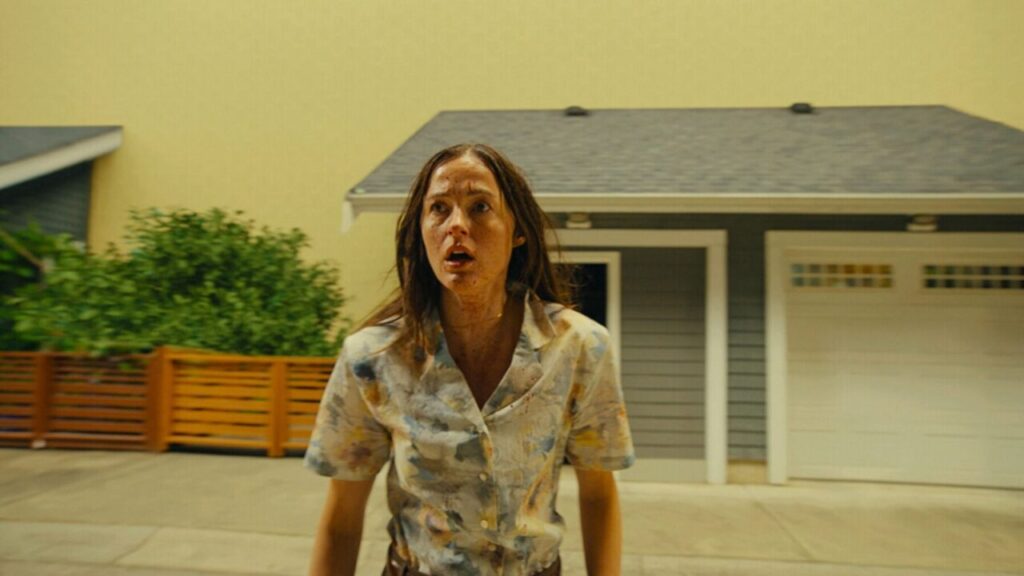
Crashing in his own store leads Clark to stumble into strangeness late one night. On the bottom floor, he discovers that leaning into one spot on a specific wall lands him in…well, he’s not sure. Nonetheless, the architect wannabe is immediately fascinated by this odd, seemingly empty, and endless realm. Around every corner lies a new wonky place. Even when it becomes clear the Backrooms are not as unpopulated as they appeared, his interest remains unshakeable. No terrifying beast can shake Clark from exploration.
While in the past I’ve stomped my foot and declared myself not a fan of found-footage films, Backrooms suggests that perhaps I only disliked subpar found-footage efforts. This feature—like Blair Witch Project, Chronicle, and Cloverfield before it—makes an evocative case for the genre, with several set pieces telling the story of these sinister liminal spaces through video from old camcorders.
Dismal found-footage films like The Gallows resort to nauseatingly shaky camerawork and murky, uninvolving images. Backrooms, on the other hand, has crisper “camcorder” images far more terrifying than endless jostling. These immersive sequences exemplify the terrifyingly finite nature of found footage. There is no other angle, no data beyond what the one camera can provide. Moments where the camcorder becomes stuck trap the audience as well. Limited resolution denies viewers clarity, too. When done right, as Parsons and cinematographer Jeremy Cox do, uncertainty and hopelessness seep into the bones. Combining this style with the compellingly unpredictable, M.C. Escher-esque tableaus of the Backrooms further enraptures the characters and the people in the reclining seats.
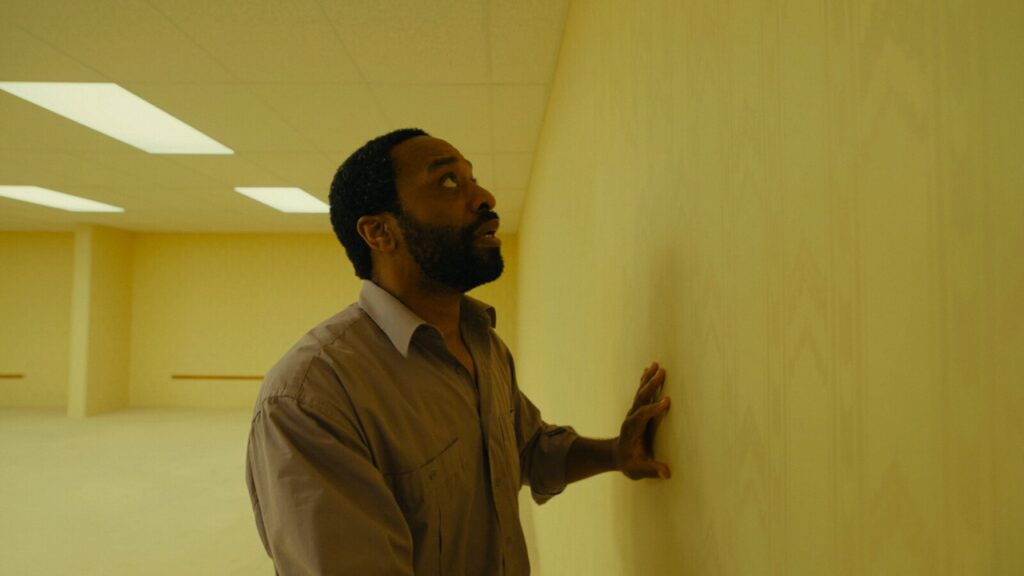
While the movie’s creative peak, these scenes are by no means the only standout elements. Also commendable is the confident maintenance of the world’s intimacy. Will Soodik’s script grounds the ever-increasing strangeness in the raw therapeutic relationship between the two original characters even as it leaves Kline’s office far behind. By eschewing ham-fisted fan service, despite Parsons’ history with the lore, the story feels more expansive and human than a creepypasta cash-in.
The scale doesn’t just let audiences inside the characters’ heads, it provides a thematic mirror. Stripped-down sequences, like an early attempt at therapeutic roleplay, establish a precedent for maximum impact from minimalist material. By the time the film fully gives itself over to the Backrooms’ unadorned, rarely populated spaces, it is a visual literalization of what it’s been playing with throughout.
Limiting the scope lets Ejiofor excel in an extraordinary lead performance. You don’t need me to tell you he’s a talented actor; his commanding performances in projects as varied as 12 Years a Slave and The Life of Chuck speak for themselves. Still, a reminder is always welcome, and Backrooms provides a doozy. There isn’t a moment that feels like he heard “based on a creeypasta” and even considered phoning it in. In his hands, Clark is often intolerably messy and petulant, yet he never loses sight of a jagged pain deep inside this man. He inspires terror, sympathy, and more, often in the same scene. A third-act “dinnertime” conversation provides a showcase for the Ejiofor magic as he flits from emotion to emotion, bringing each to evocative life.
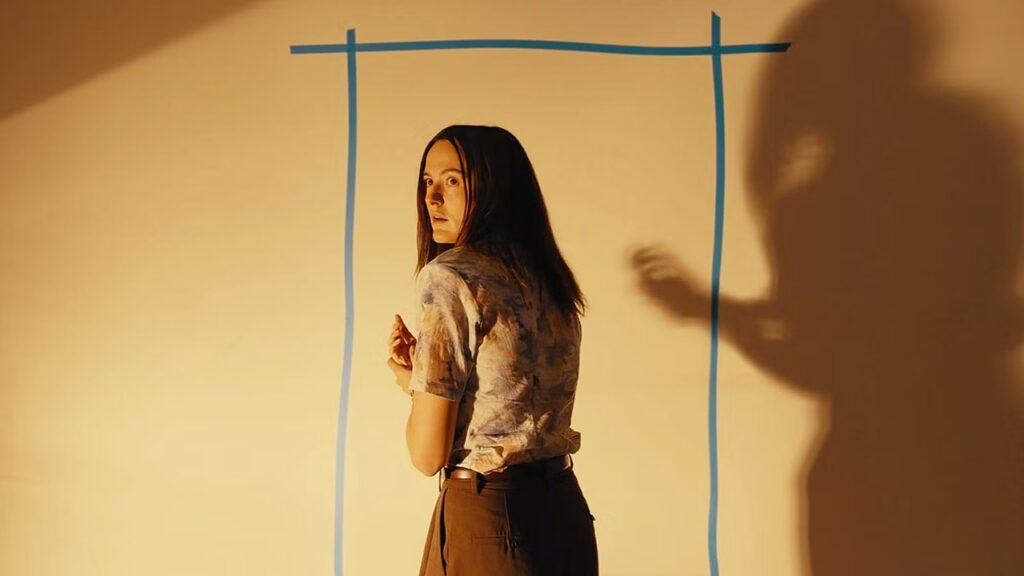
Unfortunately, not everything matches the polish of the found-footage segments or Ejiofor’s performance. Soodik’s script has a bad habit, especially in the first half, of leaning too heavily on excessive dialogue. A party montage, for instance, is accompanied by Kline reading a passage from her self-help book as voiceover. This choice runs over the visuals without offering insight or intrigue. Letting the images speak for themselves would’ve greatly improved the atmosphere.
There’s also the narrative misstep involving Mark Duplass’s scientist, which extends the movie’s world too quickly for its own good. Clark’s discovery of the space and “passing” it to Kline via unhinged ramblings is enough to keep one glued to the screen. Further ballooning the scope undercuts the mystique. A handful of third-act beats, meanwhile, adhere a bit too closely to standard horror movie impulses, disappointing for a film that otherwise effectively traffics in warping the familiar into something stranger and scarier.
These bumps in the road can’t erase Backrooms’ intrinsically chilling world. Building off its source material’s grounding in lo-fi internet horror and pairing it with Ejiofor’s great performance connects it with a new, rising age of horror. An age where the familiar is twisted into something stranger, more unsettling. An age where the image is as unsettling as the story itself.
Backrooms is waiting to be discovered in theatres everywhere now.