Read also:
How to Watch FX Live Without CableHow To Watch AMC Without CableHow to Watch ABC Without CableHow to Watch Paramount Network Without CableA smile creeps on your face. Goosebumps gently rush up your arm. Your eyeballs couldn’t even begin to look anywhere else beyond the screen. For film aficionados, realizing you’re watching a truly special movie is utterly glorious. Such a sensation befell me a few minutes into Color Book. Right away, everything from the bittersweet emotions to the wintry backdrops to the engrossing performances absolutely transfixed me. Though making his feature-length filmmaking debut here, writer/director David Fritz Fortune imbues assured craftsmanship into this down-to-Earth work.
Color Book opens with father Lucky (William Catlett) and Mason (Jeremiah Daniels), his son with Down Syndrome, mourning the passing of Tammy (Brandee Evans). She was Lucky’s wife, Mason’s mother, and a person who profoundly impacted so many lives. Now, this parent/child duo must confront existence with only each other. Shortly after a celebration dedicated to Tammy, Lucky gets an idea. He should take his youngster to his very first baseball game.
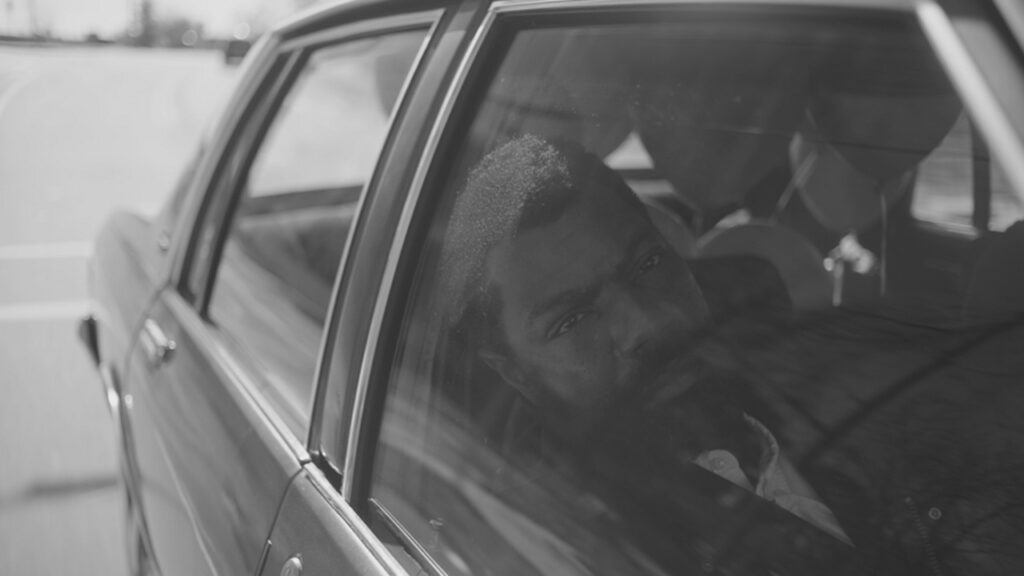
Fortune’s script then primarily follows Lucky and Mason over the course of a single day navigating Atlanta, Georgia to reach a baseball stadium. As life tends to do, Lucky keeps encountering one obstacle after another on this voyage. Cars break down. Haunting reminders of Tammy’s passing materialize. Trains they need to be on just slip past their grasp. Color Book’s lead duo rarely have it easy. But they have each other.
Before that sports-based pilgrimage, Fortune and cinematographer Nikolaus Summerer linger the camera on batter bubbling in a waffle iron. Most films would skip quiet breakfast scenes, let alone the process of making the food. However, crafting this cuisine is a bonding experience for Lucky and Mason. The camera marinating in this space and absorbing the materials consuming their attention provides more than emotional immersion. This shot establishes Color Book’s quiet priorities. This films about soaking in the sights zipping by your window during a car ride or getting your child to brush their teeth.
Thus, the imagery here and throughout the runtime emphasizes intimacy and tactility. The latter element especially comes through in Fortune’s filmmaking. I could practically see my breath as these characters navigate a palpably chilly Atlanta day. Emotionally charged images, like Lucky running his fingers over a bracelet Tammy made with Mason, are devoid of any sterility. They feel instead ripped from reality. Color Book’s discernibly authentic world harkens back to realist filmmakers like John Cassavetes or Vittorio De Sica.
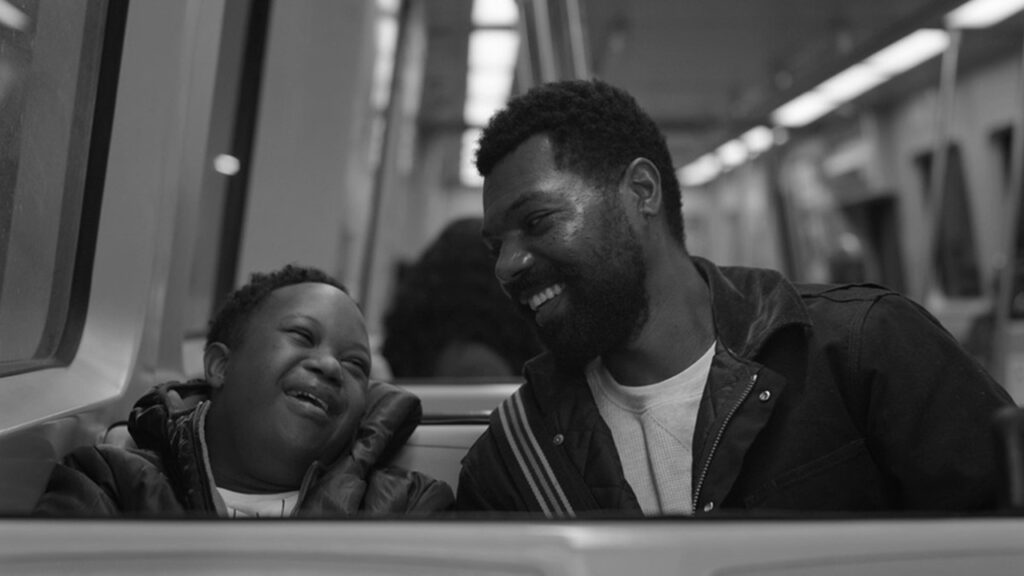
Like the spaces those auteurs filmed, Fortune imbues immediacy into bus stops, diners, junkyards, and other working-class locales. He makes viewers feel like they’re glimpsing something real, not a hollow simulacrum of everyday life. Simultaneously, Fortune and Summerer deliver beautiful pieces of blocking and precise camera placement throughout. An early image of Lucky and Mason leaving their house for the game, framed from inside their house with the pair off in the distance, strikingly reflects the scope of the journey ahead. Even this duo resting their eyes on a bus is an opportunity for expressive staging.
Ordinary sights fill the screen in Color Book, but the film itself is anything but rudimentary. Composer Dabney Morris, for instance, lends the proceedings a sonic landscape rich with transportive sounds like bittersweet trumpet playing, light flute work, and quietly momentous tickling of piano keys. As Lucky and Mason walk to bus stops or work on pronouncing words, Morris’ compositions lend their everyday treks auditory significance.
To boot, the wistfulness within these tracks signifies how the biggest events in our lives aren’t always the ones taking up the most space in our memories. Sometimes, a cherished memory is thumb wrestling in a subway car with your father. The immensely impactful Dabney Morris score lends those seemingly throwaway moments of life the powerful musical accompaniment they deserve.
Just as memorable as Color Book’s score is its bevy of performances. Midway through the film, Lucky encounters his construction worker friend, Meech (Njema Williams). Instantly, Catlett and Williams share such warm, lived-in chemistry. The bond between these two men is immensely tangible. Fortune’s script delivers some of its strongest dialogue here, as Meech tries excavating Lucky’s true feelings about dealing with loss. Mason’s father resists these invitations for vulnerability, though in a delicate fashion.
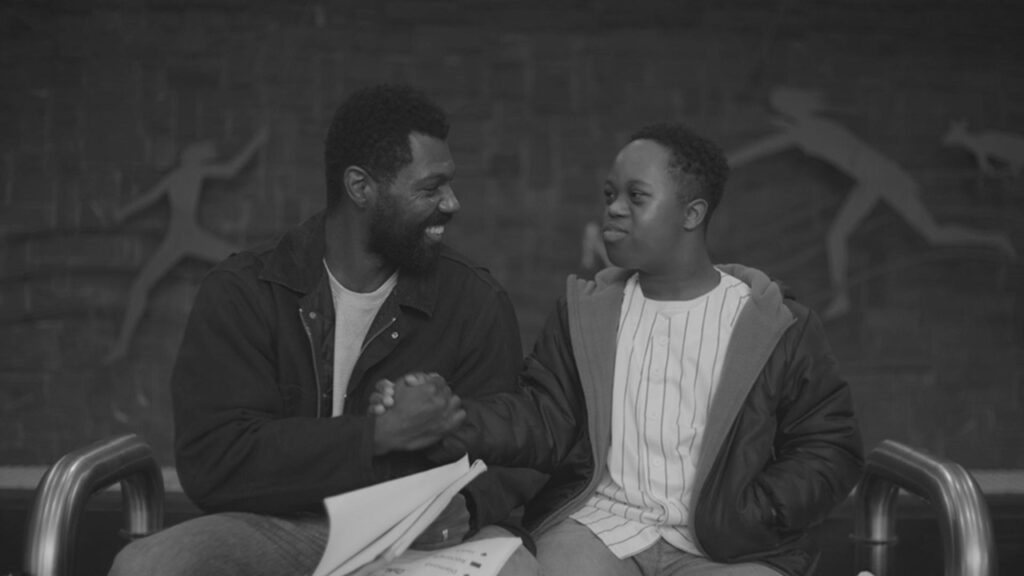
There’s a lot of tap-dancing around Lucky’s true emotions in this sequence, intertwined with the dense history of these two men (this can’t be the first time Meech has tried wringing vulnerability out of his pal). Yet Fortune communicates all of that with concise dialogue reflecting both Lucky’s “I’m good” nature and the fact that bustling subway cars aren’t ideal for lengthy chats. Throw in Meech’s amusing and moving banter with Mason (especially when he sees how this youngster has just drawn him), and this Color Book sequence is a marvel of writing and acting.
Njema Williams isn’t the only Color Book performer who excels even with limited screentime. Lucky and Mason encounter a handful of other people in their travels, each infused via their respective performers with distinctive personalities. Terri J, Vaughn as a warm-hearted server, for instance, is tremendously endearing and moving. Anchoring the entire proceedings, though, is Color Book’s greatest actor, William Catlett. This performer’s extraordinary just in his facial expressions alone. Within Catlett’s eyes, one can see the aching, desperation, and heartache he often suppresses externally.
The manifestation of those emotions within Catlett’s pupils is often shattering. This actor’s also fantastic at realizing Lucky’s most mundane corners with verisimilitude. Catlett doesn’t lean on exaggerated or grandiose flourishes to keep viewers’ attention during quiet sequences like Lucky helping Mason with his homework. Instead, this actor commands the screen in the quietest terms. The way he relaxes his body when he realizes how much Mason misses his mom or his loving gaze while examining his son’s drawings- these are masterclass moments in understated yet impactful acting.
Everyone involved in Color Book brought their A-game. The cast is exceedingly involving. The monochromatic images are evocative. That score is entrancing. Even the natural wintry Atlanta backdrops seem to have extra personality when Fortune’s camera lingers on them. Films like Color Book, so bursting with artistry and tender poignancy, aren’t common. Cherish them like you would a yummy waffle in the morning or a gentle train ride with a loved one.
Color Book is now streaming on Netflix.