Read also:
How to Watch FX Live Without CableHow To Watch AMC Without CableHow to Watch ABC Without CableHow to Watch Paramount Network Without CableA pivotal scene unfolds at the thermatic, if not literal, halfway point of Night Always Comes, the Netflix original from Benjamin Caron. Lynette (Vanessa Kirby), after her mother Doreen (Jennifer Jason Leigh) spends the money they were going to use to purchase a house on a car instead, is desperate to somehow scrape together 25,000 to save the deal. An occasional sex worker, she reaches out to one of her customers, Scott (Randall Park). He’s very rich, and she’s hoping he can float her the money as “an investment”.
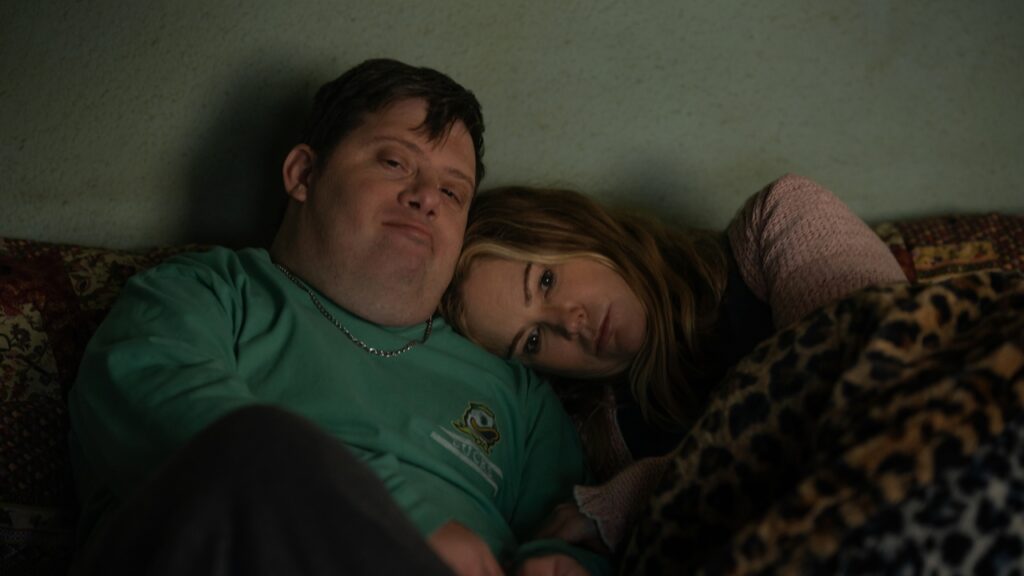
Kirby anxiously attempts to recap the situation and sell him on the idea. Meanwhile, the audience can already see what she can’t. Playing well against type, Park’s face moves from relaxed to shocked to darkly bemused. He then laughs at her plight, explaining this will be their last meeting. After all, knowing she lives with her mom and her developmentally disabled brother Kenny (Zack Gottsagen) ruins the fantasy.
Then, almost in the same breath, he suggests one last time, seemingly with zero guilt. Her one best idea gone, Lynette nonetheless agrees. The comparatively small amount of money he’ll pay her will barely make a dent in the 25,000, but some money is better than none. It effectively illustrates the pressure those near or below the poverty line face regularly. Acceptable exploitation, be it financial, physical, spirutal or all three. Because exploitation is preferable to empty pockets.

It is an agonizing moment that plays without being sensationalistic, despite the nature of Scott and Lynette’s exchange. It is also the last moment Night Always Comes unblinkingly looks at how many different ways struggling on the low end of the socioeconomic scale can grind you down. Mind, body, and soul. Moments later, Lynette is stealing a car, and the film is off and running as a crime thriller.
Taken separately, both sides of Night Always Comes are decent enough examples of their respective genres. While Sarah Conradt’s scripting—adapting the Willy Vlautin novel of the same name—never reaches the heights of the scene described above, she reasonably writes both the downbeat work-a-day opening section and the jittery thriller that makes up most of the film’s second half. Both sections have their clichés. Lynette isn’t just struggling with money and her past. She ticks nearly every “tragic” box films about poverty afflict their characters with. And then in the second half, despite no indication of a history of violent actions, she proves an impressively competent physical brawler. She takes down larger and more criminally experienced men repeatedly. Still, these are features of the genres and don’t prove especially grievous.
The flaw of Night Always Comes proves its inability to stitch together its halves. Rather than enhancing each other, the sections instead undermine one another. The bleak realism of the first section and the almost nightmarish descent into criminal hell of the second could co-exist. They just don’t here. A big part of the blame may land with the film’s conclusion that briefly returns to bleak realism for a heartbreakingly honest conversation between mother and daughter. Then, immediately, the film offers a vague but hopeful conclusion. It feels either unearned or impossible, depending on how long the audience allows themselves to think about it.
Night Always Comes is the very definition of less than the sum of its parts. Kirby is top-notch, Leigh gives depth to what could’ve been a two-dimensional “bad mom,” and Park is as arresting as I’ve seen him. The writing, as noted above, is solid and occasionally spectacular. The movie’s visual palette breaks out of the usual Netflix look multiple times, with cinematographer Damián García making the most of playing the city’s dark places against its otherwise flooded with light streets and always bright high-rises. And yet, like Caron’s earlier effort Sharper, the feature falls short of living up to those positives.
Night Always Comes suffers through the agony of begging for help and cracking safes on Netflix starting August 15.