Read also:
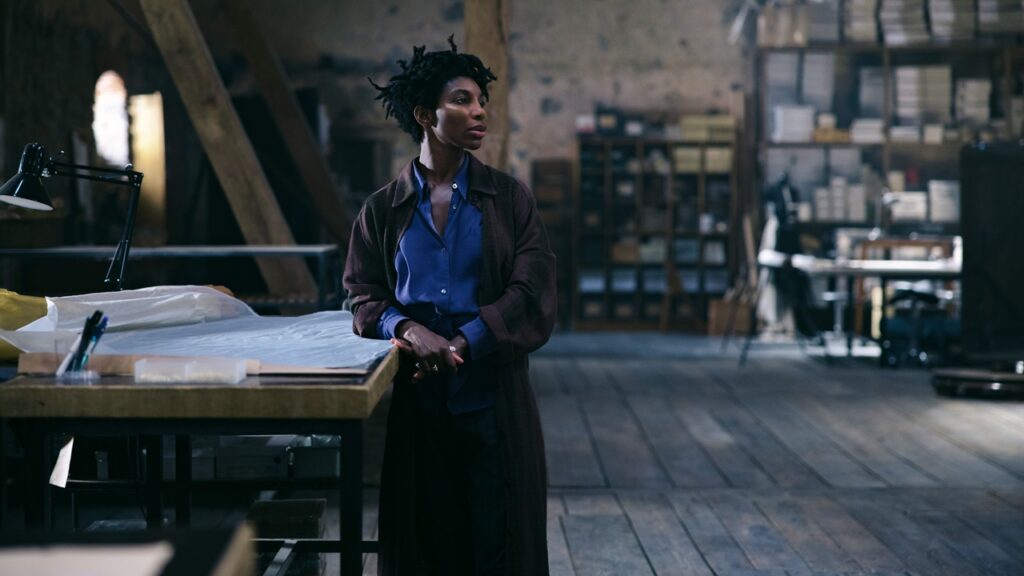
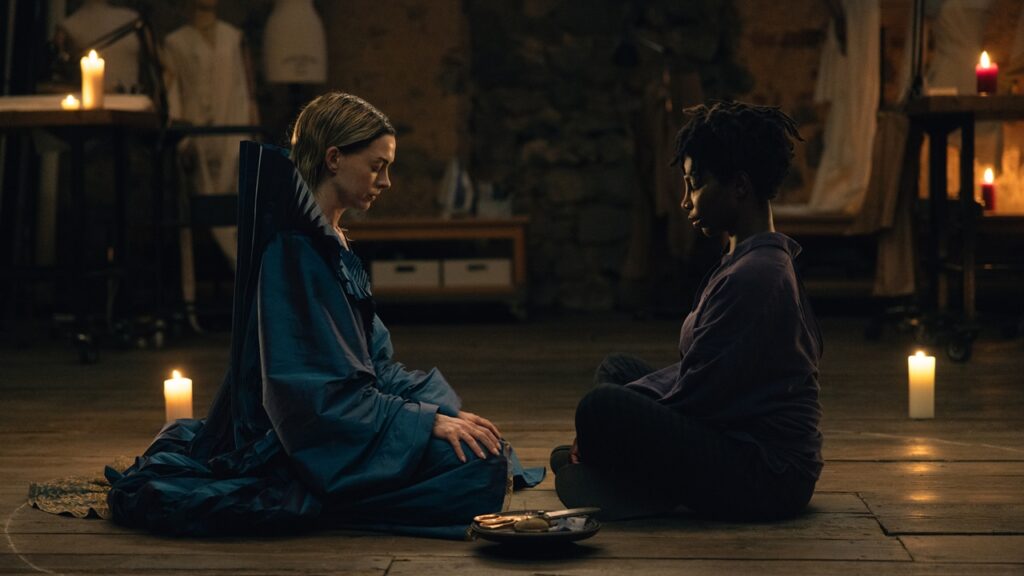
How to Watch FX Live Without CableHow To Watch AMC Without CableHow to Watch ABC Without CableHow to Watch Paramount Network Without CableMusic superstar Mother Mary (Anne Hathaway) needs a dress. She could get such an outfit from anywhere in the world, but, as a David Lowery protagonist, that simply won’t do. Instead, she calls up former colleague and fashion icon Sam Anselm (Michael Coel). The reunion is immediately fraught. Anselm communicates her immense hostility through poetic phrasing. Mary is withdrawn and clearly tormented by more than garment needs. Mother Mary metaphorically strands the two in an isolated cottage to hash out their baggage, shared and otherwise, or die trying.
Lowery’s earliest works, St. Nick and Ain’t Them Bodies Saints, were deeply rural works so caked in Texas dirt you could feel grime underneath your fingernails. On the surface, his first theatrical film since 2021’s The Green Knight seems like quite a departure, abandoning Lone Star State back roads for pop star gloss and high fashion in a British cottage. It engages its plot with a more dialogue-forward script and impressionistic, fantastical visual style than in previous works.
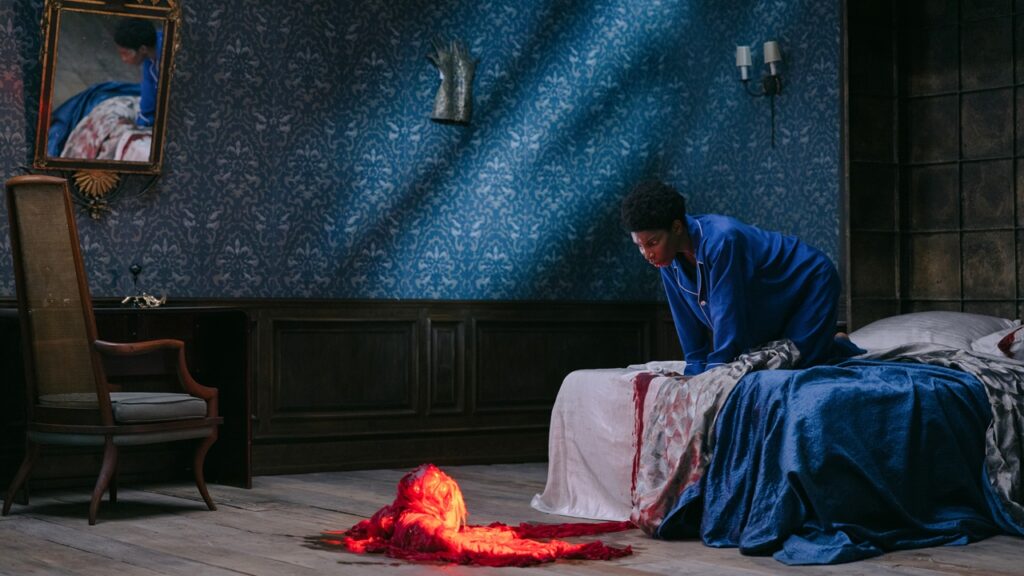
Previously, the director plopped furry green dragons and guys in ghost sheets into rudimentary landscapes. Here, though, Lowery emphasizes a reverse visual scheme. Mary and Anselm frequently navigate black voids or nighttime visits from a ghostly red cloth. In their conversations, Anselm occasionally sees the singer as an ethereal figure lingering in the air, draped in lavish garbs from yesteryear. It’s like an angel is visiting her, a figure of sharp contrast with the real Mary standing before her.
While the film does depart from many of Lowery’s signature moves, it continues his fascination with spectral ambiguity, first explored in A Ghost Story. The malleability of a specter’s meaning—a terrifying invasion to some, a symbol of melancholy longing to others—opens storytelling doors. It allows, encourages even, the exploration of existence with similar dexterity. Is it pointless? Beautiful? Both at once? Playing with this concept of contrast undergirds the dichotomy between Mary the performer, with her glamorous, maximalist concerts, and Mary the suffering, everyday moving through the world with deep, aching pain.
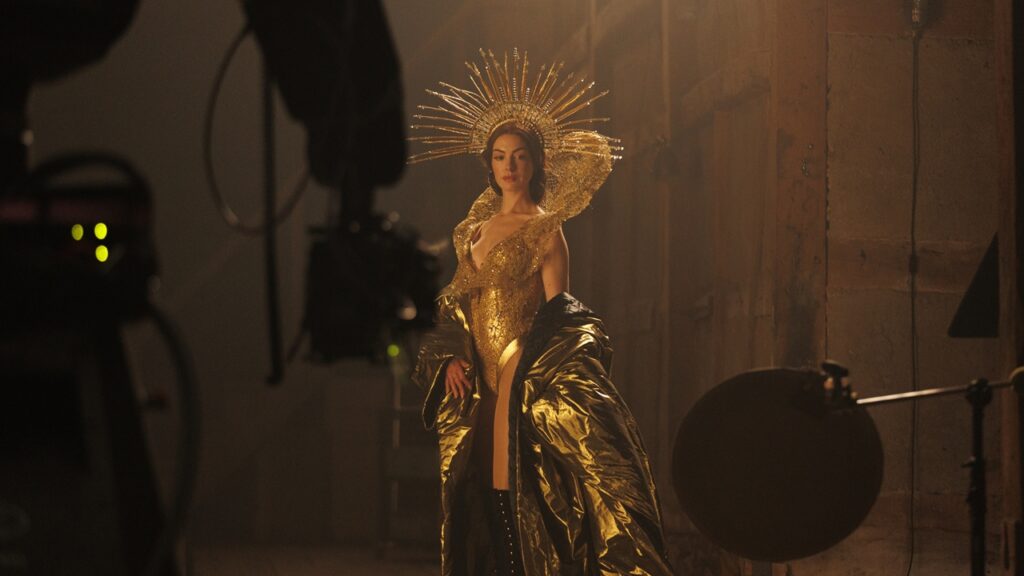
I’ll be honest: I never would’ve thought the filmmaker behind A Ghost Story could helm a movie featuring set pieces that would make Sabrinawood or Chrissy Chlapecka’s Girl on the Moon tour proud. However, production designer Francesca Di Mottola, costume designer Bina Daigeler, and the other Mother Mary artists deserve massive kudos for the effectiveness of the concert-centric sequences. In the wrong hands, they could’ve registered as arch, inaccurate visions of what pop star spectacle looks like. Instead, Di Mottola, Daigeler, and company excel at crafting genuinely awe-inspiring razzle-dazzle. Its visual grandeur can easily convince one they are seeing a real concert. This ensures Mary’s superstar status plays as authentic, keeping the dialectic sharp and rendering her tormented state extra heartbreaking.
The director and cinematographers Andrew Droz Palermo and Rina Yang capture, with equal deft, the haunting sequences illustrating Mary’s painful anecdotes. One story arrests with striking cuts between her concert reality and a nightmarish landscape, one evoking an unholy mixture of Under the Skin and The Red Shoes. These glitzy performances and haunting voids, so well-crafted, make Mother Mary a consistently dazzling enterprise.
Lowery is less sure-footed navigating the increased dialogue. At times, it clicks, as when Michaela Coel deliciously directs poetic, hostile barbs towards Mother Mary. At others, the verbiage blurs together and registers as the wrong kind of ham-fisted. The film’s compelling visual abstract digression, unfortunately, further highlights how sporadically the dialogue succeeds.
Coding Mary and Anselm as heterosexual—albeit with occasional bursts of queer-coded physicality— feels like a missed opportunity. Seeing as they’re 95% of the way to lesbians already, pushing that little bit farther could’ve lent Lowery’s film a more precise emotional texture. Yes, a friendship’s bittersweet crumbling when one of the duo gets famous can be decently moving. However, it is nothing new. Even High School Musical 2 hinges its plot on the development of a similar disparity.
Mother Mary thrives when it goes for broke. Just look at those dreamy sequences depicting Mary and Anselm’s various bravura encounters with a red-colored “ghost.” Hedging its bets when it comes to sexuality betrays those superior gusto instincts. It becomes yet another American studio release with no bones about fingers plunging into gaping wounds while getting squeamish about queer dynamics. Welcome back, Hays Code tendencies. These more disappointing instincts keep Mother Mary from being as cohesive and satisfying an experience as Lowery’s best works. Nonetheless, its jaggedness reflects an admirable ambitious streak well worth seeing.
The two central lead performances are especially remarkable. Coel’s transfixing, even waxing poetic about her contempt for Mary’s music while cutting fabric. She’s even better when she digs into Anselm’s psyche. Playful. Deeply frustrated. Concerned. She goes all over the map, crafting an extra captivating and intriguingly unpredictable performance. Hathaway, meanwhile, effortlessly portrays a pop star icon weighed down by tremendous pain. Dating back to her earliest days in The Princess Diaries and Ella Enchanted, she’s always excelled at underscoring the vulnerable and human in seemingly “perfect” archetypes. That strength flourishes in these confines, rendering Mary’s most tormented states as palpably believable. Watching her and Coel work their magic is as engrossing as any concert performance.
Mother Mary takes the stage in wide release beginning April 24.