Read also:
How to Watch FX Live Without CableHow To Watch AMC Without CableHow to Watch ABC Without CableHow to Watch Paramount Network Without CableHollywood loves a story about itself. Hollywood also loves a tale of a guy who’s successful but miserable because of that success. Jay Kelly, Netflix’s newest offering from director Noah Baumbach, pulls a bit of a Reese’s and takes these two great tastes and discovers they taste great together.
This is a bit flip, of course. But then there is something of an air of artificiality that hangs over the film from the start. The question is how much of that emptiness is intentional. It’s a question that, I confess, I’m not entirely sure of the answer.
Before all that, though, the plot.
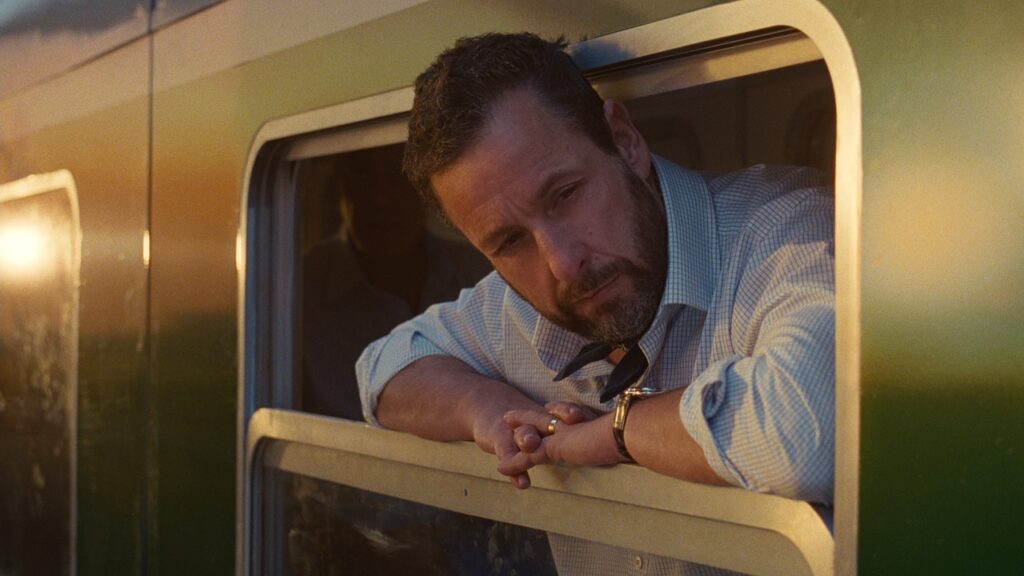
Jay Kelly (George Clooney) is the “last of the movie stars,” according to his agent Ron Sukenick (Adam Sandler). All the evidence suggests Ron is onto something here. Unfortunately, Jay isn’t feeling especially great about his life as he turns 60. He wraps his latest film, looking forward to spending time with his youngest, Daisy (Grace Edwards), before she leaves on a summer trip around Europe. By the time she returns, she’ll be going right into her freshman year of college. Unfortunately, she’s changed her plans and is now leaving for Europe in a few days.
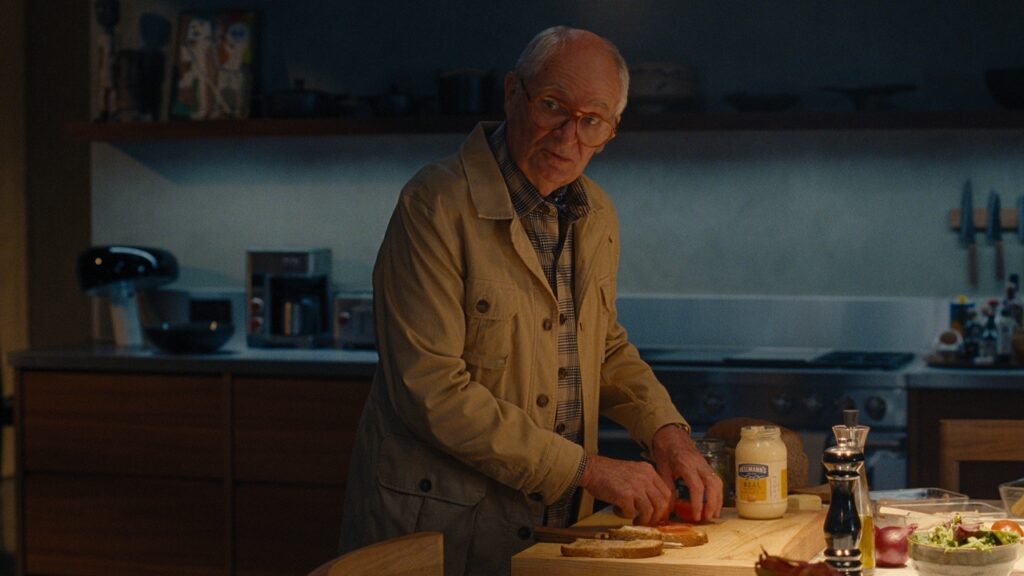
As he’s trying to process this, he learns that his friend, the man who gave him his first break, director Peter Schneider (Jim Broadbent), has died. At the funeral, he runs into a former acting school buddy, Tim (Billy Crudup), a Method thespian who didn’t book that Schneider job and ended up a therapist instead. (Truly, what a terrible fate!) Emotionally vulnerable and wistful, Jay agrees to have a drink with his old friend. One becomes several until Tim, flush with that liquid courage, accuses the star of stealing his life. Before Jay can extract himself from the situation, a parking lot fistfight ensues. The next morning, Jay skips a fitting for his next picture and heads to France to run into Daisy.
To the film’s credit, it frequently eschews answers, putting ellipses, not periods, at the end of thoughts. Tim accuses Jay of stealing his life. Jay claims he made sure Tim got a part on it too. The audience sees the audition, but it remains unclear how much Jay undercut his friend and how much his friend simply coughed up the ball. Similarly, Jay’s relationship with his older daughter, Jessica (Riley Keough), is strained but undermines attempts at repair. And with the younger daughter, it is never clear whether Daisy did tell her father she had changed her plans, and he was too self-involved to recall. Or did she do it without his permission, knowing he’d be too worried about the former to dig in his heels? Throughout the film, Baumbach and co-writer Emily Mortimer neither shy away from Jay’s shortcomings nor reduce him to an egomaniacal monster.
It is a mode Clooney operates well in. As repeatedly proven, he’s a wildly charismatic figure. However, he’s perhaps even better at puncturing that façade, whether to play an idiot (Burn After Reading) or deeply morally compromised (The Ides of March). With Jay, Clooney makes a bit of a lost soul, too entangled in his stardom to really seek enlightenment. Even as his existential crisis deepens, he continues to center himself. He reminds Ron of the financial foundation of their relationship before clinging to the manager like a life raft. Even as he finally gets honest with Jessica, he doesn’t seek to make amends, just to reset the clock.
In many ways, Jay Kelly, the film, reflects Jay Kelly, the character, bringing us back to the question of whether this is a story about hollowness or a hollow story. As the credits roll, Jay, whatever his epiphanies, still seeks an escape hatch. In his vernacular, another take. But I was never clear if Baumbach got that or felt the climax was authentic and cathartic. And perhaps that ambiguity is the point. If the film is just as convinced as Jay that his emotional arc is powerful and important, is that not the ultimate expression of form merging with function? Jay Kelly believes himself on a journey back to himself, back to substantiveness. Is Jay snowing the filmmakers? The audience? Himself?
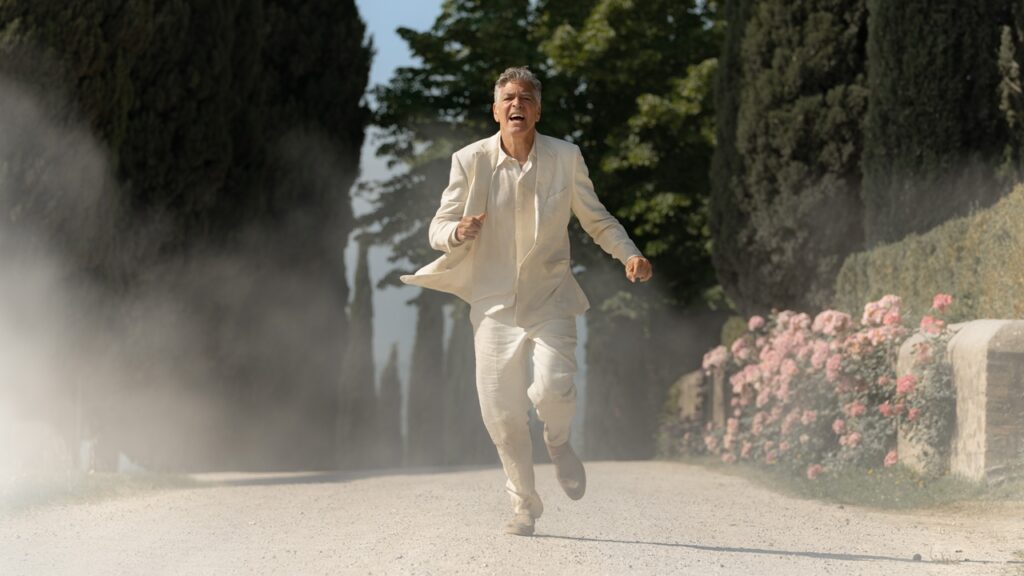
Ultimately, it is that tension that makes the film worthwhile for this writer. There is comfort in a definitive answer, for sure, but the alternative is more intriguing. What if the answer is he’s self-delusional AND still truly wants to change? The lack of clarity becomes a benefit, not a drawback. As he points out at one point, he’s been Jay Kelly, Movie Star, for 35 years. That sort of scaffolding can’t come down in one European trek, no matter how earnest one is about changing the direction of their life. Old habits and schemas die hard.
The meta-ness of it is also exhilarating. Like Jay, Clooney is a charismatic old-school star type in his 60s who broke big over 30 years ago. When Baumbach unspools a montage of Jay’s roles, we are actually watching clips from Clooney’s filmography. Obviously, there are plenty of ways the two differ, but it doesn’t seem beyond the pale to imagine the actor has asked himself some of the same questions Jay struggles with on-screen. Nor does it seem unlikely that audiences are just as unaware of the grappling as Jay’s fans, that we are all equally distracted by the glimmer and charm.
Is Jay Kelly the substantive story of a hollow man or the hollow story of someone more brand than man? Can we watch again? Might be worth another one.
Jay Kelly gets his tribute on Netflix starting December 5.