Read also:
How to Watch FX Live Without CableHow To Watch AMC Without CableHow to Watch ABC Without CableHow to Watch Paramount Network Without CableGiven how persistent zombies are, it’s only fitting that the 28 Days Later brand name is roaring back to life just seven months after 28 Years Later. This newest entry, The Bone Temple, picks right up after its predecessor’s cliffhanger ending. Teenage protagonist Spike (Alfie Williams) has been picked up by Sir Lord Jimmy Crystal (Jack O’Connell) and his hooligan minions. All of his followers are named Jimmy, wear moppy blonde wigs, and remain fiercely loyal to their leader, who claims he’s Satan’s offspring.
Spike didn’t fit into the isolated, traditionalist community he grew up in. He’s even more out of place here as Crystal and his goons set out to skin and slaughter survivors. Meanwhile, Dr. Ian Kelson (Ralph Fiennes) is still toiling away in his bone-covered domicile. It’s here that he frequently interacts with Alpha zombie Samson (Chi Lewis-Perry), who loves the morphine Kelson always has on hand. Crystal thrives on bloodshed. Kelson sees the faint glimmer of humanity in the undead. These two opposing worldviews cannot co-exist for long.
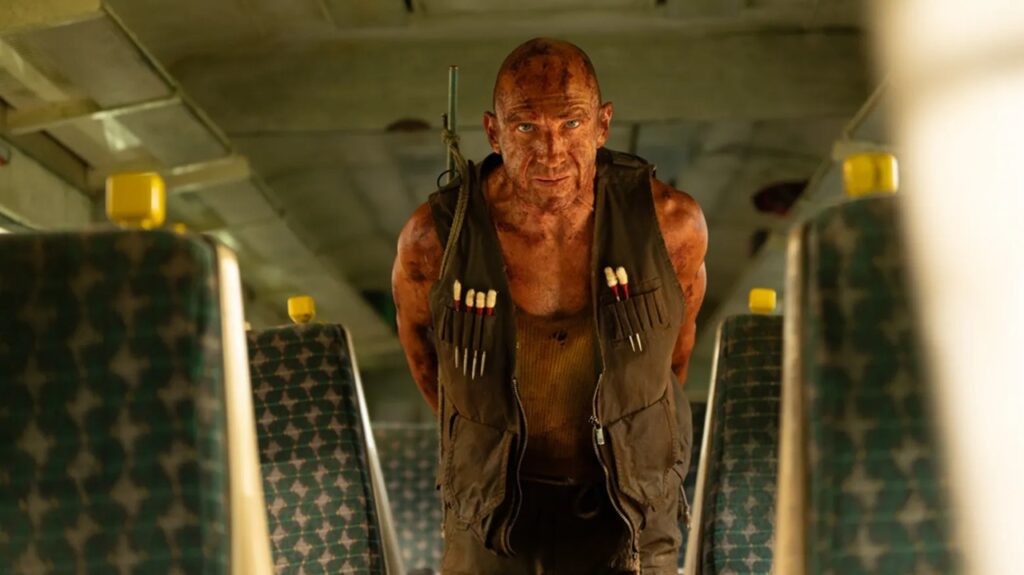
28 Years Later ended with a conceptually deranged yet beautiful in execution sequence focused on finding peace within the heartbreak of death. Happily, screenwriter Alex Garland and new director Nia DaCosta don’t backtrack on those oddball tendencies for The Bone Temple. Specifically, this entry oscillates between theology-heavy dialogue scenes reminiscent of Ordet and gnarly gross-out slayings that would make Herschell Gordon Lewis gleefully clap his hands. Embracing those opposing ambitions isn’t what any studio executive or algorithm would say dictates a “proper” legacy sequel.
As executed here, though, The Bone Temple’s varying aesthetics deftly communicate post-apocalyptic chaos. There are no rules in the fallen world. Any day could be your last. The staggering horrors of living through the unthinkable has inspired brutes (Crystal) and nurturers (Kelson) alike. That volatility informs both the barbarism of the squelching violence and sequences focused on two dudes getting high together. DaCosta’s filmmaking versatility also makes it a blast rather than disorienting to see where Bone Temple’s warped imagination goes next.
Intimate scenes of Samson and Kelson interacting, for instance, are so effective because of their stripped-down (sometimes literally), unhurried nature. DaCosta’s directorial debut Little Woods showed a flair for vulnerable, tight-knit dialogue. That quality echoes through the compelling human/zombie exchanges. Meanwhile, this same filmmaker deftly establishes Crystal and his brethren as kooky without sacrificing their menace.
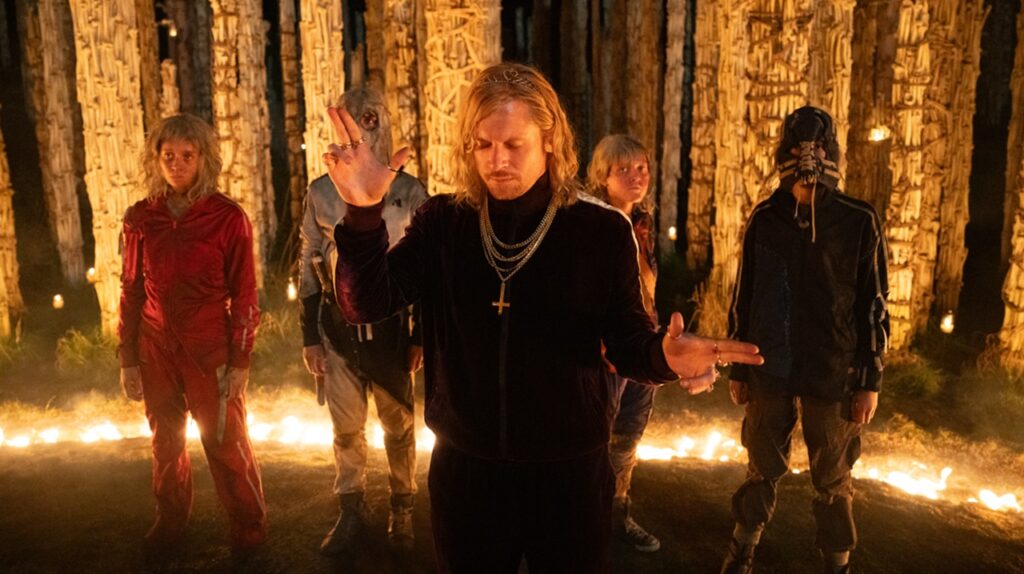
The Jimmy’s are permanently stuck in the adolescent mindset that witnessed the world’s collapse. Hence why they have such a rigid, literal interpretation of theology or happily babble about Teletubbies lore. However, that doesn’t stop Crystal from exuding a potently ominous air. Even when he’s just sitting at a dinner table making jokes to his followers and captives, DaCosta subtly uses tilted camera angles or uneasy silence to reinforce his prowess. Her unflinching vision when it’s time for the Jimmy’s to unleash brutality, meanwhile, is also effective.
Bone Temple’s middle section sometimes feels like switching channels between a Funny Games pastiche and a zombie-themed hangout movie. That’s a heavy compliment, since both modes are incredibly gripping. My breath certainly remained clutched as tormentors like Jimmima (Emma Laird) slowly pick off their victims. Meanwhile, the chummy framing of Samson running his fingers through berries or ponds also compels the eyeballs. Alex Garland’s original 28 Days Later was a rapid-fire, ADHD vision conveying the experience of enduring a zombie outbreak. DaCosta, meanwhile, realizes The Bone Temple as an act of witnessing. Audiences observe rather than outrun humanity’s worst impulses and surprising zombie depth.
Embracing aesthetics and themes so different from past 28 Days movies is remarkable. What’s more frustrating, though, is how Garland handles Spike. This screenwriter is clearly most fascinated with the dichotomy between Dr. Ian Kelson and Sir Lord Jimmy Crystal. That means a great emphasis on their personal lives, which is quite transfixing. However, in the process, Spike’s coming-of-age story sometimes vanishes.
This time around, this teenager is more of a background reactor to action rather than an audience point-of-view character or a more active player. Granted, The Bone Temple as a standalone film works just fine even while pushing Spike to the margins. However, given that this motion picture is very much a continuation of its predecessor (if you didn’t see 28 Years Later, you’d be undoubtedly lost jumping right into this entry), it’s worth noting how it does and doesn’t work in a larger narrative. In that regard, Bone Temple struggles.
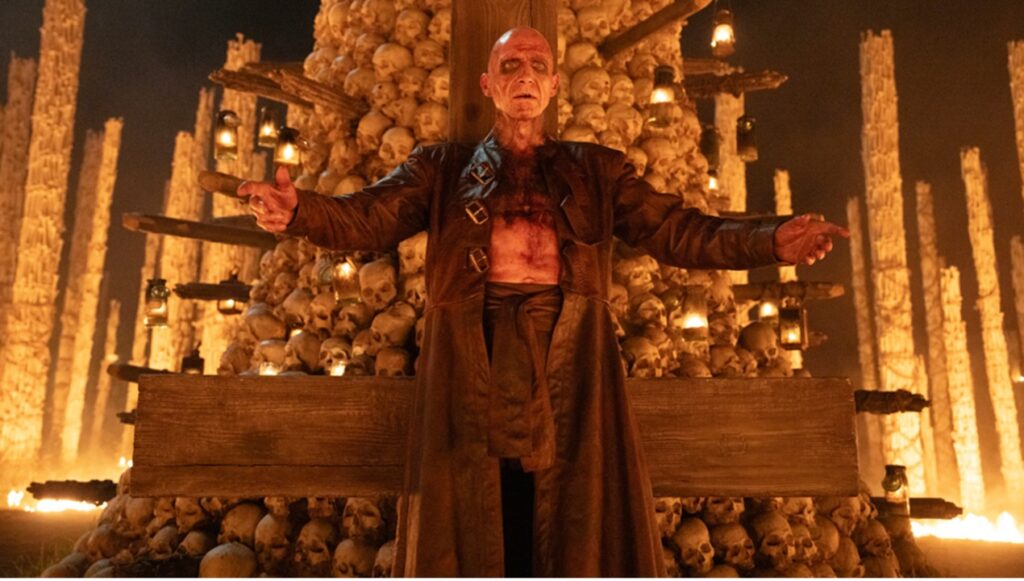
Making that shortcoming go down more smoothly are the incredibly evocative performances. Fiennes channels big Mr. Boss from Smiling Friends energy for this iteration of Kelson. It’s a vibe that this Conclave veteran excels in, particularly in his quietly amusing line delivers. Jack O’Connell, meanwhile, now has a second great horror baddie under his belt with his terrific Jimmy Crystal performance. It’s truly impressive how well he balances the character’s raggedness with a palpably intimidating aura. O’Connell effortlessly makes the scared adolescent Crystal from 28 Years Later’s prologue evident while inspiring goosebumps with his monstrousness.
The MVP among the supporting players, though, is Emma Laird as one of Crystal’s followers, Jimmima. With plastic butterfly wings on her back, a giggle constantly on her lips, and an unquenchable bloodlust driving her every move, this character is terrifying. Laird is a capricious riot performing this movie’s equivalent to Chop Top from The Texas Chainsaw Massacre 2. Meanwhile, Chi Lewis-Perry is sublime handling the increased depth handed to the Samson character.
In typical legacy sequels (horror or otherwise), newly assembled actors like Lewis-Perry, O’Connel, and Laird would be asked to just sit around, look awestruck at franchise veteran actors, and repeat lines from earlier films. Happily, The Bone Temple lets the 28 Days Later universe grow. There are now fully new and excitingly unknown characters that these artists can portray. Neither the cast nor audience are in for rerun of, say, 28 Weeks Later.
Offering up such a fresh tableau really lets DaCosta’s filmmaking instincts soar, particularly in a bombastic climactic set piece that’s nothing short of enthralling. Granted, that doesn’t mean every weighty The Bone Temple theme gets fully explored. Garland’s weird decision to sideline Spike also leaves pathos-based potential on the table. However, even those jagged shortcomings reflect what a commendably audacious (and entertaining) exercise this is. Here’s one horror franchise that more than justified coming back after just a seven-month breather.
28 Years Later: The Bone Temple stomps into theaters on January 16.