Read also:
How to Watch FX Live Without CableHow To Watch AMC Without CableHow to Watch ABC Without CableHow to Watch Paramount Network Without CableIt is perhaps fitting that the titular Vladimir is both a cipher to the audience and the story’s protagonist/narrator (Rachel Weisz). In the same way that he (Leo Woodall) comes to life in her fantasies, we are free to affix our own assumptions and interpretations to him. The version of him we get, not animated by Weisz’s character’s desire, seems bland. Prone to self-pity with a bit of whine, sometimes creeping into his voice. The fantasy version, however, is passionate, commanding, perhaps even reckless. Just as his emptiness allows Weisz to cast him as the recharger of her libido, so too does it invite us to imagine what someone would be like who did that for us.
He also hints that the series, created by Julia May Jonas from her novel, is not exactly what it seems. The opening features Weisz directly addressing the audience for the first of many times. She lays out a story of desire while insisting she can no longer exercise erotic power over a man. It seems laughable as Weisz remains a vision in her mid-50s. Plus, the lens and lighting frames her very sympathetically here. But that’s the point. Yes, Vladimir may be a sex object, worthy or not, and the protagonist may be aging, very slowly. But lust and desire are the show’s surface elements. Beneath them, the real themes of inspiration, commitment, stagnation, and betrayal bubble up.
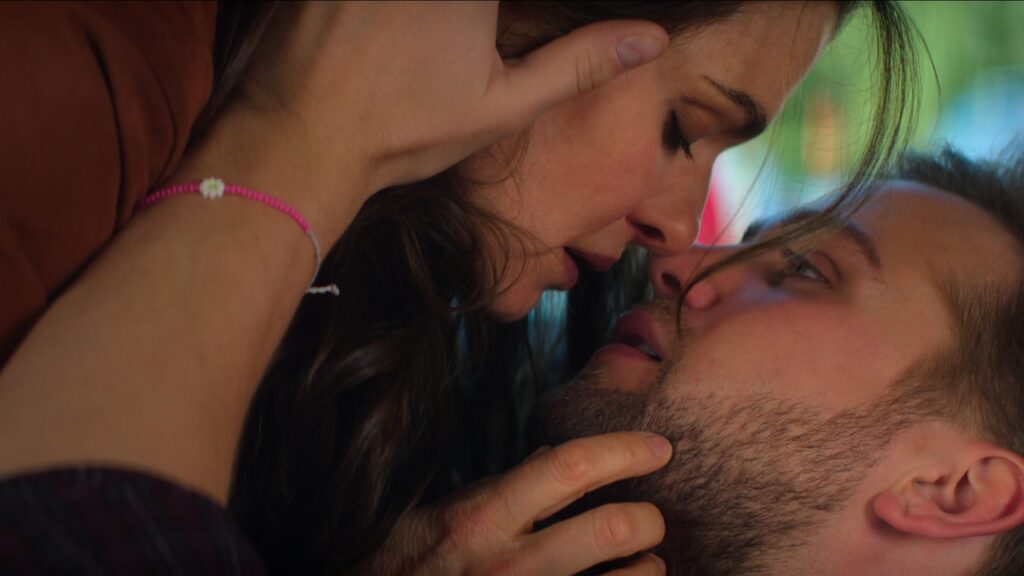
The protagonist and her husband, John (John Slattery), have enjoyed being the hot genius couple and the college where they work for years now. That’s all been brought to an abrupt halt, though. In addition to her purported vanishing erotic power, there’s also the matter of her partner’s promiscuity. It seems that after decades in academia, John has amassed a considerable number of sexual dalliances with students. The protagonist insists they had an open marriage. As a result, she’s not bothered by his affairs. No, it is only how people treat such things now that has disrupted their lives. As the controversy expands to threaten her career as well as his, Vladimir and his wife, Cynthia (Jessica Henwick), arrive on campus. It’s as though the universe has already arranged the protagonist and John’s replacements. Worse, ol’ Vlad lights the narrator’s fire bad, causing her to act even more erratically.
When the plot stays firmly on the dynamics of Weisz and Woodall’s affair, it feels on good footing. Things go awry when the show takes on questions of consent, power dynamics, and more. It wants to step out as a bit iconoclastic. Weisz, for instance, makes an argument that to question the appropriateness of John sleeping with legally adult students is to deny women the sexual liberation they spent years fighting for. However, in that case and others that follow, the series too often fails to interrogate such statements or provocatively waggles their proverbial eyebrows before moving on. These are controversial topics for sure. Nonetheless, if the show is authentic in its desire to question the status quo, it needs to either be a little less arch and/or take its time more.

That said, I found myself undeniably invested in Vladimir. Weisz makes a hell of a devil’s advocate. She’s self-aware but out of control, endlessly self-rationalizing, and, frankly, being unfairly held accountable for the sins of others. Slattery is also quite good as the aging player and intellectual. He reads as both disinterested in spending a moment thinking he did anything wrong and utterly tired of his own shit. Henwick may be the show’s most interesting character. She’s a mom, artist, and addict who feels hemmed in by both those roles and failures at living up to them. Woodall, again, is the blandest of the big players, but he plays that part with skill. For instance, when Cynthia shows up to drive him home from a facility hangout, he manages to act like both a sad child and an erotic object, no easy swing.
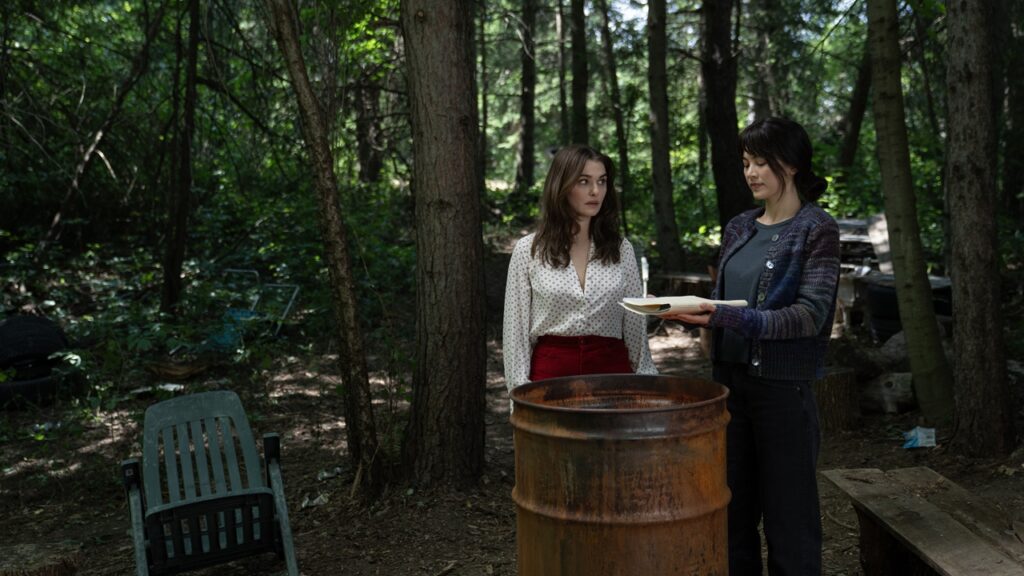
Vladimir also has a talent for not overplaying tricky emotions. When Sid (Ellen Robertson), John and the protagonist’s only child, steps in to help her father beat the allegations, both Slattery and Robertson capture the toll it takes without burying the needle. Weisz goes bigger on her roller coaster ride of lust and uncertainty, but never cartoonish, even when sniffing an armpit. With the number of fantasy sequences and fourth-wall breaks, staying authentic is no easy task. Still, Vladimir does so, time and again.
It likely makes me a bit like the pearl-clutchers the show so enjoys needling, to say that its often flippant responses to questions of fidelity, consent, and power dynamics do rankle. I don’t wish they hadn’t done it at all. I just wish they’d engaged more than just hit-and-run. But if one can put that aside, as I did, Vladimir ends up a compelling look at how often we confuse our desires for sex with our desires for harder to reach things like respect, creativity, and a sense of belonging.
Vladimir gets steamy and literate on Netflix starting March 5.