Read also:
How to Watch FX Live Without CableHow To Watch AMC Without CableHow to Watch ABC Without CableHow to Watch Paramount Network Without CableHollywood loves a good logline. Truth be told, many of us do. So let’s get this review started with one. The Miniature Wife looked like a Honey, I Shrunk the Kids riff with somehow worse comedy. What it actually is, though, is The War of the Roses smuggled onto your TV in a Honey shell, topped with critiques of venture capitalism, science-for-profit, and social media ubiquity for good measure. It’s the most delightful TV surprise of 2026, a show that is wonderfully acidic yet goes down oh-so-smooth. Creators Steve Turner and Jennifer Ames, adapting a short story by Manuel Gonzales, have delivered something really special here.
The Littlejohns, Les (Matthew Macfadyen) and Lindy (Elizabeth Banks), are about to reset their marriage, to try to get back to what they once were. It is clearly not their first attempt. Lindy, a writer who won a Pulitzer Prize for her first novel, hasn’t published anything since. Les, on the other hand, is a genius scientist whose greatest accomplishment, a genetically modified tomato, was an incredible marvel. Well, save for one thing. It tasted terrible. As a result, he remains Nobel Prize-less, a recognition of his abilities he feels entitled to. Ego, resentment, workaholism, and deferral of responsibility have conspired to curdle their relationship over the years. Lindy is even in the midst of an emotional affair with Richard (O-T Fagbenle, finding yet another way to be funny), a scientist under Les’s supervision.
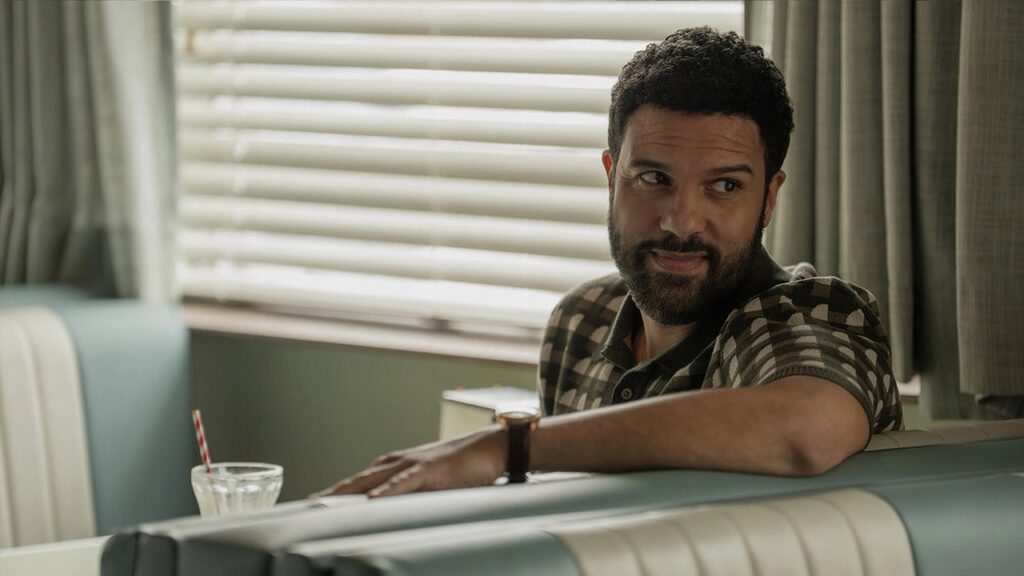 Peacock) O-T Fagbenle" class="wp-image-56701"/>
Les’s current project is half successful so far. It shrinks food. Returning it to normal size has been an issue, though. The issue? It explodes instead. However, that working half plus some glittering generalities gets callow billionaire Hilton Smith (Ronny Chieng, in too short supply) to work over seed money for the project. Alas, the cash comes with some overlooked strings attached. Namely, that the money evaporates in 30 days if Les and his team can’t fix the exploding, and that Hilton’s right-hand woman, Vivienne (Zoe Lister-Jones, wonderfully bizarre), now oversees their every move. Things go from frustrating to downright bad when the beleaguered Les accidentally doses Lindy, shrinking her.
First, are there miniature people jokes? Some, sure. You don’t write a series about shrinking people without giving them a dollhouse for a home or a fly for a nemesis. The Miniature Wife, however, doesn’t just stick with the low-hanging fruit. Lindy’s relationship with a spaceman action figure, for instance, is considerably more involved than her snacking on a giant piece of popcorn. As a result, it is also considerably more interesting, creating an ongoing joke that, while never laugh-out-loud funny, delivers chuckles over and over.
 Peacock) Elizabeth Banks" class="wp-image-56698"/>
Cinematographer Adrian Peng Correia also laces in tricks of perspective throughout. While shooting the non-miniaturized world, he gives us shots of elevators, buildings, busy streets, and more that deceive the viewer’s eyes for a few seconds, creating an atmosphere where one cannot quite trust any element. It isn’t only the people engaging in deceitfulness, but the entire visual world of the series.
He and the set dressers are also quite smart about exactly how realistic v. how cheesy to make the visuals. The level of unreality when Lindy descends a huge stairwell made of LEGO, for instance, is wonderfully calibrated. It doesn’t look real, but its artificiality enhances rather than detracts from the show’s atmosphere. Similarly, the doll house can sometimes read on-screen every bit as “real” as a correctly sized home. In addition to reinforcing the sense of an untrustworthy world, it provides a smart indicator of the times when Lindy “forgets” her situation.
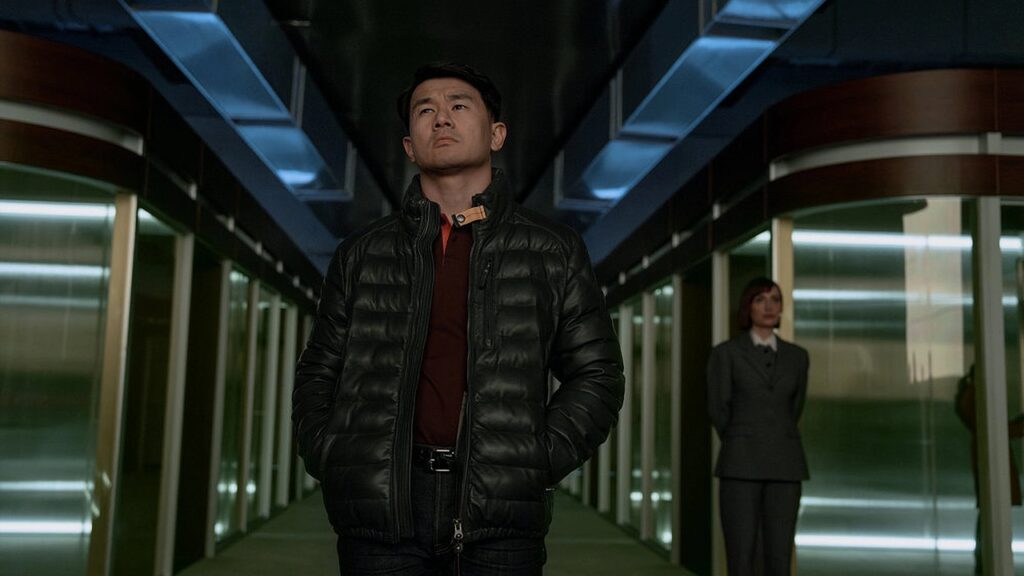 Peacock) Ronny Chieng Zoe Lister-Jones" class="wp-image-56702"/>
The Miniature Wife offers more than visual tricks. There’s talent on display in the performances as well. Banks holds the show together, somehow staying grounded despite the sci-fi trappings. Moreover, she freaks out convincingly, finding the silly and serious in moments like attempting to drive her husband out of his mind or destroying property to achieve a little more freedom. Macfadyen plays well off her—and Lister-Jones—but sometimes feels like a completely different character than his younger self. He plays both convincingly, but the man he was and the man he is feel, at times, too far apart. There’s perhaps something there about how jealousy and ambition can corrupt, but the scripts too often tell us about that transition rather than put it up on the screen.
The supporting cast is top-notch. As mentioned above, I’d have loved a bit more of Chieng’s “never admit you’re wrong” billionaire. He’s a toxic stew of obliviousness and entitlement that Chieng makes sure reads for the audience without making him an utterly repulsive presence. Same with Lister-Jones, who makes her tightly coiled corporate type a barely concealed freak without ever letting go of the leash. Fagbenle’s Shakespeare-loving romantic has just enough complexity to make him interesting without detracting from the larger characters. Aasif Mandvi, as Les’s best friend and business partner, Martin Mucklowe, probably has the most thankless job. Still, even he gets space in the final three episodes to be more than the guy who reminds everyone “we are running out of time/money!” over and over.
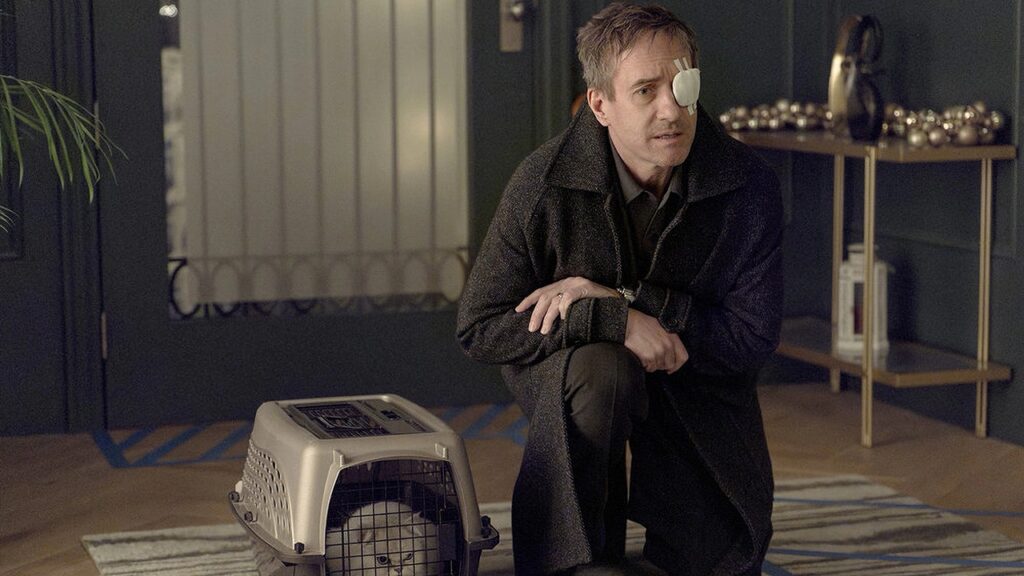 Peacock) Matthew Macfadyen Rafy" class="wp-image-56700"/>
There are a few stumbles, particularly towards The Miniature Wife’s end. An episode-long flashback coming in the penultimate isn’t so much an issue of execution. It nicely illuminates the problems of Les and Lindy’s marriage even during their “honeymoon” phase, pairing insight with an anarchic “one crazy night” sense of humor. However, near the end of the series, flashback episodes have become so clichéd that it is difficult not to roll one’s eyes when they occur. It is time to give that bit of storytelling structure a break and find a different way to use flashbacks. The other issue is that the show sometimes struggles to mix in moments when the couple seems genuinely in love without overplaying their hand. It is treacly, per se, but it veers into perfect-couple tropism in a way that disappoints.
These drawbacks—a well-done example of a cliché and overly idealized romance—are minor, though. Especially when one expected something far less interesting. Imperfections and all, The Miniature Wife is a wonderful surprise.
The Miniature Wife is moving into Peacock’s dollhouse starting April 9.