Read also:
How to Watch FX Live Without CableHow To Watch AMC Without CableHow to Watch ABC Without CableHow to Watch Paramount Network Without Cable“Boots—boots—boots—boots—movin’ up an’ down again!
There’s no discharge in the war!”
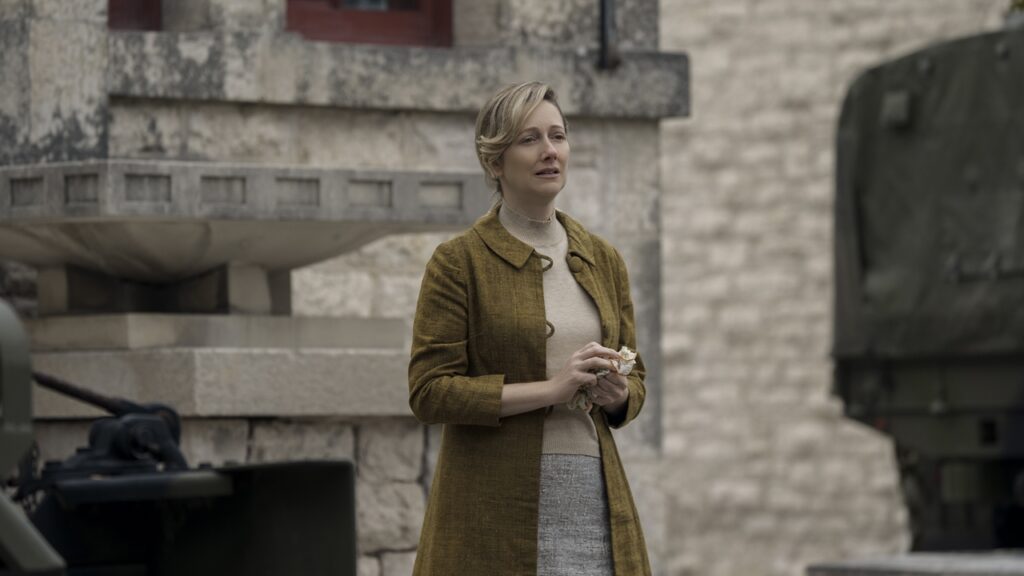
Raymond Garraty (Cooper Hoffman) thinks he’s ready to go. A citizen in a (more) dystopian United States, Garraty, much to his mother, Mrs. Garraty’s (Judy Greer) immense pain, has signed up for The Long Walk. This annual contest involves a group of 50-ish young men walking endlessly at a consistent speed, night and day. If they stop for any reason, they get three warnings. Fail to resume by the third and face slaughter by the gun-toting men following (and filming) the contestants.
As intimidating authority figure The Major (Mark Hamill) loves to say, there is no finish line here. The Long Walk ends when only one boy remains walking.
“Don’t—don’t—don’t—don’t—look at what’s in front of you.
(Boots—boots—boots—boots—movin’ up an’ down again)”
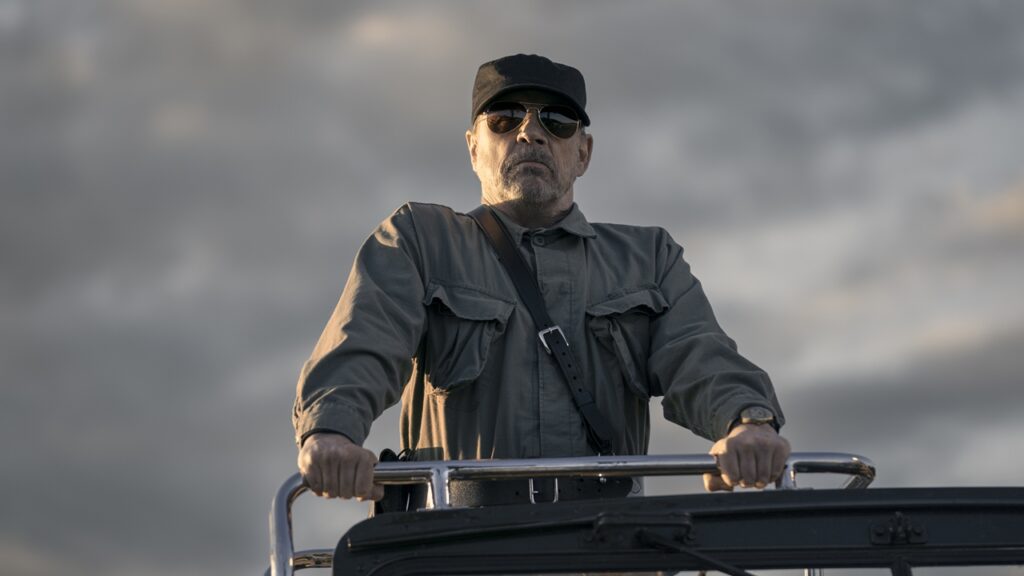
Garraty and other participants, including Peter McVries (David Jonsson), Hank Olson (Ben Wang), and Stebbins (Garrett Wareing), think they know what they’re getting into as their journey begins. After all, they’ve watched previous Long Walk iterations on television for years. Nothing can prepare them, though, for the horrific sounds of young men screaming in pain before gunshots end their lives. The Long Walk (adapted from a 1979 Stephen King [writing as Richard Bachman] novel of the same name) gruelingly chronicles these contestants perishing one at a time. As more and more blood stains the concrete, Garraty and his comrades focus on making it to the next step. Nothing could’ve made them ready for this nightmare.
In a strange twist of fate, one of director Francis Lawrence’s greatest shortcomings in his 2018 film Red Sparrow is a fantastic asset here. Sparrow’s often clinical, quasi-postmodern take on the grisly reality of women in espionage stories frequently indulged in brutal violence. Unfortunately, this ensured the supposedly subversive project starred women experiencing far grislier on-screen pain than their male counterparts. Lawrence’s commitment to bloody corpses and grotesque demises didn’t work then, but is perfect for The Long Walk.
The filmmaker’s unblinking depiction of young people getting their brains blown out, legs crushed, and bodies riddled with bullets amplifies the ceaseless tension bedeviling Garraty, McVries, and other Long Walk contestants. The mutilations subvert the “rule” that pre-college-aged characters can’t die in mainstream cinema, establishing anything can happen in this nightmare place. On the other hand, Red Sparrow’s skewering of women’s bodies regurgitated similar imagery from other movies.
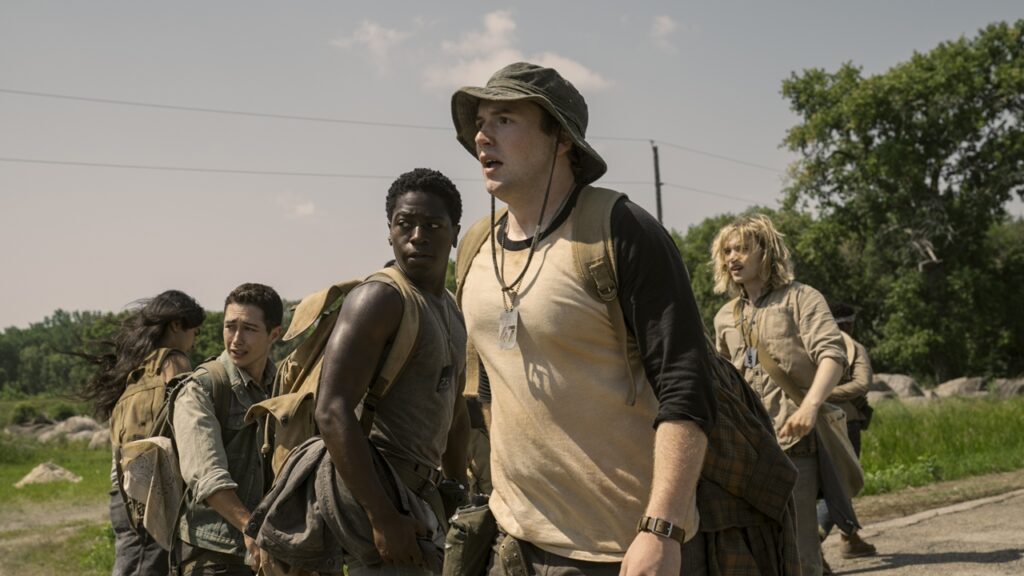
Similarly impactful is Lawrence’s intentionally unglamorous and raw capturing of the terrors. This maneuver effectively contrasts with how, in-universe, the content acts as shallow, reality TV spectacle gobbled up by desensitized audiences. Under Lawrence’s direction, though, the weight of every life lost is restored and hauntingly felt. This Stephen King adaptation allows the Hunger Games filmmaker veteran to soar.
Try—try—try—try—to think o’ something different —
Oh—my—God—keep—me from goin’ lunatic!
Those eerie bursts of violence are especially effective since JT Mollner’s screenplay doesn’t cram the entire movie with just torture and mutilated bodies. His script (and Lawrence’s camera) are equally enamored with intimate exchanges between Garraty, McVries, and company. Actors like Hoffman, Wang, and Jonsson display great chemistry, engaging in deftly specific exchanges about matters ranging from how to defecate during the Long Walk or their varying approaches to religion.
Mollner’s writing also uses these nonchalant dialogue-heavy stretches to quietly emphasize The Long Walk’s tragic core: these characters should goof around and be themselves. When they’re just supporting each other and singing “Oh, My Darling Clementine” together, characters like Garraty and McVries offer haunting glimpses into who they could be if they weren’t born into a totalitarian nightmare. Much like with the central subjects of Martin Bell’s Streetwise or countless figures chronicled in Palestinian cinema, The Long Walk shattered my heart in depicting young people who deserved to grow up and exist. The point isn’t shock value. It’s how authoritarianism, capitalism, and toxic masculinity norms deprive young men of the chance to become idiosyncratic individuals.
As Karis Nemik so wisely declared in Andor, fascism’s “need for control is so desperate because it is so unnatural.” What is natural is humans helping and caring for each other. Mollner’s script carefully shows how support and bonding between these guys let them temporarily be human. Then, the harrowing sound of gunfire slams them back into reality. Long Walk’s bursts of violence never lose their grueling impact, which amplifies that “unnatural” feeling of The Major, his bloodthirsty soldiers, and their love for “manly” violence. The intentionally jagged oscillations between entertaining friendships and unnerving bloodshed are captivatingly executed.
We—can—stick—out— ’unger, thirst, an’ weariness,
But—not—not—not—not the chronic sight of ’em —
Boot—boots—boots—boots—movin’ up an’ down again,
An’ there’s no discharge in the war!

Accentuating the compelling nature of The Long Walk is its sterling collection of performances. Jonsson particularly stands out, channeling big Raymond Wang vibes as the relatively hopeful McVries. Those of us in the Rye Lane fan camp know Jonsson’s compelling chops are nothing new. However, his rapport with his fellow contestants is still so effortlessly transfixing. Jonsson’s work infuses a crisp, richly human center for a story of relentless bleakness. Hoffman and Wang are also terrific in their performances. At the same time, Charlie Plummer lends enough compellingly frayed mental anguish to nasty walker Gary Barkovitch to differentiate him from countless other teen bullies in other Stephen King movie adaptations.
All of these great tonal and acting flourishes, unfortunately, lead to a finale that features the most rudimentary visuals of the entire motion picture. Awkward blocking and strangely stiff camerawork deprive this critical sequence of personality. Otherwise, though, Lawrence and cinematographer Jo Willems realize The Long Walk handsomely with plenty of welcome visual flourishes. That includes an emphasis on wider images with multiple characters in the same frame rather than more cramped, streaming-ready framing. That quality has the extra benefit of quietly selling the budding friendship between these guys.
Happily, save for two very brief flashbacks to Garraty’s past, Lawrence and Mollner are confident enough to keep The Long Walk exclusively confined to just people walking until their bodies give in. That limited scope likely terrified some studio executives, but it lets the in-universe stakes, performance, and especially grim atmosphere excel. Trapping audiences within this nightmare produces commendably harrowing cinema leaps and bounds above the quality of your typical Stephen King movie adaptation.
I—‘ave—marched—six—weeks in ‘Ell an’ certify
It—is—not—fire—devils, dark, or anything,
But boots—boots—boots—boots—movin’ up an’ down again,
An’ there’s no discharge in the war!
The Long Walk takes to the road starting September 12.
Thank you to the 28 Years Later teaser trailer for inspiring the recurring use of the Rudyard Kipling poem “Boots” in this review.