Read also:
How to Watch FX Live Without CableHow To Watch AMC Without CableHow to Watch ABC Without CableHow to Watch Paramount Network Without CableOOne of the last interviews in Jafar Panahi’s 2015 feature Taxi centers on Nasrin Sotoudeh. In her brief screentime, the human rights lawyer talks about the psychological experiences of those imprisoned and tortured under Iran’s government. Even after release from these prisons, your suffering isn’t over. Sotoudeh describes to Panahi (himself previously arrested for producing “propaganda against the regime”) that the Iranian forces so psychologically traumatize people that “the outside world is only a bigger prison. They make your nearest friends into your worst enemies. After that, you think all you can do is either leave the country or pray to return to that hole.”
Sotoudeh’s words echo into Panahi’s new narrative film, It Was Just an Accident. Goli (Hadis Pakbaten) recounts her sexual trauma and suffering while imprisoned, noting that leaving the place of her torture doesn’t end her anguish. As she remarks, the world outside has become its own kind of prison. Panahi’s gift for blurring the lines between reality and fiction gives this moment vivid insight into Goli’s psyche.
She’s not alone in her feelings. All the film’s central characters survived unspeakable torture at the hands of their government. That leads us, and the audience, to contemplate overwhelming questions. What can they do now? What should they do? How will their lives look in Tehran? Will revenge bring them any peace?
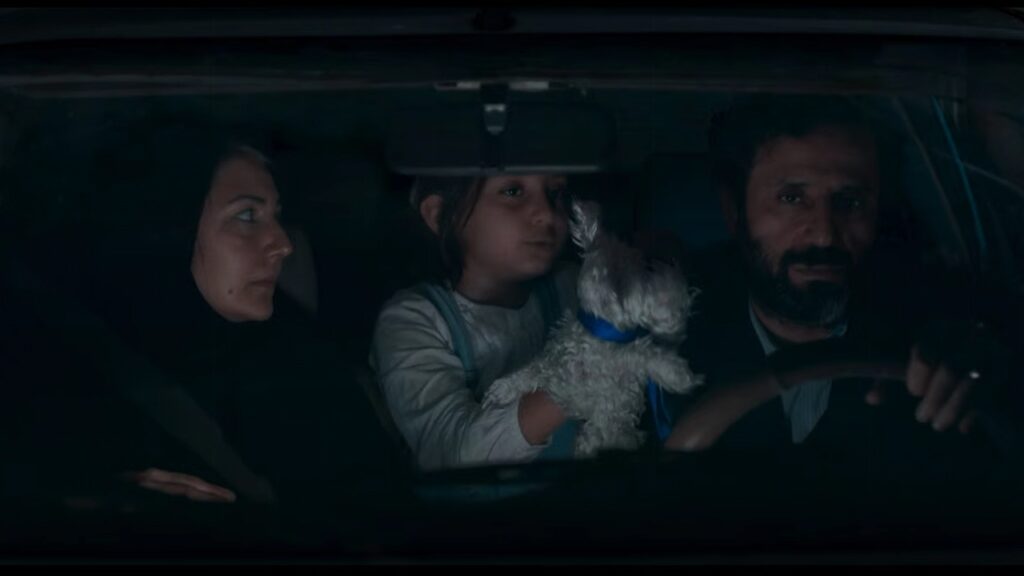
Vahid (Vahid Mobasseri) is a mechanic quietly whittling away his days while living with tremendous back pain. One fateful night, a family asks for help for their stalled car. While helping, Vahid hears a noise he hoped would never cross his ears again. A squeaking from a prosthetic leg. To his ears, it’s the same he heard every day from the man responsible for his back pain and countless sleepless nights. His merciless torturer, Eghbai.
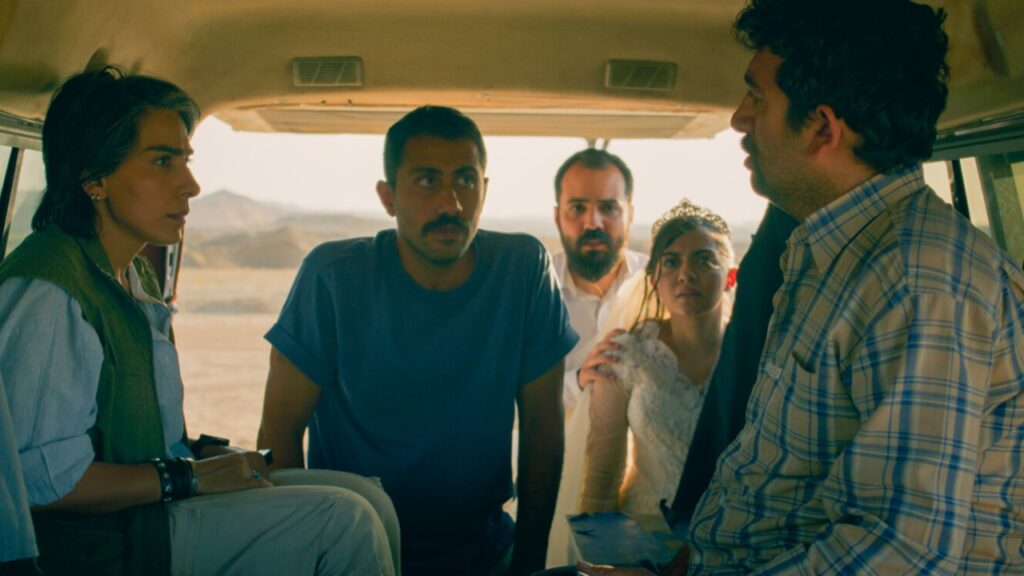
After finding out where the man (Ebrahim Azizi) lives, Vahid impulsively kidnaps him, planning to bury him alive in the desert. However, Vahid’s captive insists he is not the torturer. Given that Vahid had never seen his antagonist because of a blindfold, he needed further proof. So, he begins roping in other survivors to verify the abductee’s identity. These include photographer Shiva (Mariam Afshari), engaged couple Goli and Ali (Majid Panah), and the psychologically erratic Hamid (Mohamad Ali Elyasmehr).
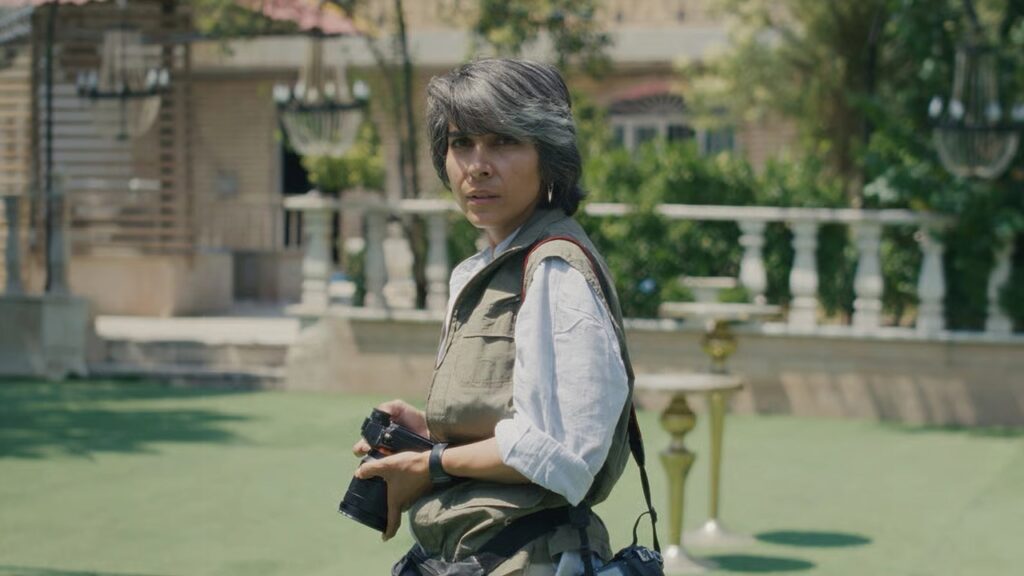
Concerned with the here and now, It Was Just an Accident never cuts to flashbacks of what Vahid and other torture survivors experienced. That choice creates a captivatingly tense atmosphere. Every Accident location is a space where trauma festers, and people can’t escape the past. For instance, Shiva can be snapping photographs in the most photogenic of locales when, suddenly, reminders of crimes perpetrated against her harrowingly materialize. Wherever this film goes, the weight of the past is immensely tangible.
This precision extends to what material Accident keeps off-screen. Keeping Azizi’s character off-screen for most of the second act complements the aforementioned lack of flashbacks. The camera captures others looking at him, but he’s always just out of frame. This decision keeps the focus squarely on people like Vahid and Shiva, redressing the Iranian government’s previous attempts to erase those characters’ autonomy and very existence. It Was Just an Accident’s visual priorities are stealthily subversive while perfectly amplifying the story’s pressure.
Also shaping the tension is the fascinating disconnect between the survivors. Suffering human rights violations doesn’t suddenly make them a hive mind in constant unison. They’ve each had radically different responses to their torment, which, in turn, inform different ideas on what to do with Maybe Eghbal. Hamid, for instance, often sees Vahid, ex-lover Shiva, and Goli as threats rather than allies. Watching these figures bounce off one another informs some of this film’s most engrossing sequences.
Panahi, cinematographer Amin Jafari, and editor Amir Etminan masterfully realize these rich character dynamics. They’re tremendously adept at the precise timing and visuals necessary to wring all possible suspense out of a sequence. A set piece set atop a parking garage involving two snooping cops especially thrives on these fronts. Every anxiety-inducing beat and new obstacle leaps to the screen so richly realized in their assured hands.
Panahi and crew’s exemplary visual instincts don’t just produce suspense sequences that would make all other thriller filmmakers seethe with jealousy. So many It Was Just An Accident sequences eschew the familiar visual motifs of other “intense” thrillers (shaky-cam, disorienting editing, etc.) in an act of quiet rebuke.
During the entire runtime, “unpleasant” parts of everyday reality are constantly visible in unblinking, beautifully arranged wide shots. The epitome of this shooting style comes in a blistering confrontation between Shiva and Maybe Eghbal. In the span of a few minutes of single-shot screentime, we see a formerly supremely composed woman stop suppressing her trauma to lay bare the daily Hell she lives with, the memories of abuse she cannot extinguish.

Afshari’s performance here is stunning. I’ll never forget her work in this scene or her other transfixing Accident moments for the rest of my life. Panahi’s steadfast shooting style perfectly captures her talent, providing an unwavering testament to “unpleasant” psychological torment. To not talk about it is akin to total erasure, but none of these characters can forget what happened to them. The feature’s pervasive and compellingly precise visual instincts bear witness to those oft-expunged experiences.
It Was Just an Accident’s mastery won’t just impress Jafar Panahi aficionados. It is a remarkably crafted production rife with extraordinary performances, imagery, and even a smattering of deftly executed comedic moments. Anyone who wanders into a darkened auditorium playing this gem will exit astonished at what they’ve witnessed. It builds upon Panahi’s previous works (including echoing specific Taxi lines and themes) without feeling like a cinematic rerun. The testimonies of Nasrin Sotoudeh and others reverberate throughout, making your heart race and ache in equal measure.
It Was Just an Accident is now playing in select theaters and will expand into more locations through the rest of 2025.