Read also:
How to Watch FX Live Without CableHow To Watch AMC Without CableHow to Watch ABC Without CableHow to Watch Paramount Network Without CableAnything can wield importance. An empty room? The setting of a child’s first steps. An old country song? The score for a first kiss. It is all a matter of perspective, emotion, and memory. For instance, for me, the 2009 Rent: Filmed Live on Broadway Blu-ray was one of the last movies I watched with my Uncle Doug before he passed. Every time I see it, I can still hear him singing along to those Rent tunes. That’s the beauty of existence, where day-to-day pain is leavened by those we love. Where reminders of treasured connections remain even after our loved ones depart this mortal plane.
Writer/director Chloé Zhao’s latest cinematic triumph, Hamnet, unflinchingly chronicles corporal agony. It also beckons viewers to the beauty that exists alongside it. Listen to a play’s dialogue a little more closely. Hold the hands of the ones you love a little longer. Anything can resurrect the past, even just for a fleeting second. Agony is everywhere. And so, it follows, are odes to those who make that torture worth enduring.
Zhao’s works have always concerned lost souls searching for solace in earthly tableaus following personal cataclysms. She and co-writer Maggie O’Farrell (adapting her 2020 novel of the same name) keep that spirit alive in centering Agnes (Jesse Buckley). She’s a young woman haunted by her mother’s death, unwilling to conform in society, and most at home in the wilderness. Others see Agnes as an oddball worthy of shunning. Not William Shakespeare (Paul Mescal).
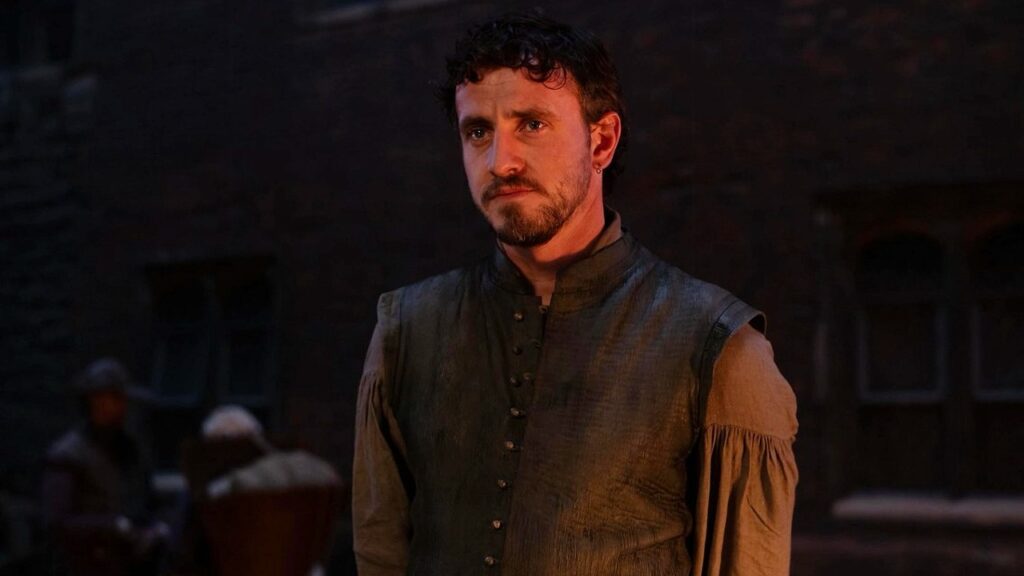
His infatuation with her quickly blooms to romance. Their bond leads to marriage and, then, family, including their sole son Hamnet (Jacobi Jupe). The screenplay chronicles William and Agnes’ life together, from the first flush of love to the ordinary days of domestic existence, in a naturalistic style in line with Zhao’s previous works. She and cinematographer Łukasz Żal even echo Roma’s gently moving, unblinking camera to capture recognizably routine early morning antics between Hamnet and his twin sister.
The subdued, observational camerawork reflects Hamnet’s greatest strength. This is not Shakespeare in Love redux. Nor is it a music biopic in which musicians stumble upon famous song titles thanks to offhand remarks from secondary characters. O’Farrell and Zhao don’t write Agnes and William to inspire the audience to spend the entire runtime pointing at the screen like DiCaprio in Once Upon a Time in Hollywood. The script secures audience investment in these characters through traits specific to this film rather than relying on ceaseless namedrops to maintain your attention. That’s what makes the feature’s world feel so honest and absorbing.
History will carve out these people as special, but in their day-to-day life, they’re fragmented human beings. Thus, Zhao’s love for zeroing in on the people society often overlooks shines. That gift is especially potent in her fully dimensional rendering of Agnes, a woman often rendered a footnote. Fascinating details about her, including her unblinking approach to death and complicated response to William’s constant absences, are realized with immense depth. While many, including members of William’s own family, dismiss Agnes as a loon, the film shows her as full of anguish, yearning, compassion, and more.
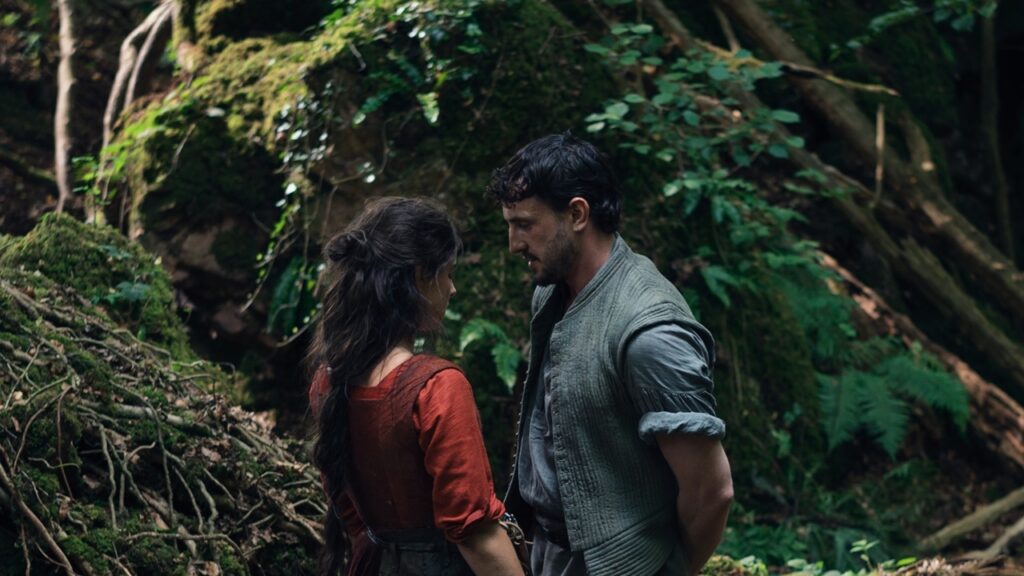
The details become even more transfixing thanks to Buckley. Beginning in Wild Rose, she’s established herself as a performer who crafts fully realized people with souls from individuals who easily could’ve been relegated to caricature or barely there player. Others might not see the depth in people like the wife of a man hospitalized after unspeakable chaos in Chernobyl or a young woman clinging to toxic societal norms in Women Talking. Buckley uncovers those fascinating layers with such absorbing ease. In Hamnet, she keeps viewers glued to her every move, acing big and quiet moments with equal success. Whether wailing in realistic pain or delivering hushed but firm lines, she communicates Agnes’ depths.
The larger movie takes a cue from Buckley, fusing conceptually inhospitable ingredients to create riveting cinema. Take, for instance, how the proceedings alternate between dreamy energy and aching realism. The latter element materializes in sequences like William struggling to both write and convince himself he’s not just a doppelganger of his abusive father. The unblinking camerawork and raw dynamic between married souls echoes filmmakers like Kathleen Collins and John Cassevettes.
However, the film also deploys heightened digressions powered by surrealistic impulses, such as recurring cuts to ominous holes in trees or on stage. Zhao excels at juggling these opposing aesthetics, fearlessly capturing domestic strife while conveying stages of death through heightened visual symbolism. Embracing these elements makes Hamnet authentic in its portrayal of processing grief and navigating life’s daily anguish.
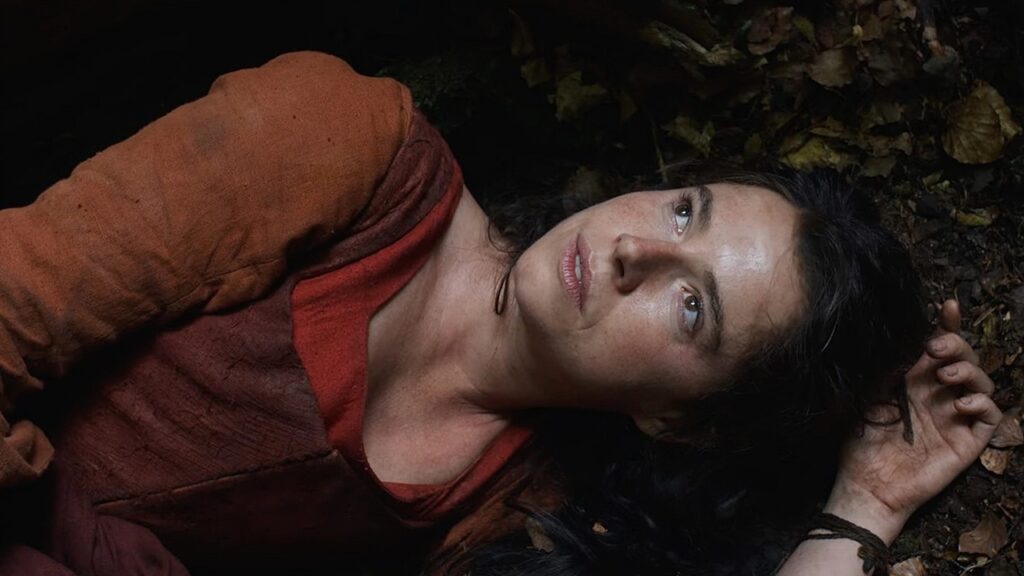
Zhao, Buckley, and other Hamnet artists, embracing varied tempos throughout this movie, perfectly crystallize the intricacies of this process. Whether it’s embracing down-to-earth realism or exploring more surrealist digressions, Hament consistently displays a stunning level of craftsmanship. Żal, for instance, stunningly translates the precise visual impulses from previous works like Ida and The Zone of Interest to this feature. His vast nighttime interior images, featuring striking contrasts between bursts of flickering candlelight and overwhelming darkness, are especially powerful.
Similar expertise flows through Max Richter’s transportive and emotionally rich score. Tracks like “Of the undiscovered country” reverberate with fascinating collisions of haunting choirs and soaring string instruments. Once again, the jagged messiness of grief manifests in Hamnet’s intricate artistry. Even quiet, affectionate interactions between Agnes and William enthrall and radiate confident artistry. Zhao wrings bittersweet poignancy from the most subdued gestures or lines exchanged between the duo. In these fleeting moments, they’re away from the judgmental world. In these fleeting moments, there is solace, however temporary.
We’re all in pain. We’re all reeling from unspeakable losses and trauma. Navigating and existing with all that psychological turmoil is a messy process. It involves as many tears as dark bursts of laughter and fits of rage. That’s as true for you and me as it was for Agnes and William Shakespeare. All the world’s truly a stage, and the play of life is one rife with turmoil. Hamnet chronicles this reality to exceedingly moving effect.
Hamnet takes center-stage in select theaters on November 26 and theaters everywhere on December 12.