Read also:
How to Watch FX Live Without CableHow To Watch AMC Without CableHow to Watch ABC Without CableHow to Watch Paramount Network Without CableHorror cinema has wrung immense power from found-footage or uniquely filmed movies in which cameras accidentally capture something terrifying. The Blair Witch Project, Paranormal Activity, and Skinamarink are just a few of the motion pictures that implore audiences to look closely at the edge of any given frame. Lurking in the background or in the corner might be the faintest outline of something eerie. They tap into the fear that nightmares are always hovering over our shoulders or just out of view. Even when we’re “alone,” something is hiding, ready to capsize our existence. Writer/director Ian Tuason’s low-budget frightfest undertone (stylized in lower-case) takes this and applies it to audio.
Everybody’s rocking headphones these days, dialed into podcasts and music, very aware of audio editing equipment. Into this status quo marches a horror film that uncovers the demonic messages and terrifying secrets hidden within WAV files. This story centers on Evy (Nina Kiri). She runs the film’s eponymous podcast with her friend Justin (Adam DiMarco). Together, they investigate supposedly paranormal phenomena with Evy playing the skeptic and Justin the believer. Despite being at home tending to her terminally ill mother (Michèle Duquet), Evy’s committed to keeping undertone running on time.
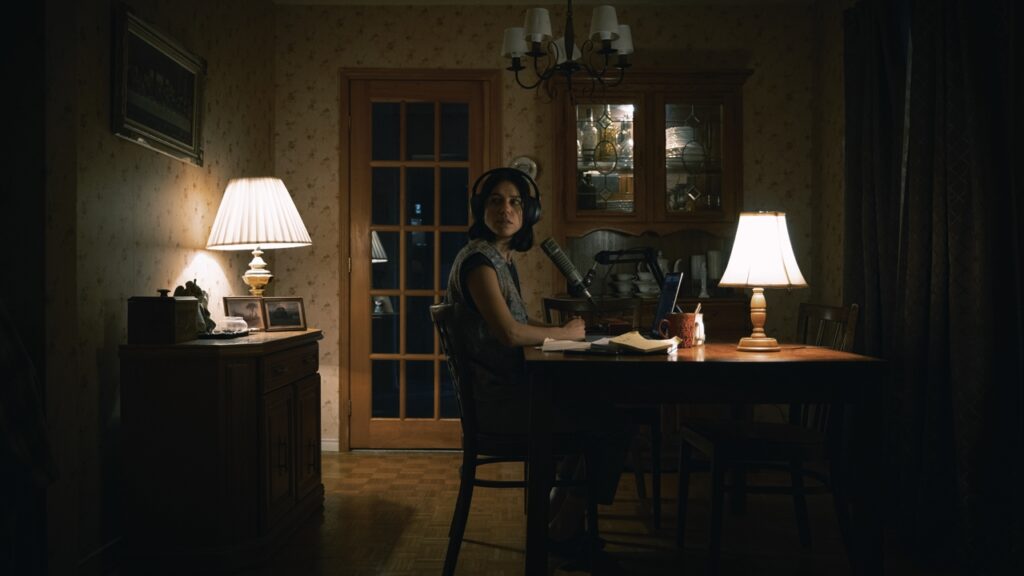
Surrounded by mom’s religious trinkets, Evy digs into ten audio files emailed to the show by an unknown listener. At first, the tracks seem to merely be a husband recording his wife talking in her sleep. Over time, though, they spiral into something much darker and inexplicable. Simultaneously, Evy’s life becomes increasingly topsy-turvy. Nightmares plague her sleep as she obsesses over what’s hidden within the recordings during her waking hours.
Certain undertone scenes feature extended, static wide shots of Kiri, in the distant background, leaning over her laptop, as audio files blare on the soundtrack. Similarly, other moments see brief black backgrounds consume the screen while creepy sounds unfurl. Such segments evoke Paranormal Activity and Derek Jarman’s Blue, intentionally creating unnerving dissonance between very raw, emotional audio and unvarying visuals. Blue used this juxtaposition to reflect the globe’s apathy toward the AIDS crisis and his own AIDS-induced partial blindness. For undertone, this incongruity between imagery and sound suggests how headphones can isolate. You could be rocking out to the coolest MF Doom song, while the rest of the world has no idea. Moreover, they can’t share in it as long as you remain plugged in.
undertone’s visual approach effectively works with the sounds to emphasize this distance. On their own, the shots of Evy listening to material on her laptop in a dining room would look totally normal. However, they become dread-soaked thanks to the sound design. Even in conceptually routine images, the buried and hidden noises tell us, evil lurks.
Unfortunately, undertone’s intricate filmmaking doesn’t ensure the script is as consistently thoughtful. Frustratingly, Tuason saddles Justin with the task of guiding Evy and the viewer through various Wikipedia pages on the dark origins of nursery rhymes or famous demons. These ham-fisted bursts of dialogue work way too hard at hand-holding. Plus, DiMarco’s delivery of such material is distractingly tin-eared. That undermines the scares, which work best when unpredictability reigns supreme. It’s chilling to imagine what’s lurking around in the dark behind Evy. It’s less chilling to see close-up shots of the word “DANGEROUS” on a Wikipedia entry.
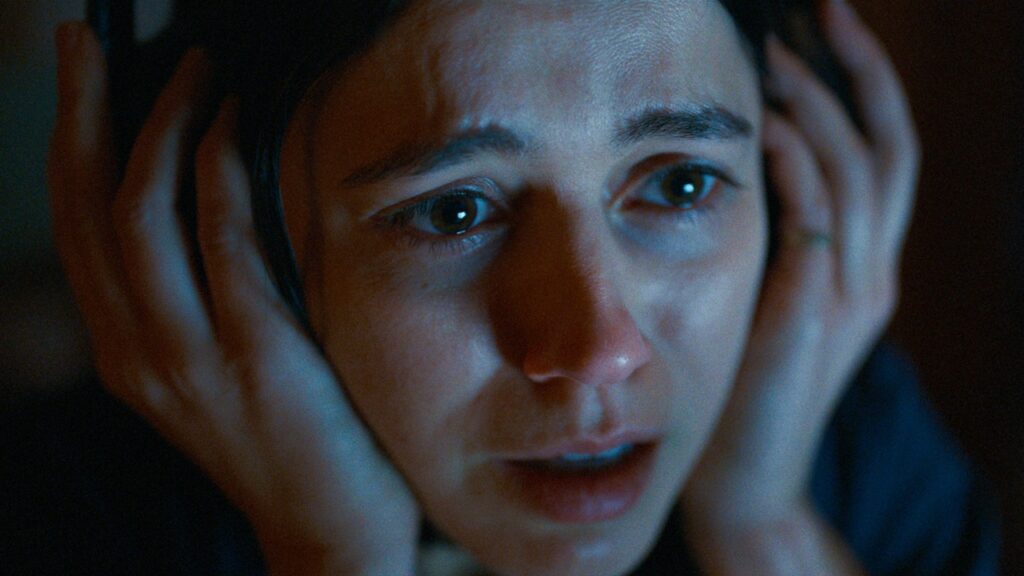
Compare this to The Blair Witch Project, which so masterfully wove a chaotic atmosphere that truly felt like the world was collapsing. Or David Lynch’s Lost Highway unfurling like a disorienting nightmare beyond anyone’s control. undertone, meanwhile, is more concrete about what’s happening, much to its own detriment. That, paired with repetitive storytelling beats that make what’s coming easy to anticipate, keeps the movie from robbing the viewer of sleep.
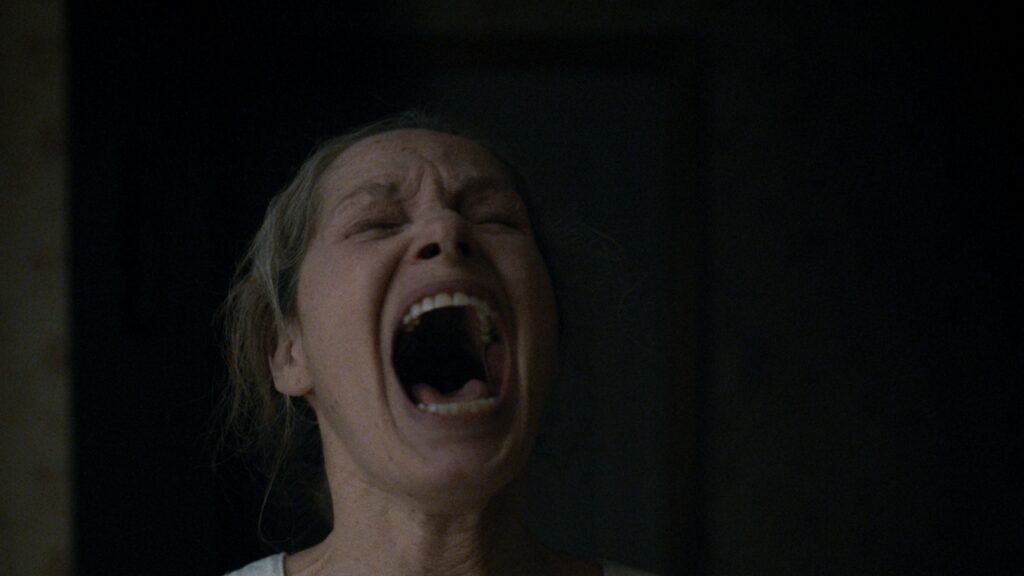
While Kiri and Duquet are the only on-screen characters in undertone, the real star here is sound. Artists like sound designer Davd Getsman, foley artist Diego Marcone, and others deliver sublime work. Especially impressive is the way noises move, making excellent use of auditorium surround sound. A clanking in the back left corner. A wailing baby emanating from the side of the room. Unnerving voices hidden inside nursery rhymes ping-ponging from one ear to the other. All traits well realized by undertone’s sound department. This crew also excels recreating the finer nuances of janky audio files just right. That lends an extra level of immediacy to certain scares. However, this sound-based finesse isn’t enough to make Tuason’s production immensely frightening.
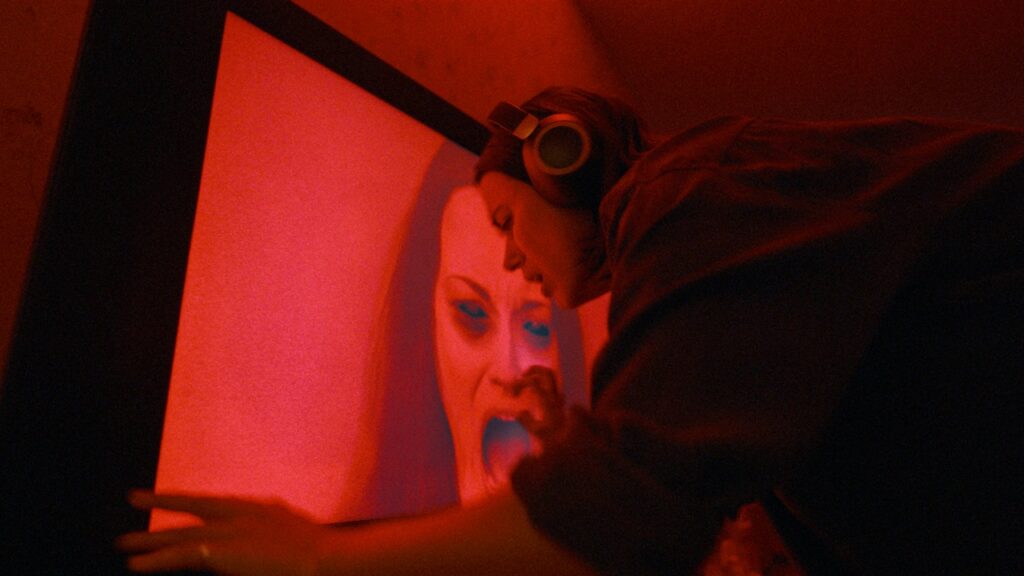
There’s lots to admire here, including Kiri’s lead performance and the precisely realized camerawork. Especially admirable is how it implores people to pay attention to what’s on-screen. This is not a movie urging audiences to whip out their phones when the lights go down. It wants you to obsess over what’s skulking in the corners.
Still, admirability and artistic proficiency don’t translate immediately into exquisite horror cinema. No need to track down ancient demons or listen to nursery rhymes backwards to figure out why undertone never reaches its full potential. Tuason’s rudimentary narrative impulses are the primary problem. While the script hinges scares on the chaos of what’s lurking in those audio files, its basic story adheres to the familiar.
undertone begins haunting theaters everywhere on March 13.