Read also:
How to Watch FX Live Without CableHow To Watch AMC Without CableHow to Watch ABC Without CableHow to Watch Paramount Network Without CableIn 2018, documentary filmmaker Bart Layton expanded into the realm of narrative features with American Animals. This blend of reality and dramatizations followed a quartet of young people plagued by emptiness who seek to fill their internal voids through stealing a priceless book. Eight years later, Layton has returned behind the camera for Crime 101, a film adaptation of a Don Winslow novella.
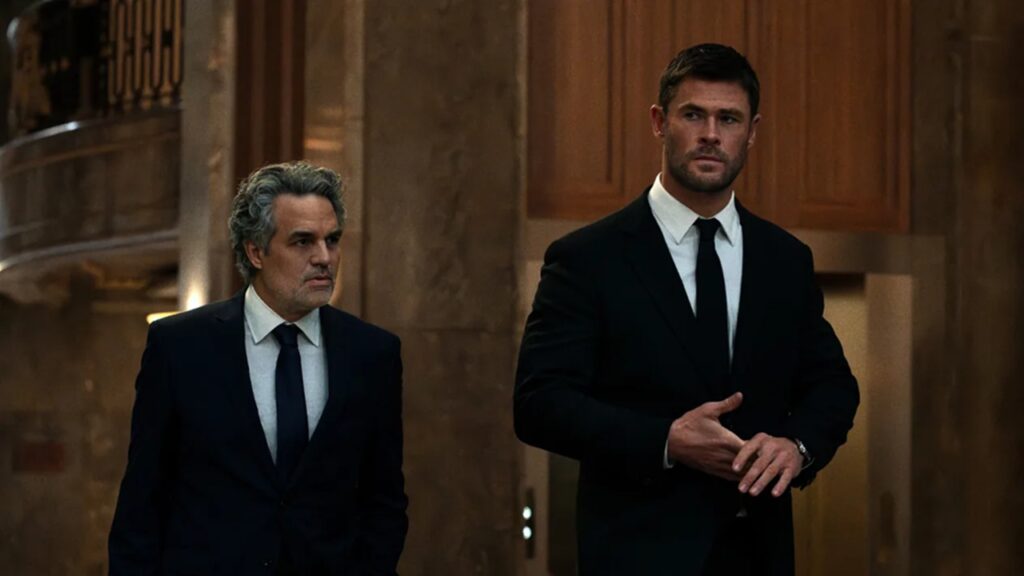
The principal Crime 101 cast is 40+ years old rather than college-aged. However, emptiness still plagues their middle-aged, Los Angeles-dwelling souls. Insurance broker Sharon (Halle Berry) can’t even get a good night’s sleep, let alone any respect from the male higher-ups at her job. Detective Lou Lubesnick (Mark Ruffalo) is convinced he’s cracked a crime pattern near the 101 freeway. However, he can’t get any of his colleagues to take him seriously. Even the younger Ormon (Barry Keoghan) is struggling to escape his criminal father’s shadow.
Then there’s the man linking all of these disparate people: Mike Davis (Chris Hemsworth). He moves like a shadow in the everyday world, never lingering for too long in one space or making lengthy eye contact with the people around him. However, he’s actually the diamond thief responsible for all those 101 freeway-adjacent robberies. Crime 101 begins with all these unfulfilled people wildly separated. However, they’re all about to collide, especially since Davis might need Sharon to pull of his newest heist. The violently unpredictable Ormon, meanwhile, keeps popping up in Davis’s life to ominous effect.

Aching internal voids aren’t the only relic of past Layton films creeping into Crime 101. Across all three of Layton’s directorial efforts (including his 2012 documentary feature The Imposter), this filmmaker established a fascination for duplicitous identities. This director always asks audiences to consider what secrets lurk beneath a seemingly concrete externalized persona. As far as I’m concerned, he can keep pursuing these motifs if they result in solid productions like Crime 101.
Though no Dog Day Afternoon or Thief, this Don Winslow adaptation works well juggling multiple plot lines and weaving suspense. Part of that stems from Layton and editors Jacob Secher Schulsinger and Julian Hart’s cute intertwining of Crime 101’s main characters. Even when they’re in different parts of Los Angeles, these elements of the production bind them together. Davis getting asked by his date Maya (Monica Barbaro) where he would actually like to go out to eat, for instance, suddenly cuts to Lubesnick clutching a raggedy diner menu. Earlier, the camera follows Ormon zipping by on his motorcycle before gradually sliding over to Lubesnick giving a presentation to his cop cohorts on those 101 robberies.
Through these clever visual touches, Crime 101 avoids feeling overstuffed. Instead, its disparate cast harkens back to Hitchcock saying that a bomb hidden under a table is enough to inspire tension. Here, the editing and camerawork-based connective tissue between these principal characters creates unease suggesting their lives will inevitably clash. On a more immediate, visceral level, Layton also continues demonstrating a penchant for realizing gripping suspense set pieces. American Animals and The Imposter were not flukes, thank the maker.
Crisp framing and pacing inform a striking opening scene establishing Davis and his robbery M.O. (quick, smooth, no violence). Even when unexpected problems appear, sleek assuredness informs this man. In contrast, anytime Ormon bursts in to interrogate someone or steal jewels, intentionally chaotic vibes consume the screen. You can feel the careful planning in every move Davis makes, where Ormon radiates bloodthirsty improvisation.

In both cases, the proceedings are commendably absorbing. Layton’s filmmaking chops also extend to stellar showmanship in tension-based “foreplay”. Before guns are drawn or diamonds are stolen, he gets you revved up for what’s imminent. This is especially discernible just before the finale. Here, viewers witness all the narrative chess pieces falling into place for a big showdown.
This and other memorable Crime 101 sequences get a lot of mileage out of a fantastic Blanck Mass score. Early super drum-heavy tracks on this soundtrack had me initially concerned. Would all these compositions hew too closely to standard Hans Zimmer-style noises? Thankfully, Blanck Mass eventually creates a more idiosyncratic sonic landscape relying on electric sounds and channeling the cacoethes driving these people. These orchestral pieces especially excel in a mid-movie car/motorcycle chase between Davis and Ormon. Here, thanks to the power of surround sound, the music “bounces” from one side of the auditorium to the other. What an imaginative way to musically reflect how uncertain Davis is regarding Ormon’s location.
There’s no denying Blanck Mass went above and beyond on this score. However, Crime 101 elements suggesting an even more thoughtful and searing enterprise, rather than just a cromulent crime thriller. An early visit to billionaire, uber-wealthy jerk Steven Monroe (Tate Donovan) features a handful of grim shots reflecting the shoddy life his pool or lawn maintenance workers inhabit. Later, the camera darts across assorted shots of unhoused people just making it through another day in Los Angeles.
Class does come up occasionally in Crime 101. In particular, the only concrete glimpses of Davis’s past involve him referencing how he grew up “with nothing.” However, it never dives deep into this matter. Nor is any depth offered to Angelenos who can’t afford $12,000 watches beyond those fleeting images. Commentary or indictment of the bourgeois strictly occurs in surface-level terms.
Similarly going nowhere is a subplot involving Lubesnick witnessing a cop colleague do something unspeakable. Initially, this guy refusing to cover up state-sanctioned violence seems like a natural evolution of how he’s already been at odds with his co-workers. However, it later vanishes and just feels like a superfluous digression in the context of the larger story. Then there’s Mike Davis and his intentionally vacant personality. This storytelling choice has its upsides and drawbacks. On the one hand, there’s appreciative ambiguity on what specifically drives him and how his paths crossed with shady folks like Money (Nick Nolte).
Chris Hemsworth also does strong work shedding his puppy dog face (which served him so well in Ghostbusters and Thor: Ragnarok) to instead believably portray a guy with a fierce expression and empty pupils glued to his face. However, as the anchor for a 148-minute movie, the vacantness fueling Davis proves troublesome. Intentionally drained of any Danny Ocean charisma or any interior life, Layton sometimes writes the character as too one-note for his own good. In the weakest Crime 101 moments, Davis’s aloofness is a liability rather than compelling viewers to look deeper.
Even with these screenwriting defects, Mike Davis is a much more compelling showcase of Hemsworth’s talents than his two forgettable turns as (shudder) Tyler Rake. As a whole project, Crime 101 proves reasonably entertaining. Hard to argue with a movie featuring Barry Keoghan rocking a pink biker jacket or A Separation’s Payman Maadi on the big screen. Less visually and narratively audacious than American Animals, Bart Layton still demonstrates laudable finesse in exploring emptiness-plagued individuals throughout Crime 101.
Crime 101 begins breaking into theaters everywhere on February 13.