Read also:
How to Watch FX Live Without CableHow To Watch AMC Without CableHow to Watch ABC Without CableHow to Watch Paramount Network Without CableFantastic Fest 2025 marks the 20th Anniversary of the Austin, TX mainstay that launched in 2005. Here, genre cinema rules. Movies about zombies, laser-guns, roundhouse kicks, and other fixtures of popcorn cinema space take precedent. Audiences usually flock to this space to check out exceedingly weird titles on a massive screen with other moviegoers.
I myself eschewed that trend by covering the festival virtually from my Dallas domicile. However, even here, the unique and audacious programming choices of this festival were apparent. I was still gasping and going “oooooh no” plenty in my apartment. Ahead is the first of two pieces touching on a variety of Fantastic Fest 2025 titles, including world premieres. The lineup for Fantastic Fest 2025 shows its continued relevance. Twenty years later, it remains a draw for genre films and weirdo moviegoers of all stripes.
Lunatic: The Luna Vachon Story (dir. Kate Kroll)
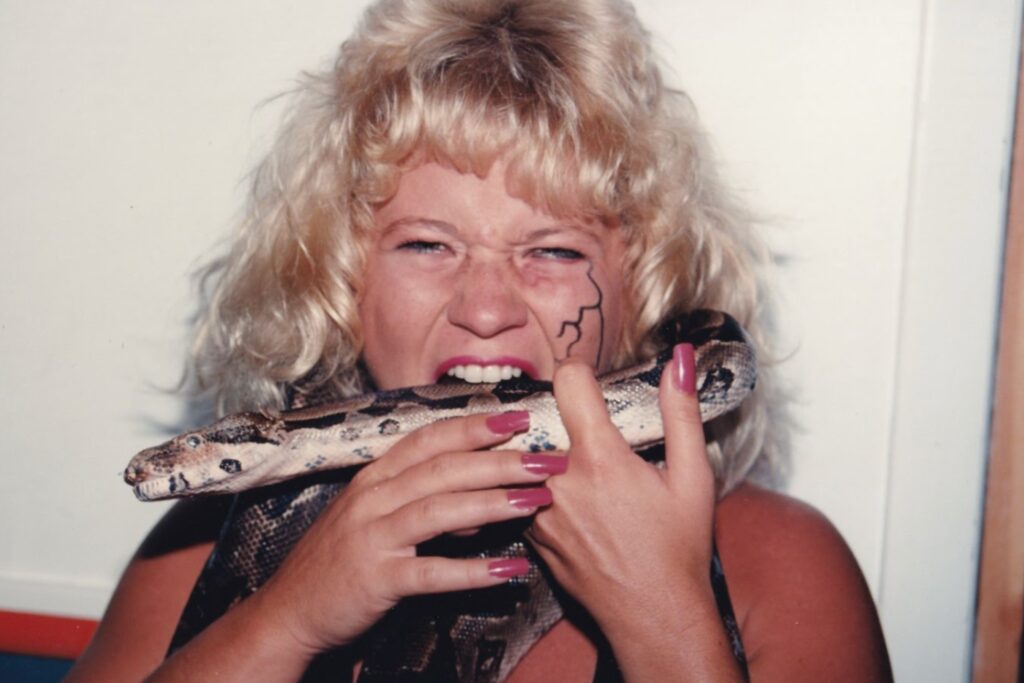
Cinema is littered with documentary and narrative features about beefy wrestlers grappling with psychological problems they can’t punch and German suplex away. Into that tradition comes the documentary Lunatic: The Luna Vachon Story. Luna Vachon (born Trudy Vachon) was the daughter of famed wrestler Mad Dog/Paul Vachon. She quickly grew determined to follow in her footsteps and become a famous wrestler. Thus began a career where Luna shaved much of her head, took on a gravely voice, and chewed up the scenery like nobody else on the scene. The career constrictions for women wrestlers were (and remain) tremendous. Vachon never stopped body slamming those constraints.
Director Kate Kroll’s form for Lunatic: The Luna Vachon Story isn’t revolutionary with its emphasis on a largely linear timeline and talking head interviews. However, her camera frequently captures testimonies from very engaging souls, particularly any of the women wrestlers Vachon worked alongside. It’s here that Kroll’s familiar trappings do take on slyly subversive qualities. Raw anecdotes from Penelope Paradise and Debrah “Medusa” Miceli are among the most emotionally gripping in the entire enterprise. Finally, voices so often reduced to eye candy or novelty acts (“a woman…wrestling?!?”) in their profession get to express nuance and humanity.
Also compelling are the stories told by one of Vachon’s sons, Vincent “Van” Hurd. He’s clearly lived with this complicated mother/son relationship for so long that the most outlandish situations have calcified into “normalcy” for him. “WTF” retrospective lines like “me and my mom used to do lines together” emerge from Hurd’s lips with an accompanying chuckle or flippant delivery. Unfortunately, Lunatic: The Luna Vachon Story keeps drowning out his words and other segments with an intrusive Conan Karpinski score. Greater sonic restraint would’ve let these striking words have extra impact.
Ham-fisted musical cues to signal sad or chaotic segments in Vachon’s life are part of how more formulaic filmmaking tendencies keep tripping this documentary up. Still, there’s an innately gripping quality to this woman’s life. Ditto the realistically messy and nuanced perceptions her closest friends and relatives have about her. In spite of its shortcomings, Lunatic: The Luna Vachon Story proved solid even to someone like me with only cursory WWE knowledge.
Camp (dir. Avalon Fast)
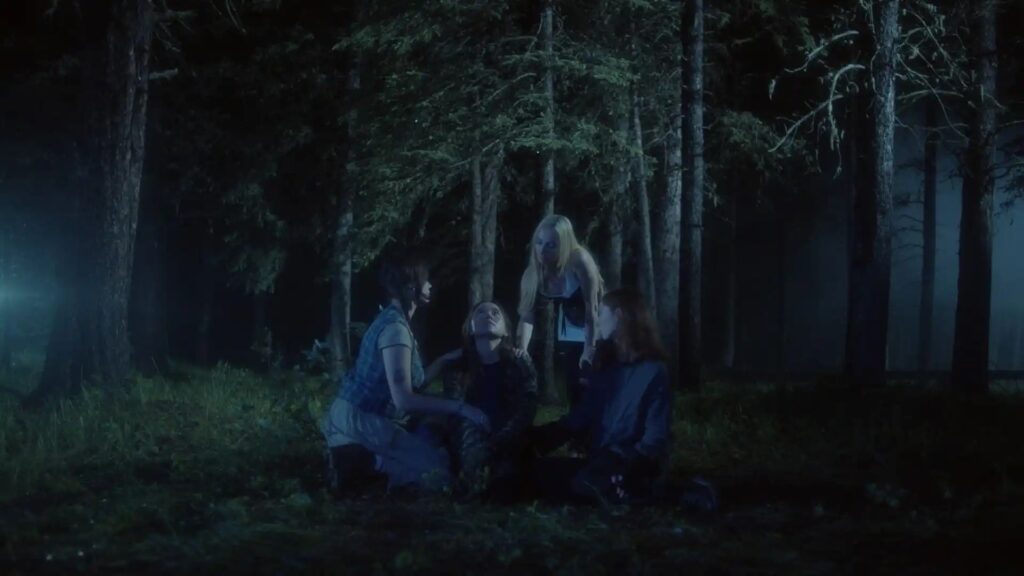
Tragedy follows Camp protagonist Emily (Zola Grimmer) wherever she goes. A few years back, she accidentally killed a kid with her car. Now, her best friend died of a cocaine overdose in her automobile. Sullen and traumatized, Emily commits to staying inside her bedroom forever. She’s only lured outside with the prospect of a camp counselor job where this college student can get something approaching a fresh start. Here, she’ll work with other lady counselors like Rosie (Cherry Moore), Clara (Alice Wordsworth), and Hope (Ella Reece) to keep the operation running smoothly.
There’s also something…magical about this place and people. Maybe those supernatural rumblings can help bring Emily something resembling peace.
Director Avalon Fast imbues Camp with a dreamlike aesthetic. From the very first scene, involving college students engaging in a very aloof truth-or-dare game, everything seems slightly askew. Whether it’s the line deliveries or the editing, Camp’s oblique ambiance conveys a hallucinatory tone. This unique approach nicely emulates the way Emily is shambling through reality after unspeakable tragedies. She feels detached from the real world. So too is Camp disconnected from atmospheric equilibrium rooted in our world.
The intent behind this mold is commendable. However, in execution, Camp doesn’t fully click as either a surrealist visual exercise or a conventional narrative experience. It’s always simply teetering on fulfilling its potential in either regard. Fast’s strong visual sensibilities do, though, produce great trippy third-act imagery. It’s also a lovely touch that late displays of magical powers materialize through visual effects emulating hand-drawn animation. Some of those effects appear in an attic that serves as a special haven for Emily and her friends.
From the second this locale first appears on screen, it exudes a tangible warmth perfectly fitting for a backdrop to unforgettable bonding. Having light angelically pour through the attic’s windows like Janusz Kamiński is lensing Camp accentuates the location’s coziness. Avalon Fast’s attempt to make Ginger Snaps/Jennifer’s Body/Raw by way of Lost Highway is better as individual pieces than as a cohesive whole. However, those standout Camp segments are extremely commendable in their conviction to a fanciful, trauma-tinged temperament.
Theater is Dead (dir. Katherine Dudas)
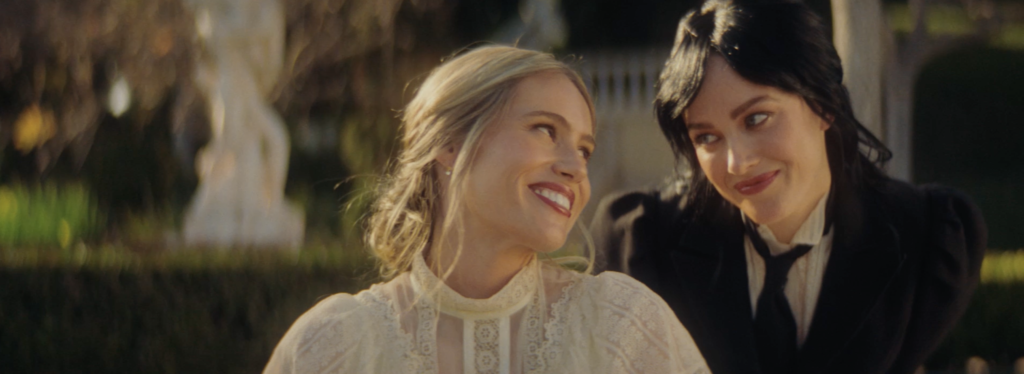
All it took was watching one play for Willow (Decker Sadowski) to realize her destiny. Sure, her late father was an actor. But watching director Matthew’s (Shane West) latest stage masterpiece convinced her that she needs to become a performer. Thus, she auditions for Matthew’s new play and, to her surprise, secures a lead role. This irks cast members like Matthew’s daughter Taylor (Maidson Lawlor), but there’s greater dangers lurking here than Willow’s awkwardness in theater warm-up exercises. Actors keep acting peculiar during rehearsals, while everyone’s dedication to “doing anything” to achieve notoriety in Matthew’s theatre company…hmmm. Something’s rotten in Denmark, to paraphrase the Bard.
Dudas and cinematographer Ryan Zemke instill Theater is Dead with a whip-quick visual aesthetic echoing similar rapid-fire comedic imagery in Edgar Wright movies. In unbroken takes, characters walk across the screen, into another room, and suddenly it’s a new day of rehearsals. Other times, the camera will suddenly whirl around and, without ever cutting away, reveal that the story has shifted to a new location. There’s an engaging go-go-go aesthetic to everything that the succinct 88-minute runtime reinforces.
For most of that brief runtime, Theater is Dead is a pleasant experience with admirable visual panache (like occasionally shifting aspect ratios) and strong instincts in executing sight gags. This dark comedy premise is also a good showcase for the film’s various actors. Shane West, for instance, has a blast channeling Brian O’Halloran and Oliver Platt in equal measure with his egocentric role. Madison Lawlor is the film’s MVP, though, as a hostile goth always a few minutes away from scorching the Earth. A fantasy sequence where Willow and Taylor recite lines sees the former character getting REALLY involved reveling in sleeping with her “pal’s” husband. It’s an outsized sequence demonstrating Lawlor’s deftness with riotously chewing the scenery.
Unfortunately, Theater is Dead’s screenplay (credited to Dudas, Lawlor, Sadowski, and Olivia Blue) tumbles mightily as it prepares for its finale. Suddenly, the writers bombard viewers with tons of new lore and character motivations. All the zippy energy leaves the building for clumsy exposition. This includes giving Willow an additional personal reason (think “the author of all your pain”) to hate Theater is Dead’s main villain. Were demonic forces and hurting innocent people not enough of an impetus for Willow’s crusade against the darkness?
Thus begins a more underwhelming finale capping Theater is Dead off on a weaker note. A movie that once breezed along at a good clip now juggles way too many narrative elements for its own good. Still, even here, certain striking images, bursts of dark humor, and a hardware store shopping montage hit their mark. Katherine Dudas has concocted a fun creation here, which makes Theater is Dead’s most ill-advised storytelling impulses extra disappointing.
Stay tuned for further Fantastic Fest 2025 content!