Read also:
How to Watch FX Live Without CableHow To Watch AMC Without CableHow to Watch ABC Without CableHow to Watch Paramount Network Without CableIn many ways, it is a familiar tale. Something has come to Earth and changed the population. Everyone still looks like people, but they no longer sound or act quite right. Think Invasion of the Body Snatchers. But what if the new “versions” of humanity are friendly to a fault? What if they make no bones about their plan to convert the few remaining unchanged people, including acerbic author Carol Sturka (Rhea Seehorn), but are super dedicated to helping out until that moment? What if things just got odder from there? Well, then, that would be Pluribus.
There are certainly a great number of familiar aspects to the story. There is, of course, the aforementioned Invasion of the Body Snatchers and its various children. Much of the first three episodes recall visions of the apocalypse like Utopia, The Stand, and numerous takes on zombies. Later episodes echo The Last Man on Earth and Childhood’s End. And yet, nothing feels stale or plagiaristic.
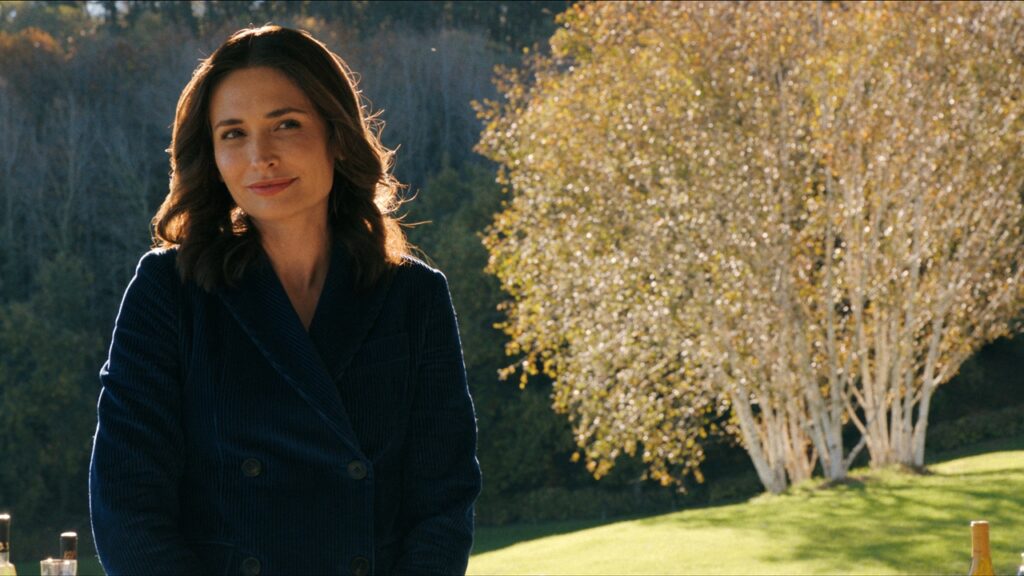
The list of topics I’m not allowed to discuss because of embargos makes this a difficult show to review. Over the course of the seven episodes made available for review, there are some excellent twists and reveals, tremendous ups and downs, and startling observations about the nature of peace, survival, and humanity. But most of them, I can only kind of nod to and say, “just trust me,” in anticipation of the rest of the viewing audience catching up.
What I can safely discuss is how assured series creator Vince Gilligan guides Pluribus. There is an incredible confidence in execution, allowing the show to move with a kind of slow, steadying confidence that is all too rare in any television series. The cold opens are often wordless or near wordless, unfolding vaguely until they connect to the story we know, revealing new and interesting wrinkles in the situation. It juggles a massive sense of scale while still keeping focus tight on Carol (largely), cleverly mining the ensuing mix of claustrophobia and existential agoraphobia.
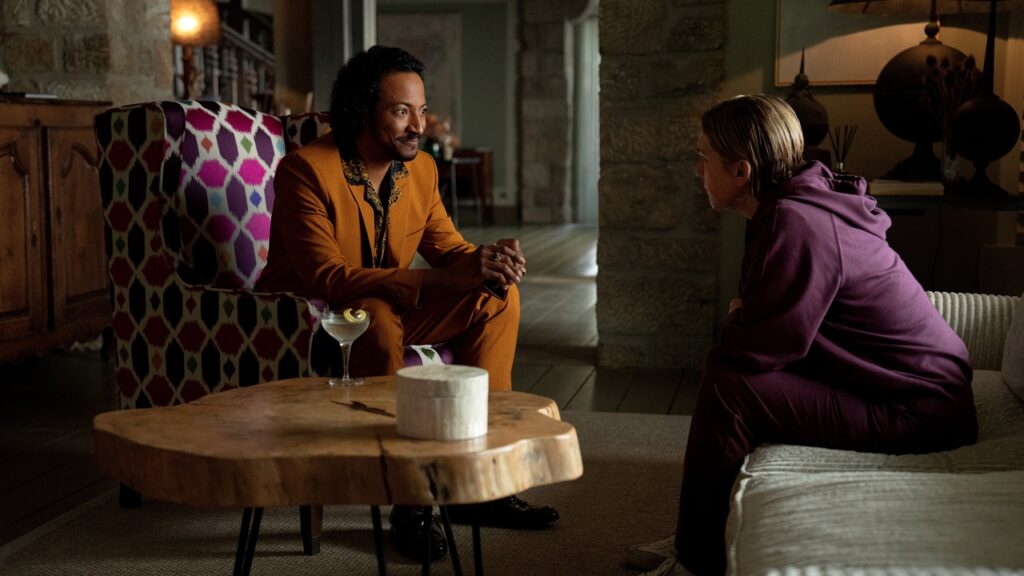
Visually, Pluribus is perhaps not as immediately eye-catching as Severance’s blend of mid-century modern, brutalist, and economically oppressed suburbia or the single-shot bravado of Adolescence. Again, though, assuredness is the watchword. The use of overhead shots of busy workers, widescreen frames that strand Carol alone among rows of airplane seats or grocery shelves, and distant reminders of the cost of this massive upheaval build. The longer you watch, the more you notice. The more you notice, the better you understand Carol’s mix of rage, hopelessness, and ever-increasing resolve.
Speaking of Carol, the show smartly starts by giving viewers a pre-change look at the protagonist. She’s a successful writer of in-demand period romances; think Outlander for those with a pirate fetish. A lesbian survivor of conversion therapy camp, she nonetheless writes for the heterosexual set. Perhaps as a result, she seemingly loathes he own work and condescendingly regards her fervent fans behind closed doors. Nevertheless, she’s the type to demand her manager and romantic partner, Helen (Miriam Shor), rearrange the books at an airport convenience store to give her prime real estate. She clearly loves Helen, but in nearly every other exchange, she exudes either false enthusiasm or brutal self-loathing. Small details like the breath alcohol ignition interlock device in her car suggest recent darker times.
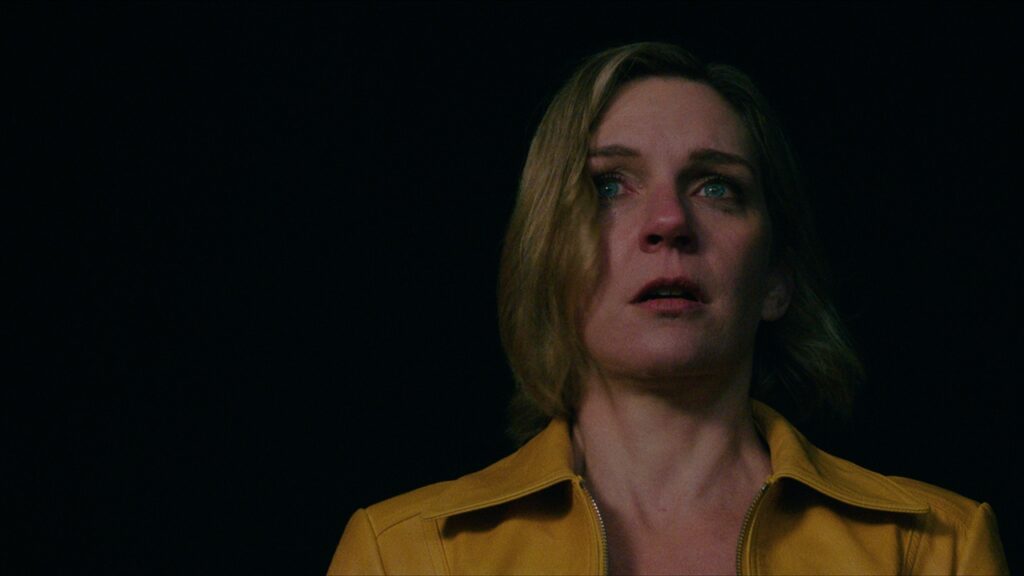
Seehorn fits the character like a glove. She conveys the character’s tendency to default to dark cloud pessimism without making her an annoying drip. While she’s taciturn, her emotions are legible, giving her depth, maybe despite the character’s own wishes. The above-mentioned scene in the airport is a thing of beauty as Seehorn conveys what she wants with a mere nod of the head. It says volumes about Carol and Helen’s relationship, the author’s ambivalence about her work, and her inability to resist the need to be shown love via sales numbers. It’s a complex, prickly performance for a complex, prickly character. It keeps a show that is frequently strange and surreal grounded in a recognizable reality.
Again, there is so much more I wish I could write about. That includes how the changed humans view the concept of harm, the sexual dynamics of the new world order, metaphors about modern journalism, and the need for connection. Sadly, I can’t give specifics. But I can at least point to the stands and promise you that Pluribus, again and again, raises and explores these ideas and more with unique thoughtfulness. It is a show full of mystery that, so far, doesn’t shy away from providing answers. That makes it feel smart AND satisfying, giving viewers the sense that this will add up to the sum of its parts.
Pluribus just wants to help Carol on AppleTV now.